








What's Happening?
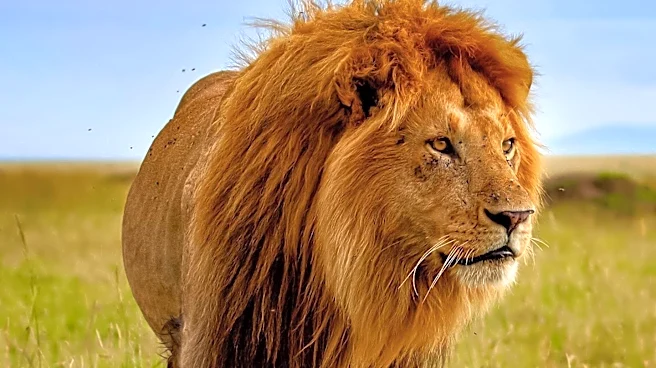
Faith Musembi, one of the four credited directors for the National Geographic mini-series 'Lion,' reflected on the extensive four-year production process of the documentary. The series chronicles the growth of a young lion cub, Kio, into a mature lion,
drawing parallels to 'The Lion King.' Musembi highlighted the challenges and surprises of filming, particularly the ability to track Kio's story from beginning to end, which is unusual given the high infant mortality rate and dispersal patterns of male lion cubs. The production involved a large crew and utilized advanced camera techniques to create an immersive viewing experience, capturing close-up movements of the lions. Communication among the multiple directors and constant updates were crucial for maintaining a cohesive narrative throughout the lengthy filming period. Jon Favreau, who has a deep connection to animal-focused projects, also played a significant role in the documentary's development.
Why It's Important?
This documentary represents a significant achievement in wildlife filmmaking, offering an unprecedented, long-term look into the life cycle of a male lion. The ability to follow Kio's journey from cub to adulthood provides invaluable insights into lion behavior, social structures, and the challenges they face in the wild. Such detailed and immersive storytelling can significantly impact public awareness and conservation efforts for endangered species. By showcasing the realities of wildlife, including high mortality rates, the film can foster a deeper understanding and empathy for these animals, potentially influencing support for wildlife protection initiatives and research. The technical innovations in filming also push the boundaries of documentary production, setting new standards for capturing natural world narratives.
What's Next?
The 'Lion' mini-series is currently streaming on Hulu, making it accessible to a broad audience. Its availability on a major streaming platform suggests continued viewership and potential for educational outreach. The insights gained from this four-year production, particularly regarding the tracking and filming of elusive wildlife, could inform future documentary projects and conservation strategies. The success of 'Lion' may also encourage further investment in long-form, in-depth wildlife documentaries that prioritize immersive storytelling and scientific accuracy. Directors like Faith Musembi may continue to apply their expertise to similar projects, contributing to a growing body of work that highlights the natural world and its conservation needs.
Beyond the Headlines
The documentary 'Lion' transcends mere entertainment by serving as a powerful tool for environmental education and advocacy. By humanizing the experience of a wild animal, it encourages viewers to reflect on humanity's impact on natural habitats and biodiversity. The film's success in capturing such a rare and complete narrative challenges conventional documentary filmmaking, demonstrating that persistence and innovative techniques can yield extraordinary results. It also subtly addresses the ethical considerations of wildlife observation, showcasing how filmmakers can achieve intimate portrayals without interfering with natural processes. This type of storytelling can inspire a new generation of conservationists and filmmakers, fostering a deeper connection between audiences and the animal kingdom, and ultimately contributing to a more informed global dialogue about ecological preservation.