





What's Happening?
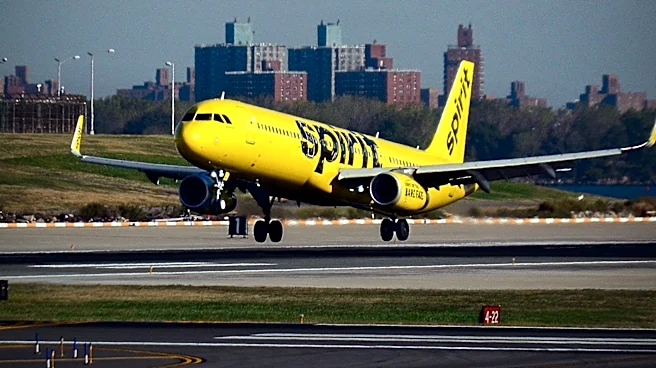
Spirit Airlines conducts all its operations at Newark Liberty International Airport (EWR) exclusively from Terminal A. This terminal, managed by the Port Authority of New York and New Jersey, primarily serves low-cost carriers and is physically separate
from the terminals used by major network airlines. Spirit's decision to centralize its operations in Terminal A aligns with its low-cost business model, facilitating efficient, high-volume passenger processing. Terminal A features a more compact, linear airside layout compared to the sprawling B and C terminals, which can theoretically reduce walking distances within the secured area. Passengers are encouraged to use online check-in, available 24 hours before departure, to expedite their journey. For those checking bags, dedicated Spirit Airlines baggage drop areas are located in the Terminal A ticketing hall. Security screening in Terminal A is a high-volume operation, and travelers are advised to arrive at least two hours before domestic flights and three hours before international flights to account for potential lines. The terminal's gates are categorized by proximity to the central structure, with gates A1-A12 being further away and potentially requiring a shuttle service.
Why It's Important?
Spirit Airlines' exclusive operation from Terminal A at Newark Liberty International Airport significantly impacts the travel experience for its passengers and reflects the airline's strategic focus on cost efficiency. By consolidating operations in a terminal designed for low-cost carriers, Spirit can streamline its ground services, potentially reducing operational costs and turnaround times. This efficiency is crucial for maintaining its competitive pricing model in the U.S. market. However, the aggressive scheduling and tight windows between landing and departure, characteristic of Spirit's operations, mean that delays can have a substantial ripple effect on subsequent flights, affecting passenger travel plans. The terminal's linear layout, while potentially reducing walking distances, also means that amenities are sparser compared to larger terminals, which can impact passenger comfort and convenience. For travelers in the New York metropolitan area, understanding these specific dynamics of Terminal A is essential for managing expectations and planning their journey effectively, especially concerning check-in procedures, security wait times, and gate locations.
What's Next?
Passengers flying Spirit Airlines from Newark Liberty International Airport should continue to monitor their flight status closely via the Spirit website or airport digital displays, especially given the airline's aggressive scheduling and potential for ripple effect delays. Travelers are advised to arrive well in advance of their scheduled departure times—at least two hours for domestic flights and three hours for international flights—to accommodate potential security line backups and walking distances to gates, particularly for those assigned to gates A1-A12. Spirit will likely continue to emphasize online check-in and the use of digital kiosks to manage passenger flow and reduce staffing needs at the ticketing counters. The Port Authority of New York and New Jersey will likely continue to monitor passenger flow and operational efficiency within Terminal A to manage congestion. In the event of significant delays or cancellations, passengers should be aware of their rights and keep documentation of any expenses incurred, as Spirit's policies may vary.
Beyond the Headlines
The operational model of Spirit Airlines at Newark's Terminal A highlights a broader trend in airport infrastructure and airline strategy: the segregation of services based on business models. By dedicating Terminal A primarily to low-cost carriers, EWR acknowledges and facilitates the distinct operational needs of these airlines, which prioritize high volume and efficiency over extensive amenities. This segregation can lead to a more streamlined experience for budget travelers, but it also underscores a two-tiered system within air travel, where the 'no-frills' experience is physically separated from the more amenity-rich environments of legacy carriers. This approach has implications for urban planning and transportation policy, as airports adapt to diverse airline demands. It also raises questions about equitable access to airport services and amenities, as passengers in Terminal A may have fewer options for dining, shopping, and comfort compared to those in other terminals. The long-term impact could be a further specialization of airport terminals, with each catering to specific airline types and passenger expectations, potentially influencing future airport development and design.