









What's Happening?
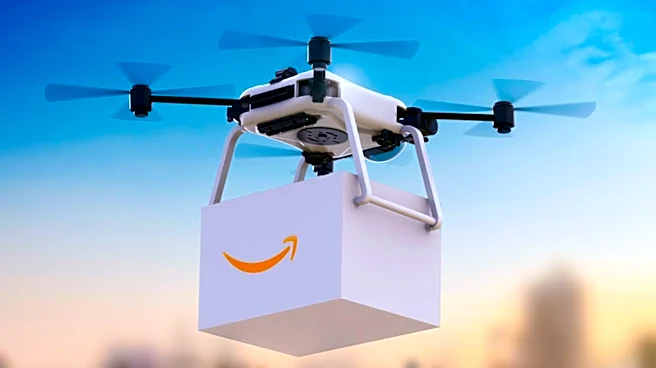
Walmart is significantly expanding its drone delivery program, aiming to increase its reach from 70 to over 270 stores by the end of next year. This expansion is part of a broader trend among U.S. retailers, including Amazon, which recently opened its 10th
drone delivery network in Baton Rouge, Louisiana. Walmart's drone deliveries focus on urgent, convenience-driven items such as allergy medications and pet food. The company partners with drone providers like Zipline and Wing, Alphabet's drone division, to enhance its delivery capabilities. Despite challenges such as noise and privacy concerns from communities, the potential cost benefits are driving the expansion. PwC researchers estimate that per-delivery costs could drop to as low as $2 by 2034, making drone delivery a cost-effective alternative to traditional methods.
Why It's Important?
The expansion of drone delivery services by major retailers like Walmart and Amazon represents a significant shift in the logistics and retail sectors. This move could drastically reduce delivery times and costs, offering a competitive edge in the fast-paced e-commerce market. As the U.S. aims to lead in drone technology, this development could also enhance the country's technological and economic standing globally. The ability to deliver goods quickly and efficiently could transform consumer expectations and shopping habits, potentially increasing demand for drone-compatible products and services. However, the success of these programs will depend on overcoming regulatory hurdles and addressing community concerns about privacy and noise.
What's Next?
The Federal Aviation Administration (FAA) is proposing new rules to facilitate the deployment of drones, which could significantly accelerate the growth of the drone delivery market. If these rules are adopted, they would allow certified operators to fly drones beyond the visual line of sight, eliminating the need for costly waivers. This regulatory change could lead to exponential growth in the drone delivery sector, with more companies entering the market and existing players expanding their operations. As the technology matures, improvements in hardware, battery life, and reliability are expected, further enhancing the viability of drone deliveries.