






What's Happening?
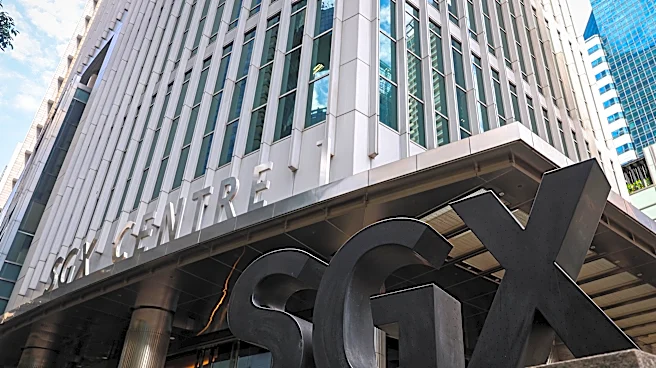
Tay Hwee Ling, capital markets services leader at Deloitte South-east Asia, stated that companies seeking to list on the Singapore Exchange’s (SGX) new Global Listing Board (GLB) must demonstrate a significant presence in Southeast Asia, not solely focus
on the U.S. market. This announcement was made during a briefing on Deloitte's outlook for initial public offerings (IPOs) in the region on Tuesday, November 24. The GLB, launched in November 2025, is a dual-listing track between SGX and Nasdaq. To qualify, companies must have a market capitalization of at least US$2 billion and either be approved for or already hold a primary listing on the Nasdaq Global Select Market. The framework became effective in June 2026. Deloitte is currently assisting a company with preparations for a GLB listing, which could potentially occur in the first half of 2027, though further details about the company or its sector were not disclosed. This guidance comes as IPO market conditions have recently deteriorated, with many newly listed companies trading below their offer prices.
Why It's Important?
This emphasis on a strong Southeast Asian presence for GLB listings highlights a strategic shift in how international exchanges view cross-border IPOs. For U.S. investors and Nasdaq-listed companies, it signals that a dual listing on the SGX GLB is not merely an extension of their U.S. market strategy but requires genuine engagement and investor support within the Southeast Asian region. This could influence how U.S. companies with global ambitions structure their operations and investor relations, potentially encouraging deeper ties with Asian markets. The requirement aims to ensure that GLB-listed entities have a robust local foundation, which could lead to more stable and diversified investor bases. It also reflects a broader trend of regional markets seeking to retain and attract listings by leveraging local investor interest and consumption patterns, rather than solely relying on the allure of major U.S. exchanges. This approach could benefit Southeast Asian economies by fostering greater investment and visibility for companies with strong regional ties.
What's Next?
The first GLB listing, potentially in the first half of 2027, will serve as a crucial test case for this new dual-listing framework and Deloitte's outlined criteria. The success of this initial listing, particularly in attracting both U.S. and Southeast Asian investor support, will likely influence subsequent companies considering the GLB. Companies like DayOne, which previously filed for a Nasdaq listing but reportedly put its U.S. offer plans on hold, may re-evaluate their strategies in light of these requirements and market conditions. Furthermore, the performance of the broader IPO market, especially for real estate investment trusts (REITs) which are highly sensitive to market conditions and yields, will continue to shape the pipeline for future listings. Stakeholders, including investment banks, legal firms, and potential issuers, will closely monitor how the SGX and Nasdaq collaborate to facilitate these dual listings and how the market responds to companies that meet the dual-presence criteria.
Beyond the Headlines
The GLB initiative and Deloitte's guidance underscore a growing trend towards regionalization in global capital markets, even as exchanges seek international partnerships. While the GLB offers a pathway for Nasdaq-listed companies to tap into Southeast Asian capital, the insistence on a strong regional presence suggests a move away from purely transactional listings. This could foster more integrated economic relationships between the U.S. and Southeast Asia, encouraging companies to build genuine operational and investor bases across both regions. Ethically, it promotes a more balanced approach to market access, ensuring that companies benefit from local market support rather than solely leveraging global brand recognition. Legally, it may necessitate companies to navigate a more complex regulatory landscape, adhering to both U.S. and Singaporean listing requirements and corporate governance standards. Culturally, it could lead to a greater appreciation for regional market dynamics and investor preferences among globally aspiring companies.