
What's Happening?
Pakistan's Commerce Minister, Jam Kamal Khan, has called for stronger economic ties with Bangladesh, urging both nations to expand bilateral trade, investment, and industrial cooperation. This appeal was
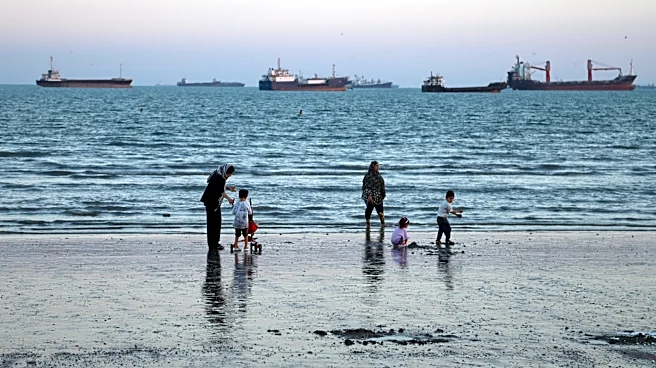
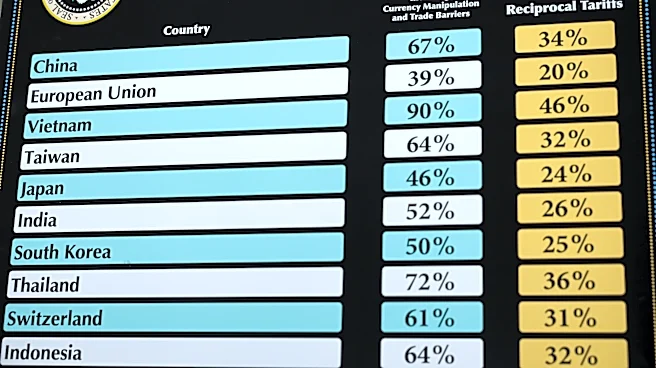
made during his address to a delegation of senior Bangladeshi civil servants attending an Executive Leadership Training Program in Islamabad. Minister Khan emphasized that closer strategic partnerships are essential for both countries to address emerging economic challenges and explore new business opportunities in a period of growing global economic uncertainty. He highlighted opportunities for collaboration in port development, logistics, industrial management, and technology transfer, praising Bangladesh's industrial progress, particularly in manufacturing, ship recycling, and maritime industries. The minister also stressed the importance of economic diversification, technological advancement, and stronger regional partnerships to counter rising energy costs, geopolitical tensions, tariff uncertainties, and global supply-chain disruptions. Discussions also covered trade policies, economic reforms, and prospects for bilateral cooperation, with Bangladeshi participants raising issues concerning tariff and non-tariff barriers, pharmaceutical certification, and investment facilitation.
Why It's Important?
This call for enhanced economic cooperation is crucial for both Pakistan and Bangladesh, as it seeks to bolster their resilience against global economic volatility. By expanding bilateral trade and investment, both countries can diversify their markets and reduce reliance on single trading partners, thereby mitigating risks associated with global supply chain disruptions and geopolitical shifts. Increased industrial cooperation, particularly in areas like port development and technology transfer, can foster innovation and create new avenues for economic growth and job creation. For Pakistan, strengthening ties with Bangladesh, a rapidly developing economy, offers access to new markets and investment opportunities. For Bangladesh, closer collaboration with Pakistan can provide access to Pakistani expertise and resources, particularly in industrial sectors. This strategic partnership could also lead to the formation of a more robust regional economic bloc, enhancing their collective bargaining power in international trade forums and promoting South-South cooperation.
What's Next?
Following Minister Khan's call, both Pakistan and Bangladesh are expected to explore concrete steps to enhance economic cooperation. This may include discussions on a Preferential Trade Agreement (PTA) or Free Trade Agreement (FTA), as well as conducting feasibility studies to identify potential sectors and products for increased bilateral commerce. The existing Joint Working Group on Trade is likely to play a more active role in facilitating these discussions. There could be an increase in reciprocal visits by officials, technical experts, and business delegations to foster closer people-to-people, business-to-business, and government-to-government engagement. Pakistan's five-year tariff rationalization framework, aimed at reducing customs duties and improving industrial competitiveness, could also facilitate trade with Bangladesh. Both nations may also look into joint ventures in emerging markets, particularly in Africa, leveraging their complementary industrial strengths. Addressing issues like tariff barriers and pharmaceutical certification will be critical for the practical implementation of these economic goals.
Beyond the Headlines
The push for stronger economic ties between Pakistan and Bangladesh carries implications beyond immediate trade figures, touching upon the broader geopolitical landscape of South Asia. Historically, relations have been complex, but a renewed economic focus could serve as a powerful bridge, fostering mutual dependence and reducing political friction. This economic alignment could also subtly shift regional power dynamics, offering an alternative to over-reliance on larger regional economies. Furthermore, by emphasizing economic diversification and technological advancement, both nations are positioning themselves for future global economic trends, particularly in the context of artificial intelligence and emerging technologies. This proactive approach could enhance their competitiveness on the global stage and attract more foreign direct investment. The collaboration also highlights a growing trend among developing nations to forge stronger South-South partnerships, creating a more multipolar global economic order and fostering collective self-reliance in the face of global uncertainties.