





What's Happening?
Brian Garlock, the video coach for the Tampa Bay Lightning, recently shared his expertise and career journey with nearly 100 youth hockey coaches at a USA Hockey coaching clinic held at Benchmark International Arena. Garlock, who has worked over 1,000
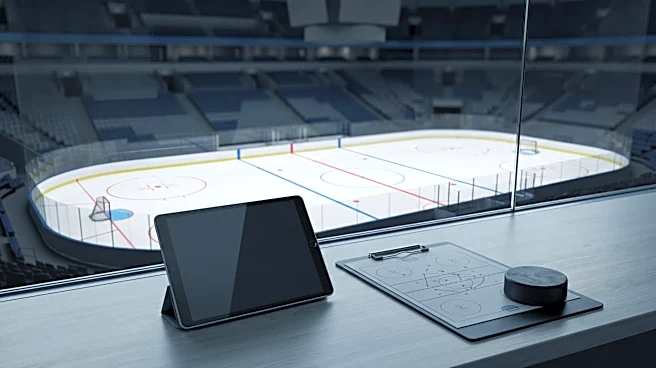
NHL games and contributed to hundreds of victories, emphasized the importance of constructive feedback and making the game enjoyable for young players. He also highlighted the growing popularity of hockey in Florida and the broader efforts of USA Hockey. Garlock, who began his career at the youth level and advanced through various roles, including equipment manager, before becoming an NHL video coach, stressed that an NHL playing pedigree is not a prerequisite for a successful coaching career in the league. He provided practical advice on using video as a teaching tool, suggesting that coaches can effectively break down clips using a phone camera for no more than 15 minutes at a time.
Why It's Important?
The participation of an NHL video coach like Brian Garlock in a youth coaching clinic is significant for the development of hockey at the grassroots level in the U.S. His insights provide invaluable professional perspectives to aspiring and current youth coaches, directly impacting how young athletes are trained and motivated. Garlock's emphasis on constructive feedback, making the game fun, and fostering player ownership aligns with best practices in youth sports development, which prioritize long-term engagement and skill acquisition over immediate results. His personal story of ascending to the NHL coaching ranks without a professional playing career serves as an inspiration, demonstrating alternative pathways within the sport. This initiative by USA Hockey, supported by NHL personnel, helps to standardize coaching quality and promote the growth of hockey in non-traditional markets like Florida, contributing to a stronger national talent pool.
What's Next?
The insights shared by Brian Garlock are expected to be integrated into the coaching practices of the nearly 100 youth hockey coaches who attended the clinic, including those involved with the new Jr. Lightning youth hockey program. This will likely lead to an enhanced focus on constructive feedback, player engagement, and the strategic use of video analysis in youth hockey training. Garlock's message about alternative career paths in hockey could inspire more individuals to pursue coaching and support roles, broadening the talent pool for hockey development. USA Hockey and local organizations may continue to host similar clinics, leveraging the expertise of professional coaches to further elevate the standard of youth hockey coaching across the country, particularly in regions experiencing significant growth in the sport.
Beyond the Headlines
Beyond the immediate impact on coaching techniques, Garlock's involvement underscores a broader cultural shift in professional sports towards giving back to community and youth development. His journey from an equipment manager to an NHL video coach challenges conventional notions of career progression in sports, highlighting the value of dedication, continuous learning, and diverse experiences. The emphasis on making sports fun and fostering a partnership with young athletes reflects a modern pedagogical approach that prioritizes holistic development over rigid instruction. This philosophy, when adopted widely, can contribute to healthier, more engaged youth sports environments, potentially reducing burnout and increasing lifelong participation in physical activities. It also reinforces the idea that success in professional sports extends beyond on-field performance, encompassing a wide array of specialized roles that are crucial to team operations and player development.