






What's Happening?
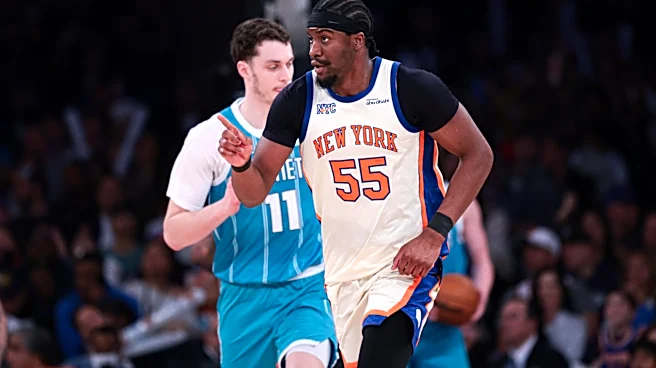
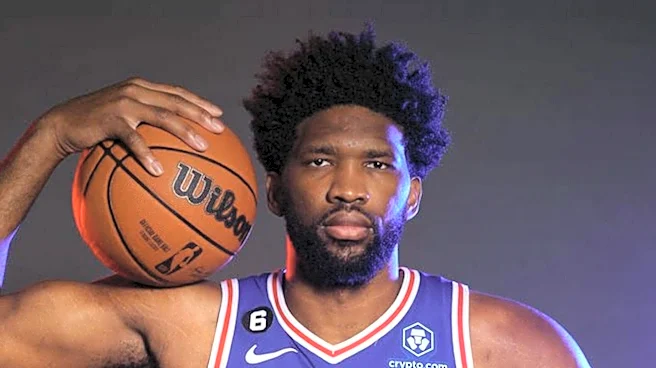
The Philadelphia 76ers have signed Ariel Hukporti, a 24-year-old center, to a one-year contract worth $3.4 million. Hukporti, who previously played for the New York Knicks, joins the 76ers as a backup option behind star center Joel Embiid. The move aims
to enhance the team's depth at the center position, especially given Embiid's history of injuries and the need for load management. Hukporti's role with the Knicks was limited, averaging 9.1 minutes, 2.2 points, and 2.9 rebounds over 79 games. His addition to the 76ers is seen as a developmental opportunity rather than a major reinforcement, with the potential to contribute through rebounding, rim protection, and energy on the court.
Why It's Important?
This signing is significant for the 76ers as it addresses the need for reliable backup options at the center position, a critical area given Embiid's central role in the team's strategy and his occasional absences. Hukporti's presence could provide the 76ers with flexibility in managing Embiid's minutes and maintaining defensive stability. For Hukporti, this contract represents a chance to prove his value in the NBA and potentially secure a more stable role. The financial terms of the deal, slightly above the minimum salary, indicate the 76ers' interest in his potential rather than just filling a roster spot.
What's Next?
Hukporti will need to demonstrate his ability to adapt to the 76ers' system during training camp and the preseason. His performance in these settings will likely determine his role and minutes during the regular season. The 76ers will be looking for him to provide defensive support and maintain the team's structure when Embiid is not on the court. Success in these areas could lead to more significant playing time and a longer-term role with the team.
Beyond the Headlines
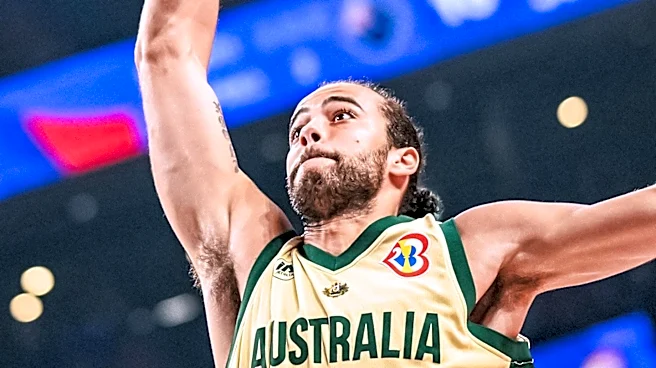
Hukporti's journey from international leagues to the NBA highlights the global nature of basketball talent development. His experience in Germany, Lithuania, and Australia has prepared him for the physical and tactical demands of the NBA. This move also underscores the strategic importance of depth in NBA rosters, where even non-star players can have a substantial impact on a team's success over a long season.