





What's Happening?
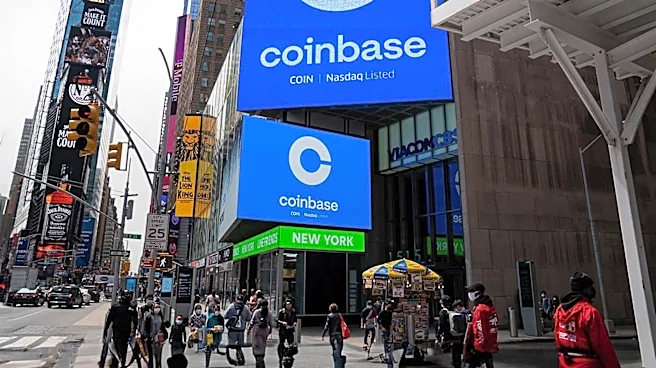
Consumer Reports has evaluated five major cryptocurrency exchanges: Binance.US, Coinbase, Crypto.com, Gemini, and Kraken, to inform consumers about what to consider before choosing a platform. The evaluation found that while these platforms make it easy
to start trading, critical information regarding fees, fee calculation, and consumer protections is often difficult to find. A significant finding was that none of the exchanges clearly disclosed during sign-up that cryptocurrency held on an exchange lacks the same federal protections as money in a traditional bank. This means that if an exchange fails or is hacked, investors could lose all or part of their investment. Fraud warnings also varied, with Gemini requiring multiple acknowledgments, while others like Binance.US, Coinbase, and Crypto.com used warnings that were easier to dismiss, and Kraken showed no warning during transfers. Consumer Reports advocates for clearer, upfront disclosure of these risks.
Why It's Important?
The findings by Consumer Reports are crucial for U.S. consumers engaging with the rapidly evolving cryptocurrency market. The lack of clear disclosure regarding federal protections and potential investment loss exposes individuals to significant financial risks, especially given the volatility and nascent regulatory framework of digital assets. The absence of bank-like federal insurance means that consumers are largely unprotected in scenarios of exchange failure or cyberattacks, which could lead to substantial personal financial losses. This situation underscores the need for greater transparency from crypto exchanges and potentially more robust regulatory oversight to safeguard consumer investments. The varying approaches to fraud warnings also suggest an inconsistent standard of consumer protection across platforms, making it challenging for users to make informed decisions and understand their exposure to scams.
What's Next?
Consumer Reports recommends that before choosing a crypto exchange, consumers should ask four key questions: what are the actual costs, how does the platform protect against scams, what happens to funds if the company fails, and what is being done with personal data. The organization also suggests that companies should place critical information, such as the irreversible nature of crypto transactions and the increasing threat of scams, directly before a consumer commits to a transaction. For those seeking crypto exposure with stronger federal oversight and consumer protections, Consumer Reports advises considering crypto ETFs or index funds available through traditional brokerages. This guidance aims to empower consumers to navigate the crypto market more safely and highlights areas where industry practices and potentially regulation could improve.
Beyond the Headlines
The Consumer Reports evaluation touches upon deeper implications concerning the integration of novel financial technologies into the existing regulatory landscape. The disparity in consumer protections between traditional banking and cryptocurrency exchanges raises questions about regulatory arbitrage and the need for a harmonized approach to financial security in the digital age. The issue of data privacy, with only Coinbase offering an in-app option to delete or request access to personal data, also highlights broader concerns about how digital asset platforms handle sensitive user information. This situation could prompt discussions among policymakers and regulators about extending consumer protection frameworks to cover digital assets more comprehensively, potentially leading to new legislation or stricter enforcement of existing rules to ensure a safer environment for crypto investors.