






What's Happening?
Wyoming is significantly increasing its efforts in rare earth element (REE) production and processing, positioning itself as a key player in the U.S. strategy to reduce reliance on China. The state has established the $105 million Energy Dominance Fund
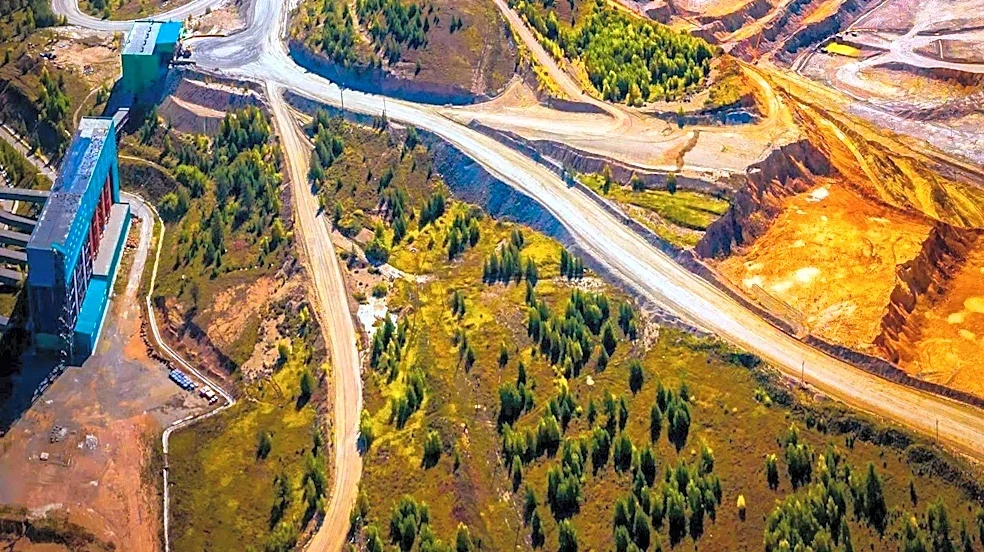
and the $16 million Wyoming Rare Earths Fund to support critical mineral projects. Several projects are underway, including Rare Element Resources' Bear Lodge bastnaesite deposit near Sundance, which is ramping up a demonstration separation plant and received expedited federal permitting. American Rare Earths is developing the Halleck Creek deposit, reported as the largest known U.S. REE deposit by volume, with pilot programs for milling and separation. Additionally, the University of Wyoming is researching REE extraction from coal and fly ash, with projects like Ramaco's Brook Mine and Peabody Energy's Rawhide mine exploring coal-based REE recovery. These initiatives are part of a broader Western effort to build a new REE supply chain, as China currently dominates over 80% of light REE and nearly 100% of heavy REE separating capacity globally.
Why It's Important?
The development of rare earth element production in Wyoming is crucial for U.S. national security and economic independence. REEs are vital components in advanced technologies, including wind turbines, electric vehicle motors, and missile guidance systems. China's near-monopoly on REE processing and its recent export restrictions on heavy REEs, which are critical for the U.S. military, highlight the vulnerability of the current supply chain. By investing in domestic REE mining and processing, the U.S. aims to secure essential materials, mitigate geopolitical risks, and foster technological innovation. This push creates new economic opportunities within Wyoming, attracting investment and creating jobs in the mining and processing sectors. The success of these projects could establish a more resilient supply chain, reducing the U.S.'s susceptibility to foreign policy shifts and trade disputes, and ensuring the availability of materials necessary for defense and green energy initiatives.
What's Next?
The immediate future will see continued development and scaling of Wyoming's rare earth projects. Rare Element Resources' Bear Lodge project anticipates concluding its environmental review by 2028, with actual production to follow. American Rare Earths aims for production at Halleck Creek by 2031, with capital attraction being a primary challenge. Ramaco's Brook Mine expects initial production no earlier than 2028 or 2029, with downstream processing partners like REalloys involved. Peabody Energy's Rawhide mine project is in its early stages, focusing on pilot facilities. Federally, the Department of Defense's acquisition rules will prohibit Chinese magnets in weapons systems starting January 2027, requiring contractors to trace magnet content to the mine, which will further drive demand for domestic sources. The U.S. government is also providing financial support through programs like the CHIPS Program and the Office of Strategic Capital, indicating continued investment in the sector. The industry will also focus on overcoming challenges such as mastering separation chemistry, navigating lengthy permitting processes, and managing the environmental impact of REE production.
Beyond the Headlines
The push for domestic rare earth element production in Wyoming and across the U.S. signifies a broader strategic shift towards supply chain resilience and de-globalization in critical sectors. This initiative extends beyond mere economic competition, touching upon national security, environmental responsibility, and technological sovereignty. The historical context of the U.S. losing its REE dominance in the 1980s due to environmental concerns and market shifts underscores the importance of sustainable practices in this new era. Projects like Serra Verde in Brazil, which uses contained leaching to mitigate pollution, exemplify a commitment to more environmentally sound methods, contrasting with past practices in China and Myanmar. The long-term implications include the potential for the U.S. to regain leadership in advanced materials, fostering innovation in magnet manufacturing and other high-tech industries. This also presents an opportunity to develop new, cleaner processing technologies, setting a global standard for responsible resource extraction and processing, thereby addressing both economic and ethical dimensions of critical mineral supply.