




What's Happening?
The U.S. Federal Reserve recently raised interest rates for the first time since July 2023, with indications of further hikes to combat inflation fueled by rising oil prices. This tightening of monetary policy by the Fed is anticipated to have significant
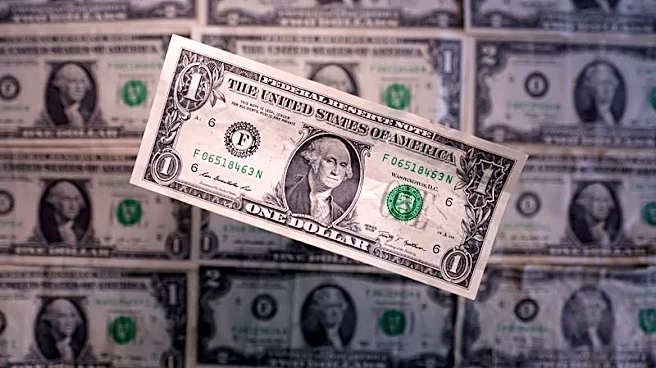
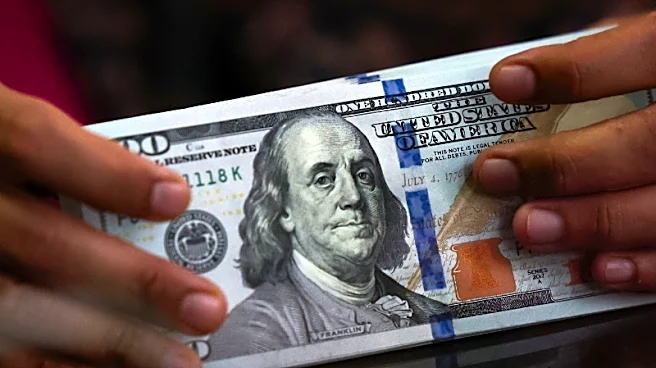
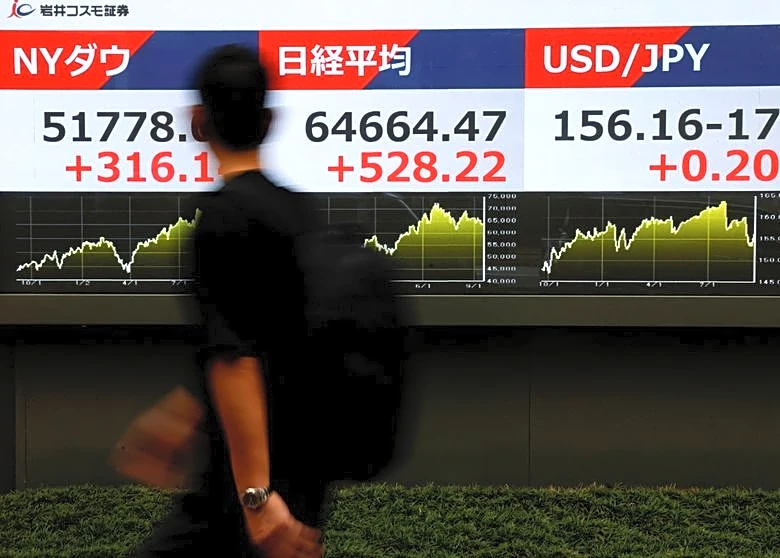
repercussions across global markets. Experts suggest that a renewed U.S. tightening cycle will likely lead to a stronger dollar, exert pressure on other currencies, and limit the ability of other central banks to ease their monetary policies. Additionally, higher U.S. interest rates could contribute to elevated global bond yields and negatively affect equity valuations and economic growth. The Fed's decision aligns with similar actions by other major developed-market central banks, such as the European Central Bank, which recently increased rates by 25 basis points, and the Bank of Japan, which is also expected to raise rates.
Why It's Important?
The Federal Reserve's decision to raise interest rates carries substantial importance for the global economy, particularly for the U.S. and its international partners. A stronger U.S. dollar, a direct consequence of higher rates, makes dollar-denominated commodities like oil and natural gas more expensive for countries using other currencies, potentially exacerbating inflation in those regions. This creates a challenging environment for central banks worldwide, as they face pressure to either follow the Fed's lead to protect their currencies or risk capital outflows to the U.S. in pursuit of higher yields. While some Asian economies like China and Thailand are experiencing deflationary pressures, others such as Australia and Japan are still battling inflation above their central bank targets, making a synchronized global hiking cycle less certain. The divergence in inflation conditions means that domestic economic factors may ultimately dictate the policy responses of individual central banks, even as a stronger dollar reduces their flexibility.
What's Next?
Following the Federal Reserve's interest rate hike, global markets are expected to continue adjusting to the implications of a stronger dollar and potentially higher U.S. Treasury yields. Other central banks, particularly those in developed markets, will likely continue to evaluate their monetary policies in response to their domestic inflation conditions and the Fed's actions. While some, like the Bank of Japan, are anticipated to follow with rate increases, others may prioritize domestic economic stability over mechanically mirroring the Fed. The ongoing situation in the Middle East, which has contributed to spiraling oil prices, will remain a critical factor influencing global inflation and, consequently, central bank decisions. Investors will be closely watching for further signals from the Fed regarding future rate hikes and the responses of other major central banks to these evolving economic pressures.
Beyond the Headlines
The Federal Reserve's tightening of monetary policy extends beyond immediate market reactions, touching upon deeper economic and geopolitical implications. The strengthening dollar could intensify economic disparities between nations, potentially straining international trade relations as imported goods become more costly for countries with weaker currencies. This could also lead to increased debt burdens for nations with dollar-denominated loans. Furthermore, the pressure on other central banks to raise rates, even if their domestic economies are not robust enough to withstand such measures, highlights the interconnectedness of the global financial system and the significant influence of U.S. monetary policy. The long-term shift towards higher interest rates could also re-evaluate investment strategies globally, potentially favoring fixed-income assets over equities and impacting corporate financing costs, thereby influencing global economic growth trajectories.