







What's Happening?
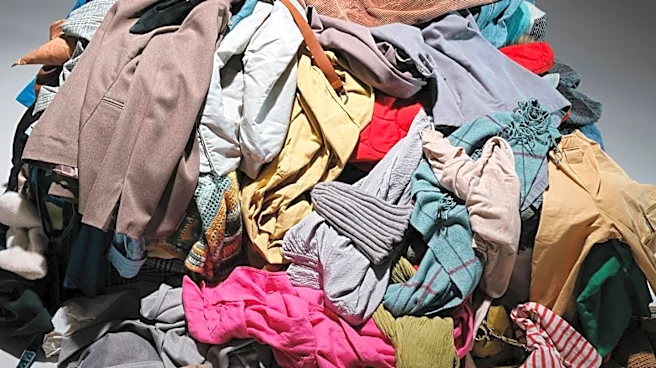
California has passed the Responsible Textile Recovery Act, a new state law designed to shift the financial burden of textile waste from taxpayers to clothing manufacturers and distributors. The legislation addresses the significant issue of 1.2 million
tons of textiles being discarded annually in California. Under this new act, fast fashion brands and other clothing businesses are now mandated to finance and organize the collection, sorting, and recycling of used garments and textiles. State regulators at CalRecycle are currently conducting compliance workshops to guide businesses through the implementation of the law. Joanne Brasch of the California Product Stewardship Council highlighted that the law holds fast fashion brands accountable for their contribution to fabric waste, aiming to establish a comprehensive recycling infrastructure across the state. This initiative marks a significant step in addressing the environmental impact of the fashion industry.
Why It's Important?
This legislation is crucial for several reasons, primarily its potential to revolutionize waste management within the U.S. fashion industry. By making manufacturers responsible for the end-of-life cycle of their products, California is setting a precedent that could influence other states and potentially lead to federal regulations. This shift incentivizes brands to adopt more sustainable production practices, such as using durable materials and designing for recyclability, to reduce their financial obligations. Consumers may see an expansion of textile recycling options, making it easier to dispose of old clothes responsibly. Economically, the law could spur innovation in textile recycling technologies and create new jobs in the green economy sector. However, it also poses a challenge for fast fashion companies, which may face increased operational costs, potentially leading to higher prices for consumers or a restructuring of their business models to minimize waste. This move underscores a growing national focus on producer responsibility and circular economy principles.
What's Next?
As state regulators at CalRecycle continue to hold compliance workshops, the immediate next steps involve the establishment and rollout of the new textile recycling infrastructure across California. Businesses, particularly fast fashion brands, will need to develop and implement systems for funding and managing the collection, sorting, and recycling of used garments. This could involve partnerships with existing recycling facilities, investment in new technologies, or the creation of brand-specific take-back programs. Consumers can expect to see new avenues for textile disposal, such as designated drop-off points or mail-in options. The success of California's Responsible Textile Recovery Act will likely be closely watched by other states and environmental advocacy groups, potentially leading to similar legislative efforts nationwide. The long-term impact will depend on the effectiveness of the new infrastructure and the industry's adaptation to these new responsibilities.
Beyond the Headlines
The California Responsible Textile Recovery Act delves deeper than just waste management; it challenges the fundamental business model of fast fashion, which thrives on rapid production and consumption. By imposing financial responsibility for textile waste, the law implicitly encourages a re-evaluation of product longevity and material choices. This could lead to a cultural shift where consumers are more aware of the environmental footprint of their clothing purchases and demand more sustainable options. The legislation also highlights the ethical dimension of consumption, pushing brands to consider the full lifecycle impact of their products rather than just their initial sale. This could foster greater transparency in supply chains and promote a more circular economy, where resources are kept in use for as long as possible. Ultimately, this act could redefine the relationship between fashion, commerce, and environmental stewardship in the U.S.