





What's Happening?
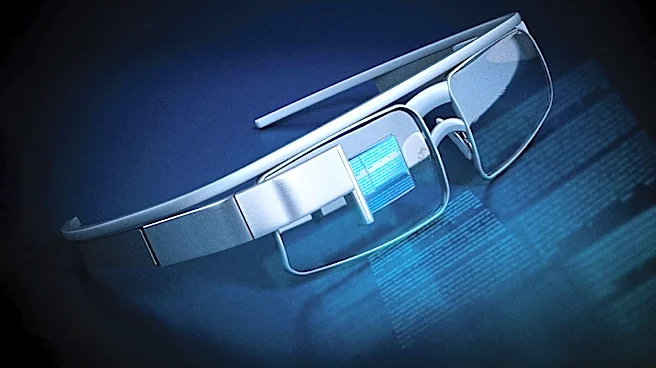
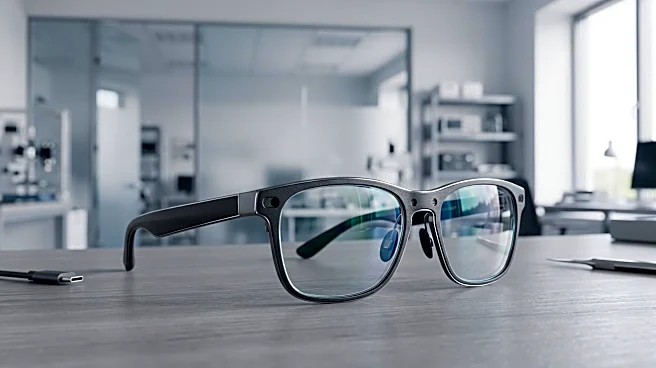
Snap's new Specs AR glasses are designed to provide travelers with a hands-free navigation experience by overlaying digital content onto their view of the physical world. These augmented reality glasses display directions, translations, and other travel information
directly in a transparent waveguide display. This technology aims to reduce the need for travelers to constantly check their phones for maps and apps, allowing them to remain more engaged with their surroundings. The Specs feature a 51-degree field of view and can display 16 million colors, offering a viewing experience comparable to a 115-inch screen from about 10 feet away. The glasses also incorporate voice controls, hand tracking, and gesture recognition for natural interaction, along with built-in stereo speakers and microphones for audio functions. Adaptive electrochromic lenses adjust to changing light conditions, supporting all-day wear.
Why It's Important?
This development is significant for the travel and technology industries as it introduces a new paradigm for how individuals interact with digital information while exploring new environments. By offering hands-free navigation and translation, Snap's Specs could enhance the travel experience, making it more immersive and less reliant on traditional smartphone use. This shift could lead to increased adoption of augmented reality devices for practical, everyday applications, potentially influencing how other tech companies approach wearable technology. For travelers, it promises a more seamless journey, reducing distractions and allowing for greater appreciation of their surroundings. The integration of AI and AR capabilities in a wearable device also highlights a growing trend towards more intuitive and context-aware personal technology, which could impact various sectors beyond travel, such as education and professional fields requiring on-the-go information access.
What's Next?
The introduction of Snap's Specs AR glasses suggests a future where augmented reality plays a more central role in daily activities, particularly for travelers. As the technology matures and becomes more widely adopted, it could spur further innovation in wearable tech, leading to more sophisticated features and broader applications. Other tech companies may accelerate their own AR development to compete in this emerging market, potentially leading to a new wave of smart glasses and similar devices. The success of Specs will likely depend on user adoption, comfort, and the seamless integration of digital information with real-world experiences. Future iterations could see enhanced AI capabilities, more diverse applications, and improved hardware, further blurring the lines between the digital and physical worlds for consumers.
Beyond the Headlines
The emergence of AR glasses like Snap's Specs raises deeper questions about the future of human-computer interaction and our relationship with digital information. By integrating digital overlays directly into our field of vision, these devices could fundamentally alter how we perceive and interact with our environment. This technology could lead to a more 'always-on' information access, potentially impacting cognitive processes and attention spans. Ethical considerations regarding privacy, data collection, and the potential for digital distractions in real-world settings will become increasingly important. Furthermore, the widespread adoption of such devices could influence urban planning, public spaces, and even social etiquette, as individuals navigate a world where digital information is constantly present in their visual field. The long-term societal implications of such pervasive augmented reality are yet to be fully understood.