






What's Happening?
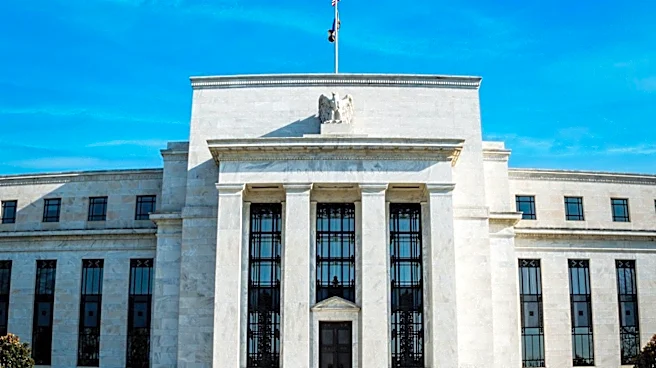
Arthur Hayes, Chief Investment Officer of Maelstrom, has stated that the upcoming December Federal Open Market Committee (FOMC) meeting is expected to significantly influence market sentiment. Hayes anticipates a resumption of selling pressure on the Nasdaq
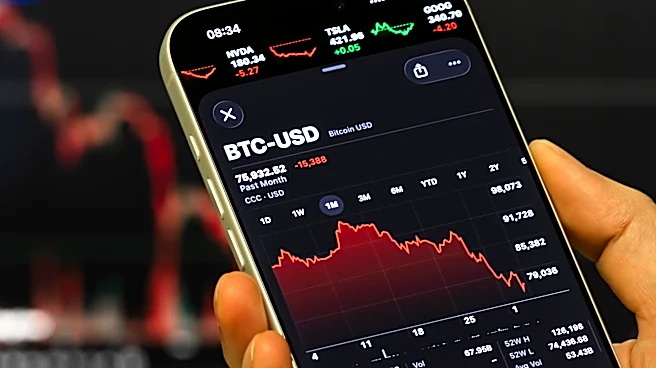
index and technology stocks, which he believes will subsequently weigh down Bitcoin's performance. He expressed a desire to observe market signals indicating a rise in gold prices alongside a decline in the Nasdaq. Hayes also characterized a recent U.S. bank failure as a minor market fluctuation. His assessment suggests that while further Federal Reserve rate hikes might cause short-term market pain, a bailout is ultimately likely. The central question, according to Hayes, is the extent of market pain required before policymakers initiate monetary easing.
Why It's Important?
This prediction is important for U.S. financial markets, particularly for investors in technology stocks and cryptocurrencies like Bitcoin. A downturn in the Nasdaq, a key indicator for the tech sector, could signal broader economic concerns and impact investment portfolios. The interconnectedness of tech stocks and Bitcoin, as highlighted by Hayes, suggests that monetary policy decisions by the Federal Reserve have far-reaching effects beyond traditional financial instruments. The potential for continued rate hikes and the subsequent market pain, even if followed by a bailout, underscores the volatility and uncertainty facing investors. Hayes's perspective emphasizes the critical role of the Federal Reserve's actions in shaping market dynamics and investor confidence.
What's Next?
The immediate focus will be on the Federal Reserve's decisions at the December FOMC meeting. Market participants will closely monitor any indications regarding interest rate adjustments or changes in monetary policy. Should the Federal Reserve adopt a hawkish stance, as implied by Hayes's concerns about further rate hikes, it could trigger the anticipated selling pressure on tech stocks and Bitcoin. Conversely, any signals of monetary easing or a less aggressive approach could alleviate some of the predicted market pain. Investors will also be watching for market signals such as gold price movements and Nasdaq performance to gauge the accuracy of Hayes's predictions and adjust their strategies accordingly.
Beyond the Headlines
Hayes's commentary touches upon a deeper theme of market resilience and the role of central bank intervention. His belief that a bailout will eventually occur, despite short-term pain, reflects a common sentiment among some market observers regarding the 'Fed put'—the idea that the Federal Reserve will intervene to prevent severe market downturns. This perspective raises questions about moral hazard and the long-term implications of repeated interventions on market discipline and risk-taking behavior. The interplay between traditional financial markets (like the Nasdaq) and emerging assets (like Bitcoin) also highlights the evolving landscape of global finance and the increasing influence of macroeconomic policies on diverse asset classes.