



What's Happening?
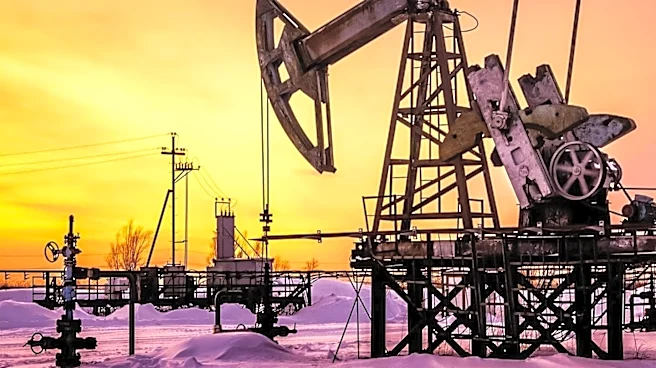
Russia has commenced commercial oil exports from Rosneft's Vostok Oil project, a significant Arctic development. This move is intended to boost Russia's crude production, which has faced delays and sanctions, and to compete with the U.S. shale boom that
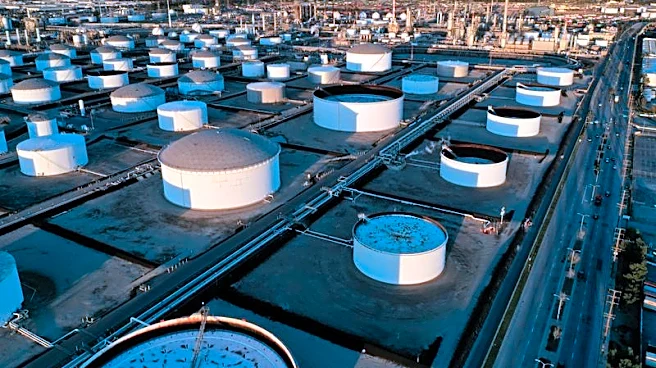
has positioned the U.S. as the world's largest crude producer. Rosneft began loading crude onto specialized ice-class tankers at its new Bukhta Sever terminal on the Taimyr Peninsula in September. While the project was initially envisioned to produce up to 2 million barrels per day, current exports are significantly lower, with industry sources expecting an average of about 150,000 bpd this year, primarily from Rosneft's mature Vankor fields. Rosneft aims to increase exports to approximately 600,000 bpd by the second half of 2027 and reach 1 million bpd by 2030 as development of northern greenfield assets, particularly Payakha, progresses. The Vostok Oil project encompasses 13 fields with an estimated 50 billion barrels of low-sulfur crude and connects to Bukhta Sever via a 790-kilometer pipeline and a planned 100-tank storage hub. Western sanctions imposed after 2022 led to the departure of key international investors, forcing Rosneft to rely on domestic financing and asset sales, causing project delays. Despite these setbacks, the project is strategically vital, offering a secure export outlet insulated from drone strikes targeting Russia's Baltic and Black Sea infrastructure.
Why It's Important?
The initiation of commercial exports from Russia's Vostok Oil project holds significant implications for the global energy market and, by extension, for the U.S. The U.S. has solidified its position as the world's largest crude producer, largely due to its shale boom, with U.S. oil and condensate output averaging nearly 13.6 million bpd in 2025 compared to Russia's 9.9 million bpd. Russia's push to increase its oil production through Vostok Oil represents a direct challenge to this U.S. dominance and could intensify competition in global oil markets. Increased Russian supply, particularly from a project designed to be resilient against sanctions and geopolitical disruptions, could influence international oil prices, potentially affecting U.S. energy companies and consumers. Furthermore, the project's strategic importance for Russia, providing a secure export route, highlights ongoing geopolitical tensions and the weaponization of energy resources. For the U.S., this development underscores the need for continued vigilance in energy policy, diversification of supply, and strategic alliances to maintain energy security and economic stability in a volatile global landscape.
What's Next?
Rosneft plans to gradually ramp up exports from the Vostok Oil project, targeting approximately 600,000 bpd by the second half of 2027 and 1 million bpd by 2030. This will depend on the continued development of its northern greenfield assets, particularly Payakha. The company will likely focus on securing new buyers for its unnamed crude grade, as initial buyers were not disclosed. The project's long-term success will also hinge on its ability to overcome the lingering effects of Western sanctions and attract necessary investment and technology for full-scale development. The U.S. and its allies will likely monitor the project's progress and its impact on global oil markets, potentially adjusting sanctions or energy policies in response. The strategic insulation of the Bukhta Sever terminal from drone strikes suggests Russia's intent to maintain robust export capabilities despite ongoing conflicts, which could influence future geopolitical strategies related to energy infrastructure and security.
Beyond the Headlines
The Vostok Oil project's launch transcends mere economic competition; it represents a deeper geopolitical struggle for influence and resilience in the global energy landscape. The project's design to be insulated from drone strikes highlights the increasing vulnerability of energy infrastructure in an era of modern warfare and geopolitical instability. For the U.S., this underscores the importance of not only domestic energy production but also the security of global energy supply chains and the need to counter efforts by rival nations to gain strategic advantages through energy dominance. The reliance on domestic financing and asset sales by Rosneft due to Western sanctions also illustrates the complex interplay between economic pressure and national strategic imperatives. This situation could accelerate the global shift towards diversifying energy sources and routes, potentially impacting long-term investment in fossil fuels versus renewable energy, and influencing international cooperation on energy security and climate change initiatives.