
What's Happening?
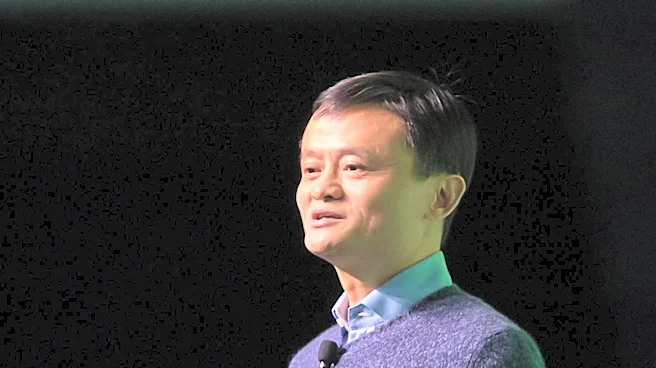
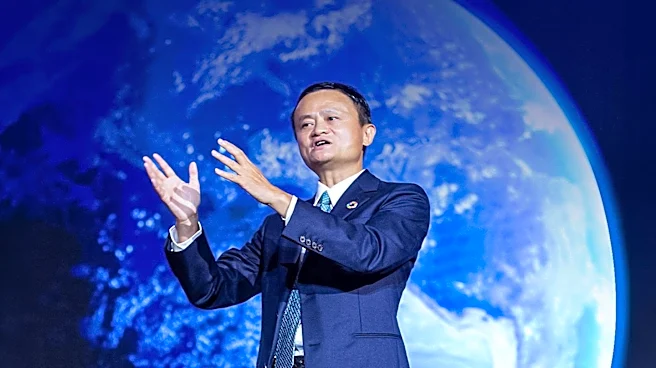
Ant Group Co., the Chinese fintech giant founded by billionaire Jack Ma, has spearheaded a $100 million investment in Simplexity Robotics, a Chinese physical artificial intelligence startup specializing
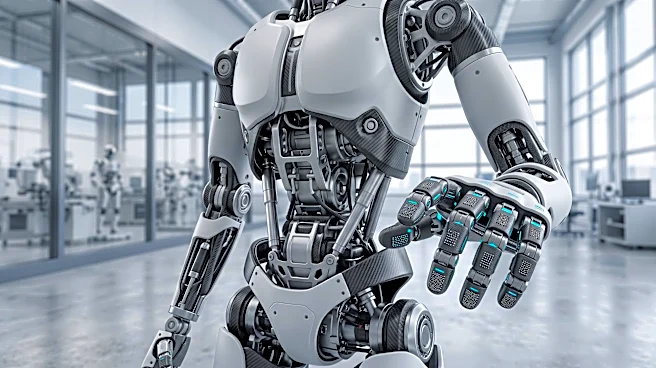
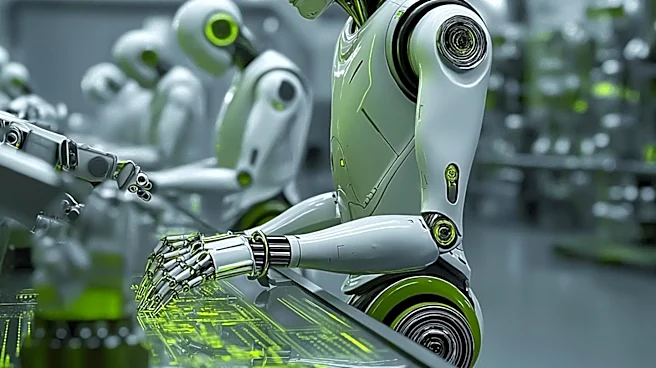
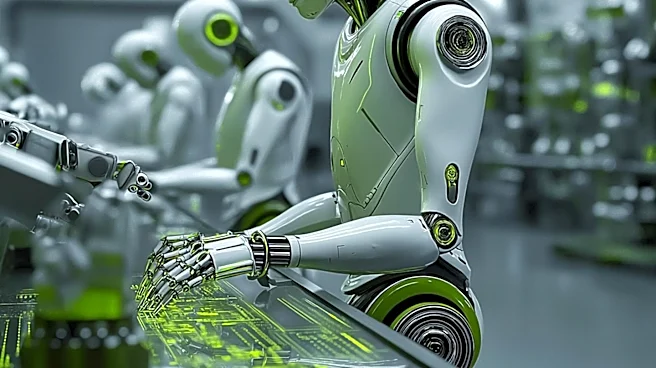
in humanoid robots. This pre-Series A funding round values Simplexity at $1.6 billion, according to Wang Kai, the company's chairman and co-founder. The investment is part of Ant Group's broader strategy to back China's rapidly expanding humanoid robot industry. Simplexity, a relatively young company, achieved unicorn status in March, just months after its inception, having raised $289.3 million in its initial six months. The new capital is intended to facilitate the transition of Simplexity's robots from laboratory development to large-scale commercial deployment. Simplexity focuses on embodied AI, which involves the integration of software and hardware to enable robots to perceive, move, and interact with physical objects. This investment marks another in a series of humanoid-related ventures for Ant Group, which began investing in the sector in early 2025 and has since completed approximately a dozen deals, including investments in robot manufacturers like Unitree and Galaxea, as well as component and software startups such as Linkerbot. Ant Group also develops its own robots through Robbyant, an embodied AI unit that unveiled its first humanoid robot in September 2025.
Why It's Important?
This significant investment by Ant Group into Simplexity Robotics underscores a growing trend of Chinese technology companies channeling substantial capital into robot startups, aligning with Beijing's national priority to advance embodied AI. The move reflects a strategic bet by investors on the imminent integration of humanoid machines into various sectors, including factories, warehouses, and homes. For the U.S., this development highlights the intensifying global competition in artificial intelligence and robotics. China's aggressive push in this domain could lead to advancements that challenge U.S. technological leadership and market share in these critical emerging industries. The commercialization of humanoid robots could transform global supply chains, manufacturing processes, and labor markets, potentially impacting U.S. businesses and workers. Furthermore, the rapid progress in embodied AI in China could have implications for national security and technological sovereignty, as advanced robotics become increasingly intertwined with defense and critical infrastructure. U.S. policymakers and industry leaders will need to closely monitor these developments to assess their competitive implications and formulate appropriate responses to maintain technological competitiveness and address potential economic and strategic shifts.
What's Next?
The immediate next step for Simplexity Robotics is to utilize the $100 million investment to scale up the commercial application of its humanoid robots, moving them from research and development into practical, large-scale use. This will likely involve further refinement of their embodied AI technologies and manufacturing processes. For Ant Group, this investment signals a continued expansion of its portfolio within the robotics and AI sectors, suggesting more such investments are probable as it seeks to capitalize on China's national push for embodied AI. The broader trend indicates that Chinese technology groups will likely continue to pour money into robot startups, driven by government support and the anticipation of widespread adoption of humanoid machines in various industries. This could lead to a rapid acceleration of robotic capabilities and deployment within China, potentially setting new benchmarks for automation and efficiency. U.S. companies and research institutions will need to observe these advancements closely, as they could influence global standards and competitive landscapes in robotics and AI.
Beyond the Headlines
The investment by Ant Group into Simplexity Robotics carries deeper implications beyond immediate commercial gains. It reflects a broader strategic vision within China to achieve technological self-sufficiency and leadership in critical emerging technologies, particularly artificial intelligence and robotics. This national imperative, backed by significant government and private sector funding, could lead to a bifurcation of global technological ecosystems, with distinct standards and supply chains emerging in the U.S. and China. Ethically, the widespread deployment of humanoid robots raises questions about job displacement, the nature of work, and the societal impact of increasingly autonomous machines. Legal frameworks will need to evolve to address issues such as liability, data privacy, and the ethical use of AI in physical forms. Culturally, the integration of humanoid robots into daily life could alter human-machine interactions and societal norms. The long-term shift could see a significant portion of labor automated, necessitating new economic models and social safety nets. For the U.S., understanding these deeper implications is crucial for developing policies that foster innovation while mitigating potential risks and ensuring a competitive stance in the evolving global technological landscape.