



What's Happening?
WWE's recent Monday Night Raw broadcast featured a heavily censored segment involving a parking lot attack on Jimmy and Jey Uso by Royce Keys and OTM. The pre-taped segment, intended to establish the new heel faction as serious threats, was marred by extensive
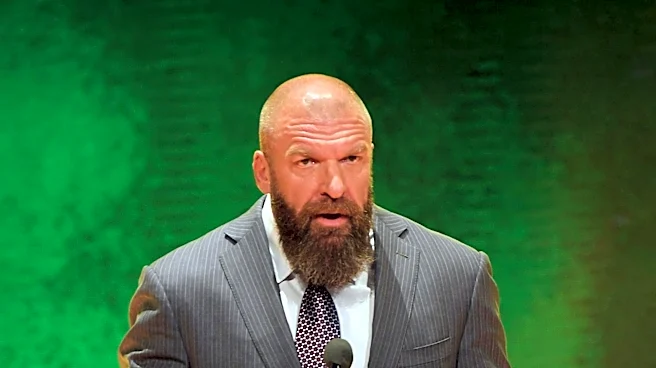
blurring of blood, making it difficult for viewers to discern the intended intensity. This censorship included blurring a pool of blood on the ground, which viewers found disconcerting and undermined the segment's dramatic impact. The creative team, including Chief Content Officer Paul Levesque (Triple H), reportedly expressed dissatisfaction with the broadcast version, with Levesque tweeting an uncensored cut and the company's YouTube channel releasing a version with minimal blurring. This incident highlights an ongoing issue with censorship in WWE programming, particularly since its content has become available on platforms like Netflix.
Why It's Important?
The excessive censorship of a key dramatic moment in WWE programming carries significant implications for the company's creative direction and audience engagement. By blurring out blood, WWE risks alienating its adult fanbase who appreciate the grittier aspects of professional wrestling, reminiscent of eras like the Attitude Era. While the company aims to be family-friendly, the current approach to censorship, especially in pre-taped segments, is perceived as awkward and counterproductive. It suggests a disconnect between the creative vision for a segment and its final broadcast presentation, potentially diminishing the impact of storylines and character development. This situation could lead to a decline in viewer satisfaction and a questioning of the authenticity of WWE's product, as fans expect a certain level of realism and intensity in their entertainment.
What's Next?
WWE and Netflix will likely need to address the ongoing censorship issues to ensure a more consistent and impactful viewing experience. The current situation, where creative teams release uncensored versions after broadcast, indicates an internal struggle over content standards. Discussions between WWE management, potentially led by Paul Levesque, and Netflix executives could lead to clearer guidelines regarding the depiction of violence and blood. This might involve establishing specific parameters for what can be shown, or a more nuanced approach to editing that doesn't compromise the narrative integrity. Failure to resolve these issues could lead to continued viewer frustration and potentially impact viewership numbers, especially as streaming platforms become a primary distribution channel for WWE content. The company may need to decide whether to fully embrace a more sanitized product or find a way to incorporate elements of realism without resorting to jarring censorship.
Beyond the Headlines
The debate over censorship in WWE extends beyond mere content guidelines; it touches upon the evolving nature of entertainment consumption and the balance between creative freedom and corporate responsibility. In an era where diverse content is readily available, the heavy-handed blurring of blood in a professional wrestling show raises questions about the perceived maturity of the audience and the company's brand identity. It also highlights the challenges of adapting traditional entertainment forms for modern platforms with varying content policies. The incident could spark broader conversations within the entertainment industry about how to present intense or controversial content in a way that respects both artistic intent and audience expectations, without resorting to methods that detract from the viewing experience. The long-term implications could influence how other sports entertainment and action-oriented programming approach content moderation in the digital age.