




What's Happening?
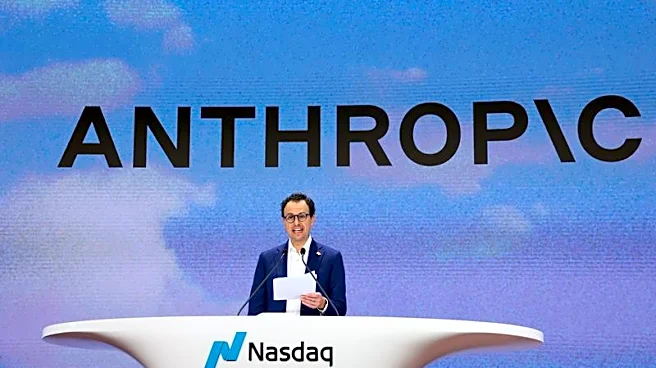
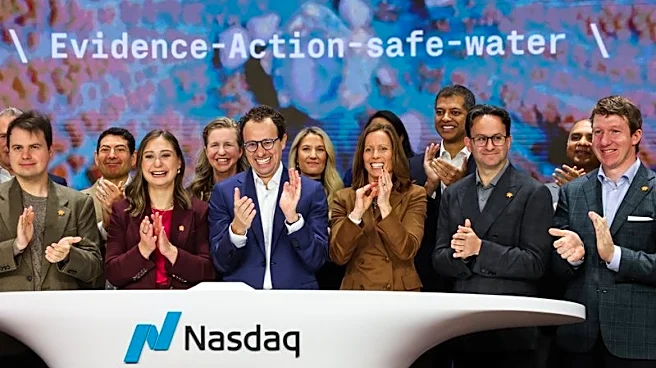
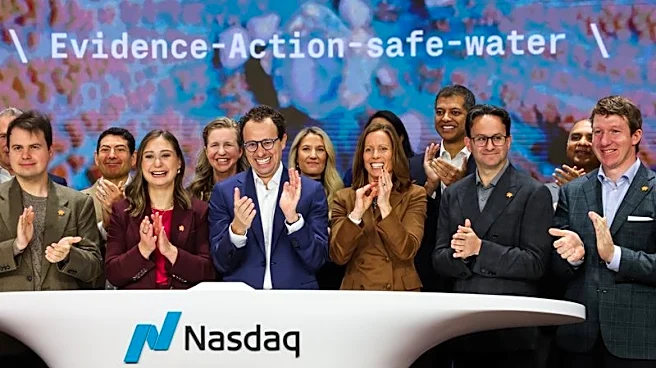
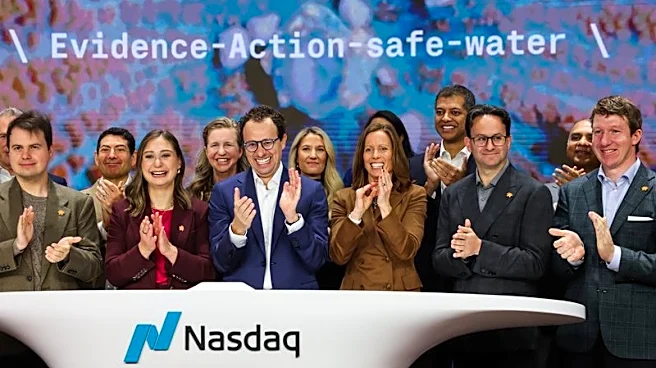
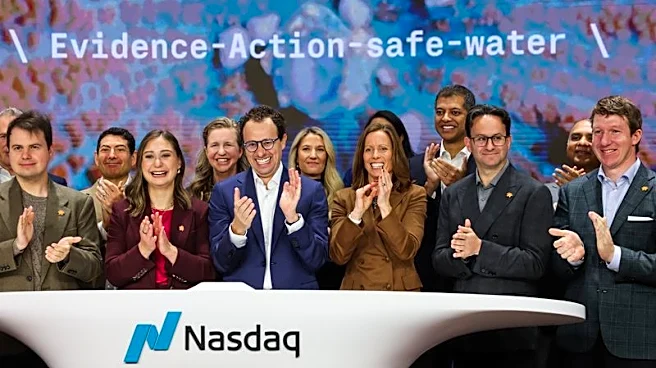
Anthropic, an AI company, recently listed on Nasdaq with a market capitalization of approximately $1.8 trillion. This event has brought significant attention to its co-founder, Dario Amodei. The article highlights Amodei's early career, particularly his tenure
at Baidu's Silicon Valley Artificial Intelligence Lab (SVAIL) in 2014. Amodei, who initially pursued physics and biophysics, transitioned into AI research after being recruited by Gregory Diamos, a former NVIDIA expert at SVAIL. During his time at Baidu, Amodei led the Deep Speech 2 voice recognition project. This project, which involved extensive data and training, demonstrated the 'Scaling Laws' for AI models, a concept that later became foundational in the field. Amodei's work at Baidu laid the groundwork for his subsequent contributions to AI, including his leadership in developing GPT-2 and GPT-3 at OpenAI before co-founding Anthropic.
Why It's Important?
Dario Amodei's journey from Baidu's SVAIL to co-founding Anthropic underscores the interconnected and evolving nature of the global AI research landscape. His early work on 'Scaling Laws' at Baidu was a pivotal moment, demonstrating that increasing model size, data, and computational power could lead to consistent improvements in AI performance. This principle has since become a cornerstone of modern large language models, impacting the development of advanced AI systems globally. The success of Anthropic, now a trillion-dollar company, highlights the immense commercial and technological value derived from these foundational research efforts. The narrative also reveals the competitive talent acquisition strategies in the AI sector, with companies like Baidu and later OpenAI attracting top researchers from diverse scientific backgrounds. This historical context is crucial for understanding the rapid advancements and the current competitive dynamics within the U.S. and global AI industry.
What's Next?
Anthropic's recent Nasdaq listing places it under increased scrutiny regarding its financial performance, including revenue growth, profit margins, and computational costs. The company faces ongoing pressure from competitors like OpenAI and Google, which continue to iterate on their AI products. The open-source AI model community also provides alternatives, influencing customer purchasing decisions based on factors beyond just model leadership, such as price, stability, and integration with existing business operations. The broader AI industry is grappling with the challenge of translating significant AI investments into tangible business outcomes, as highlighted by industry leaders questioning the return on investment for increasing token usage without corresponding revenue or profit growth. This suggests a future focus on developing 'intelligent organizations' where AI is deeply integrated into business processes to drive operational efficiency and profitability.
Beyond the Headlines
The article touches upon the complex public perception of Dario Amodei and Anthropic, particularly concerning AI safety and commercialization ethics. Amodei's strong warnings about AI's potential to displace white-collar jobs and his advocacy for stringent safety measures have drawn criticism from industry figures like NVIDIA's CEO, Jensen Huang, who accused Anthropic of 'fear-mongering' to gain regulatory advantage. This tension highlights a fundamental debate within the AI community: balancing rapid innovation and commercialization with ethical considerations and long-term societal impact. Allegations of copyright infringement, where Anthropic reportedly used vast amounts of copyrighted material for training data, and accusations of 'industrial-scale distillation' against competitors, further complicate its image. These controversies underscore the ethical and legal challenges inherent in developing and deploying powerful AI technologies, raising questions about data sourcing, intellectual property, and fair competition in the burgeoning AI market.