





What's Happening?
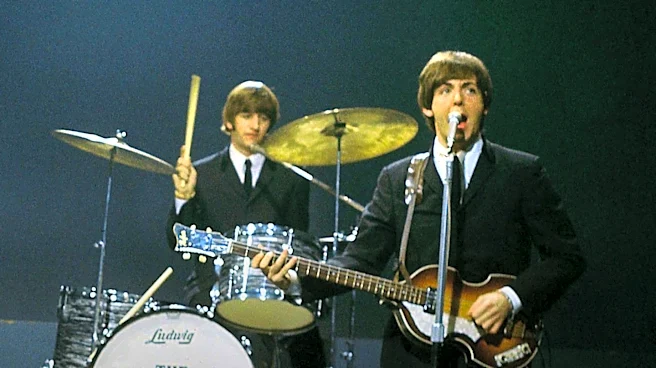
Paul McCartney, a co-founder of The Beatles, has amassed an estimated fortune of $1.4 billion, making him the world's third-richest musician, according to Forbes. This financial success follows a childhood described as 'poor' in Liverpool, where his father
sold cotton and his mother worked as a nurse. McCartney's wealth is largely attributed to decades of touring and his business acumen in music publishing. In 1969, he established MPL Communications to retain ownership of his solo songs and recordings, ensuring a larger share of royalties. MPL Communications, his largest business, is valued at least at $250 million and holds a catalog of thousands of titles, including the Broadway score for 'Grease' and the holiday standard 'Blue Christmas.' His share of The Beatles' songwriting copyrights alone is estimated to be worth over $200 million, generating at least $10 million annually. McCartney also successfully reclaimed his U.S. publishing rights for songs co-written with John Lennon, which were previously owned by Michael Jackson.
Why It's Important?
McCartney's financial journey highlights the significant long-term value of intellectual property ownership in the music industry. His decision to found MPL Communications in 1969, while still with The Beatles, demonstrates a foresight that allowed him to control his solo work and secure substantial future royalties. This move contrasts with the common practice of artists losing control over their early works to publishers, as was the case with many Beatles songs initially. The ongoing revenue from his songwriting copyrights, even decades later, underscores the enduring economic power of classic music catalogs. Furthermore, his successful reclamation of U.S. publishing rights for his Beatles songs sets a precedent for artists seeking to regain control over their creative output under copyright law, potentially influencing how future generations of musicians manage their intellectual assets and negotiate with publishers.
What's Next?
The continued success of MPL Communications and McCartney's personal fortune suggest a sustained impact on the music publishing industry. As copyright laws evolve and artists become more aware of the financial implications of intellectual property, McCartney's model of retaining ownership could inspire more musicians to pursue similar strategies. The ongoing revenue from his extensive catalog ensures a lasting legacy and financial stability, potentially allowing for continued philanthropic efforts or investments. The value of music catalogs, as demonstrated by McCartney's holdings and the previous acquisition by Michael Jackson, indicates that these assets will remain highly sought after in the entertainment business, influencing future mergers, acquisitions, and artist-publisher relationships. The legal precedent set by his reclamation of U.S. publishing rights may also encourage other legacy artists to explore similar avenues.
Beyond the Headlines
McCartney's story transcends mere financial success; it illustrates a profound shift in artists' understanding and control over their creative output. His early decision to establish MPL Communications was not just a business move but a statement about artistic autonomy and the long-term value of intellectual property. This approach challenges the traditional power dynamics between artists and record labels/publishers, advocating for artists to be primary beneficiaries of their creations. The narrative also touches upon the cultural significance of music, where songs written decades ago continue to generate substantial income and cultural relevance. The legal battles over publishing rights, such as the one with Sony/ATV, highlight the complex legal landscape surrounding music ownership and the persistent efforts required for artists to secure their legacy and financial interests. This ongoing struggle for control over artistic works remains a critical ethical and legal dimension within the entertainment industry.