

What's Happening?
Ramon Laguarta serves as the CEO of PepsiCo, a prominent global leader in the food and beverage industry. The company boasts 23 brands, each generating over $1 billion in revenue. Laguarta's leadership has been noted through his engagements in various
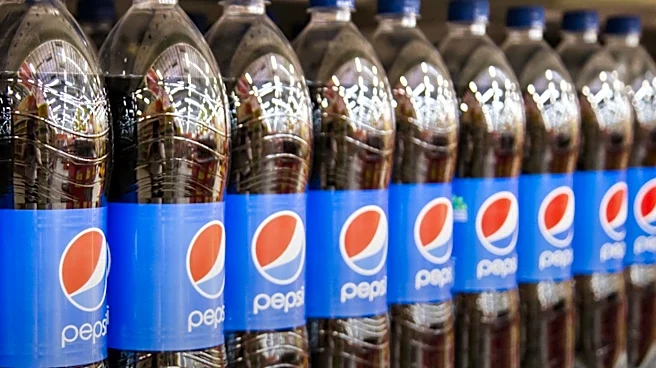
regions, including recent visits to China and Thailand. A recent financial analysis of PepsiCo indicates a base scenario fair value of $140.54 per share. The company's current Price-to-Earnings (P/E) ratio stands at 17.6. This valuation considers various financial metrics, including revenue growth projections, operating margins, sales to capital ratios, and terminal return on invested capital (ROIC). The analysis also factors in different scenarios—bad, base, and good—to assess potential future performance and stock valuation. PepsiCo's business encompasses snacks (Frito-Lay, Quaker) and beverages (Pepsi, Gatorade, Mountain Dew), distributed across approximately 200 countries, with the U.S. market accounting for 56% of its revenue.
Why It's Important?
PepsiCo's financial health and strategic direction under Ramon Laguarta's leadership are significant for several reasons. As a major player in the consumer goods sector, its performance can influence broader market trends and investor confidence in the food and beverage industry. The company's extensive global reach means its operational strategies and financial outcomes have implications for international markets, supply chains, and consumer spending habits worldwide. For U.S. investors, the fair value assessment of $140.54 provides a benchmark for evaluating their holdings and making informed investment decisions. The company's consistent dividend increases, with 2026 marking the 54th consecutive raise, highlight its commitment to shareholder returns, which is crucial for income-focused investors. Furthermore, PepsiCo's ability to manage input costs and maintain margins, especially in North America, directly impacts its profitability and market competitiveness, affecting both its workforce and the broader economic landscape.
What's Next?
PepsiCo is expected to continue navigating market pressures, including input costs and margin challenges, particularly in North America. The company's future performance will likely depend on its ability to implement cost-cutting measures effectively and sustain organic growth. Investors will be closely watching for updates on revenue growth, operating margins, and earnings per share (EPS) projections, especially given the recent adjustment of 2026 core EPS growth guidance. The company's strategy for international markets, particularly in regions like EMEA and Latin America, will also be critical for driving overall growth. Continued share buybacks, though currently modest, could also influence shareholder value. Future dividend growth will be a key indicator of the company's financial stability and commitment to returning capital to shareholders, with analysts assessing whether dividend increases can keep pace with EPS growth.
Beyond the Headlines
Beyond the immediate financial metrics, PepsiCo's long-term sustainability under Ramon Laguarta's leadership involves adapting to evolving consumer preferences, particularly the growing demand for healthier options and sustainable practices. The company's vast portfolio of brands presents both opportunities and challenges in this regard, requiring continuous innovation and strategic brand management. Ethical considerations related to sourcing, environmental impact, and labor practices across its global operations are increasingly under scrutiny, influencing brand reputation and consumer loyalty. Legal and regulatory landscapes, especially concerning food labeling, marketing, and environmental regulations, will also play a significant role in shaping PepsiCo's future strategies and operational costs. The company's ability to maintain its wide economic moat and low uncertainty rating, as noted by Morningstar, will depend on its agility in responding to these complex and interconnected factors.