




What's Happening?
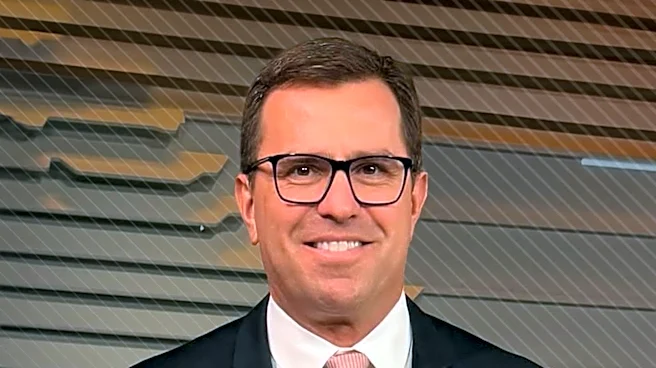
During a live broadcast of Fox 2's 'Good Day Detroit,' news anchor Ryan Ermanni found it difficult to maintain his composure after co-host Deena Centofanti posed an unintentionally risqué question. The discussion revolved around the History Channel survival
show 'Alone,' where contestants hunt for food. Centofanti was explaining that beaver is a highly sought-after animal for its fat content on the show. She then directly asked Ermanni, 'Ryan, would you — do you think you could eat beaver? 'Cause it's fat and then it's meat.' Ermanni reacted with laughter, putting his head in his hands, while meteorologist Derek Kevra confirmed the importance of beaver in the survival context. Despite his struggle to recover, Ermanni later told Centofanti she was 'really funny,' and both anchors shared the clip on social media, acknowledging the humorous on-air exchange.
Why It's Important?
This incident highlights the unpredictable nature of live television and the potential for innocent remarks to be misinterpreted due to double entendres. For news anchors, maintaining professionalism and composure on air is paramount, yet moments of genuine human reaction, like Ermanni's laughter, can sometimes break through. Such occurrences can humanize news personalities, making them more relatable to viewers, but also carry the risk of distracting from the intended content. In the context of local news, these viral moments can generate significant social media engagement and broader public attention, as evidenced by both anchors sharing the clip. It underscores how quickly content can spread and be recontextualized in the digital age, turning a minor on-air gaffe into a widely shared and discussed event, potentially boosting the show's visibility, albeit for an unexpected reason.
What's Next?
The clip of the on-air exchange has already been shared on social media by both Ryan Ermanni and Deena Centofanti, suggesting it will continue to circulate and be discussed online. This viral moment may lead to increased viewership for 'Good Day Detroit' as people tune in to see if similar unscripted moments occur. It could also become a recurring topic of lighthearted banter among the co-hosts, potentially becoming an inside joke for their audience. For the anchors, such an incident can either be a one-off humorous event or contribute to a more relaxed and personable on-air dynamic. The station might embrace the unexpected popularity, or it could serve as a reminder of the need for careful phrasing in live broadcasts, even during seemingly innocuous discussions about survival shows. Ultimately, the immediate 'next' is continued online sharing and discussion, with potential long-term implications for the show's tone and the anchors' public personas.
Beyond the Headlines
Beyond the immediate humor, this incident touches upon the broader cultural phenomenon of unintentional innuendo and how language can be perceived differently based on context and individual interpretation. The word 'beaver,' while referring to an animal, also carries a slang connotation, which is what triggered the anchor's reaction. This highlights the challenges of communication in a diverse audience, where words can have multiple meanings. It also speaks to the evolving nature of broadcast journalism, where the line between formal news delivery and more casual, personality-driven interaction is increasingly blurred. The public's positive reception of such 'blooper' moments suggests a desire for authenticity and relatability from news personalities, moving away from overly rigid or formal presentations. This trend reflects a shift in media consumption, where viewers appreciate genuine human reactions, even if they involve a momentary lapse in composure, fostering a more intimate connection between broadcasters and their audience.