





What's Happening?
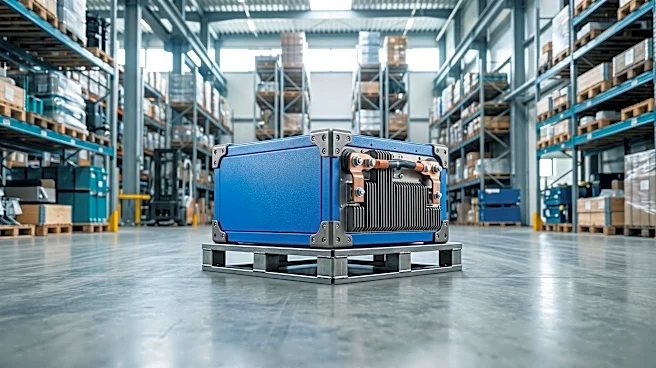
The market for electric stacker batteries is experiencing a shift towards lithium-ion (LiFePO4) technology, particularly for warehouse robotics and material handling equipment. While traditional lead-acid and GEL batteries remain available, LiFePO4 batteries offer
significant advantages in cycle life, charging efficiency, and maintenance. Prices for electric stacker batteries vary widely based on type and capacity, ranging from $350 for basic 12V GEL units to $3,800 for heavy-duty 48V industrial lithium packs. Lithium-ion batteries are noted for their ability to undergo opportunity charging during short breaks, allowing for extended operation across multiple shifts without the need for battery swapping. This contrasts with lead-acid batteries, which require rigid 8-hour charge and 8-hour cooling cycles.
Why It's Important?
The increasing adoption of lithium-ion batteries in electric stackers has significant implications for U.S. warehouse and logistics operations. The enhanced efficiency and longer lifespan of LiFePO4 batteries can lead to substantial reductions in operational costs, including lower utility bills due to higher energy efficiency and decreased labor for maintenance (e.g., no distilled water replenishment). The ability to opportunity charge means less downtime for equipment, directly increasing productivity in multi-shift environments. This shift can improve supply chain efficiency, a critical factor for the U.S. economy. While the initial investment for lithium-ion batteries is higher, the total cost of ownership over a 5-year period often favors lithium due to reduced replacement frequency and operational savings, making it a strategic investment for businesses aiming to optimize their material handling fleets.
What's Next?
The trend towards lithium-ion batteries in electric stackers is expected to continue, driven by their operational benefits and improving cost-effectiveness. Manufacturers will likely focus on further innovations in battery management systems (BMS) to enhance safety, performance, and integration with warehouse telematics. As more businesses recognize the long-term value, the demand for LiFePO4 solutions will grow, potentially leading to increased competition and further price reductions. Additionally, the industry may see more comprehensive solutions that include not just batteries but also smart charging infrastructure and integrated fleet management software to maximize the benefits of lithium-ion technology in warehouse environments. The need for proper counterweight ballast when converting from heavier lead-acid to lighter lithium packs will also remain a key consideration for safety and operational stability.
Beyond the Headlines
The shift to advanced battery technologies like LiFePO4 in industrial equipment reflects a broader movement towards electrification and automation in logistics. This transition is not just about power sources but also about creating more agile, efficient, and sustainable operational models. The reduced maintenance requirements and longer lifespan of lithium-ion batteries contribute to a lower environmental footprint by decreasing waste and the consumption of resources associated with frequent battery replacements. Furthermore, the data collection capabilities of smart BMS integrated with these batteries can provide valuable insights into equipment usage and performance, enabling predictive maintenance and further operational optimizations. This evolution in battery technology is a cornerstone of the modern, data-driven warehouse, impacting everything from labor allocation to energy management strategies.