


What's Happening?
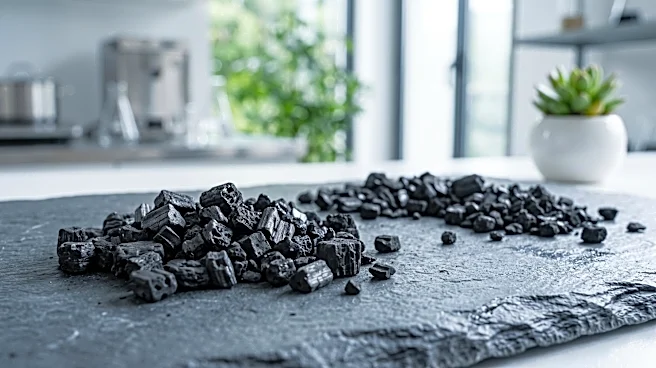
Plantd, a company known for manufacturing construction panels from perennial grass, has introduced a new biochar product line. This initiative transforms biomass waste generated during its panel production into a valuable soil amendment for the agricultural
industry. Previously, Plantd faced monthly waste removal costs of approximately $13,000 due to this biomass. Cofounder and CEO Nathan Silvernail identified biochar, a carbon-rich material used by farmers for millennia, as a solution to this waste problem. The company's biochar is marketed as a premium fertilizer that can reduce the need for other fertilizers, improve soil composition, and potentially sequester carbon. This move not only creates a new revenue stream for the North Carolina-based company but also advances its goal of achieving a completely closed-loop manufacturing system, where every part of the process becomes a product.
Why It's Important?
This development holds significant importance for both the U.S. construction and agricultural sectors. For construction, it demonstrates a viable model for waste reduction and resource efficiency, turning a costly byproduct into a profitable asset. This could inspire other manufacturers to explore similar circular economy approaches, reducing landfill burden and promoting sustainable building practices. In agriculture, Plantd's biochar offers farmers a high-quality soil amendment that can enhance crop health, improve water retention, and potentially contribute to carbon sequestration efforts. This aligns with growing demands for sustainable farming and could lead to reduced reliance on synthetic fertilizers, benefiting both environmental health and farmers' bottom lines. The innovation also highlights the potential for cross-industry solutions to environmental challenges, showcasing how waste from one sector can become a valuable resource for another, fostering economic and ecological benefits.
What's Next?
Plantd plans to further integrate its biochar production into its manufacturing operations, aiming for a zero-waste model where the biochar itself can generate energy for the company. While currently using grid power, the company intends to transition to solar and wind energy, with the gasification process of biomass into biochar serving as an additional energy source. This would significantly reduce operational costs and environmental footprint. Plantd is also working with agricultural solutions provider Qualterra, which has helped establish an initial customer base for the biochar. Future efforts will likely focus on expanding this customer base, further research into the biochar's long-term benefits for soil health and carbon sequestration, and potentially exploring carbon credit strategies. The company's vision is to create a fully self-sustaining manufacturing process, where the plants grown are processed, and the waste is converted into energy and valuable products.
Beyond the Headlines
Plantd's innovation extends beyond mere waste management; it represents a paradigm shift towards a truly circular economy in manufacturing. The concept of a 'zero-waste manufacturing model' where every byproduct is utilized challenges conventional industrial practices that often prioritize linear production and disposal. This approach has profound ethical implications, promoting responsible resource stewardship and minimizing environmental harm. Legally, the success of such models could influence future regulations and incentives for sustainable manufacturing, encouraging other companies to adopt similar closed-loop systems. Culturally, it reinforces the idea that waste is a design flaw, not an inevitability, fostering a mindset of innovation and resourcefulness. The integration of agriculture and manufacturing through biochar also highlights the interconnectedness of different sectors in achieving broader sustainability goals, potentially leading to new interdisciplinary collaborations and a more resilient economic landscape.