






What's Happening?
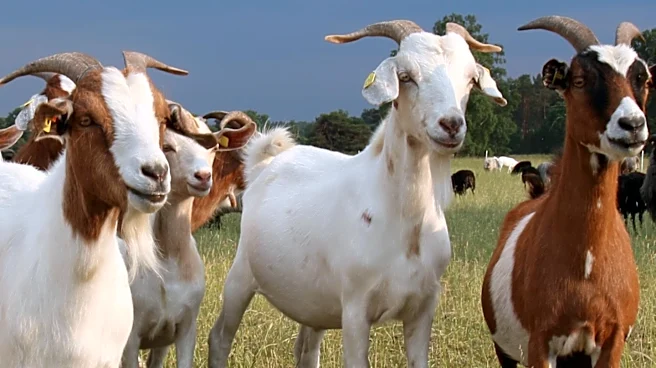
Pakistan's Prime Minister Shehbaz Sharif has approved a comprehensive plan aimed at significantly increasing the country's livestock exports. The strategy involves importing high-yield, superior-breed livestock, raising them in specialized farms, and
then exporting them. To facilitate this, the Prime Minister directed that imports of livestock for these specialized farms be duty-free. A modern animal-tagging system will be introduced to ensure that the livestock raised in these farms are indeed exported. The plan also includes restructuring the livestock sector along corporate lines, utilizing expertise from private-sector specialists for reforms. A key component of the initiative is the eradication of Foot-and-Mouth Disease (FMD) from the country, with authorities tasked to submit a roadmap with specific targets within two weeks. Additionally, international certification of slaughterhouses across Pakistan and third-party validation will be ensured to meet global standards. The Ministry of National Food Security and Research will collaborate with provincial governments to eliminate livestock diseases and improve the entire value chain for meat and livestock exports.
Why It's Important?
This initiative is significant for Pakistan's economy, as the livestock sector accounts for over 60% of its agricultural sector and 14.97% of the national economy, with substantial export potential. For the U.S., while directly impacting Pakistan, such developments in global agricultural trade can have indirect effects. Increased livestock exports from Pakistan could alter global supply chains for meat and related products, potentially influencing international market prices and competition. The focus on FMD eradication is particularly important, as animal diseases can disrupt global trade and pose biosecurity risks. A more stable and disease-free livestock sector in Pakistan could contribute to global food security and reduce the risk of disease transmission across borders, which is a concern for U.S. agricultural interests. Furthermore, the corporate restructuring and modernization efforts could serve as a model for other developing nations, potentially fostering more efficient and reliable agricultural trade partners for the U.S. in the long run.
What's Next?
Authorities in Pakistan are expected to submit a detailed roadmap for FMD eradication within two weeks, outlining specific targets and strategies. The implementation of duty-free imports for high-yield livestock and the establishment of specialized export farms will follow. The government will also proceed with international certification of slaughterhouses and introduce a modern animal-tagging system. The Ministry of National Food Security and Research will work closely with provincial governments to execute disease elimination programs and enhance the livestock value chain. The plan also includes a focus on feedlot farming, cold-chain infrastructure, de-boning, and value-added products, with a target to further increase meat exports by 2028. These steps indicate a sustained effort to transform Pakistan's livestock sector into a major export industry, with ongoing monitoring and adjustments expected as the plan progresses.
Beyond the Headlines
Beyond the economic and trade implications, this initiative touches upon broader issues of public health and food safety. The eradication of Foot-and-Mouth Disease is not only crucial for export market access but also for the health and welfare of animals within Pakistan, which can have ripple effects on human health through the 'One Health' approach. The emphasis on international certification and third-party validation for slaughterhouses highlights a commitment to global food safety standards, which is essential for building trust in international markets. This move could also lead to improved animal husbandry practices and veterinary services within Pakistan, benefiting rural communities that heavily rely on livestock. The corporate restructuring of the sector could also bring about technological advancements and better resource management, potentially addressing long-standing issues of small-scale farming and fragmented supply chains, thereby contributing to sustainable agricultural development and poverty reduction in the country.