







What's Happening?
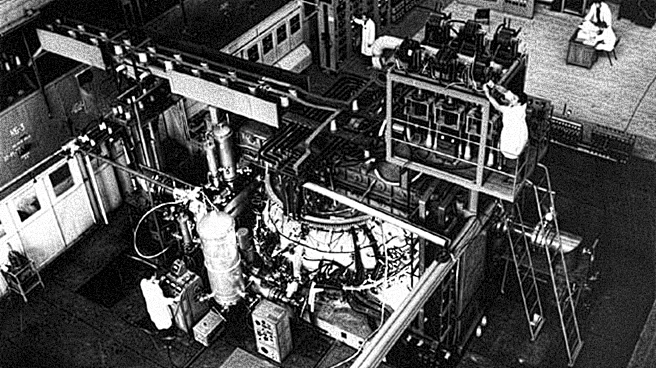
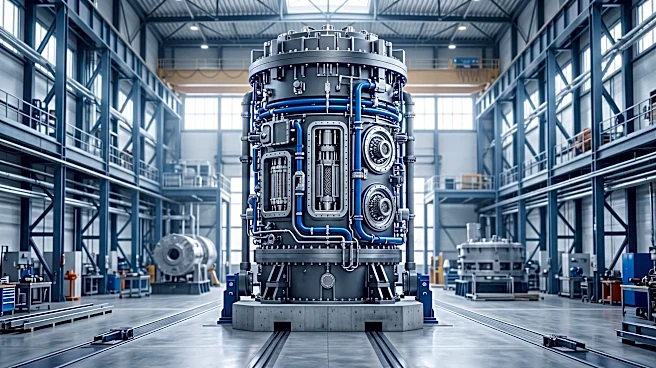
Marathon Fusion, an American fusion-energy company, has put forth a proposal to produce gold from mercury using neutrons generated during nuclear fusion. This process involves exposing a specific isotope of mercury to high-energy neutrons, which creates
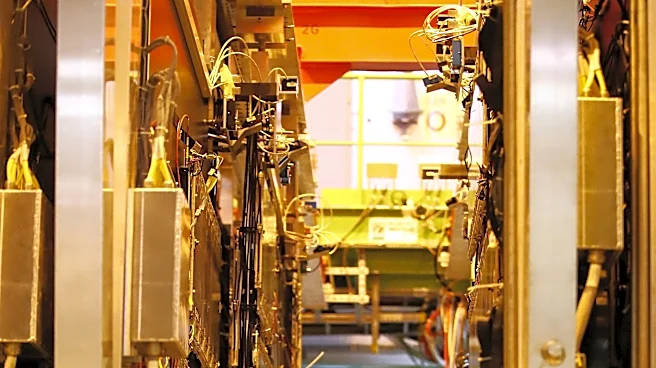
radioactive mercury-197. This radioactive isotope then decays into stable gold-197. The company envisions integrating this process into future fusion power plants, where gold could be generated as a byproduct of energy production. Their research paper, published in July 2025, explores the potential for producing substantial quantities of gold through this method. While the underlying nuclear process of transmutation has a scientific basis, as demonstrated by experiments at CERN where lead nuclei were transformed into gold, the commercial viability of Marathon Fusion's proposed application remains unproven. CERN's experiments, conducted between 2015 and 2018, produced only 29 picograms of gold, a quantity far too small for commercial value.
Why It's Important?
This development is significant because it explores a novel approach to gold production that could potentially shift the dynamics of the global gold market. If Marathon Fusion's method proves commercially viable, it could introduce a new source of gold supply, moving beyond traditional mining operations. This could have long-term implications for gold prices, potentially leading to downward pressure on international markets if substantial quantities of laboratory-made gold enter circulation. For the U.S. economy, a successful gold-manufacturing industry could generate export earnings, attract investment, and increase revenues for American businesses, potentially supporting the dollar. However, the actual impact on currency values would depend on the industry's overall contribution to the wider economy and other macroeconomic factors. The prospect also highlights the ongoing advancements in nuclear fusion technology and its potential applications beyond energy generation.
What's Next?
The immediate next steps for Marathon Fusion involve demonstrating the sustained production of gold, developing efficient recovery methods, and proving the process can be profitable after accounting for all production, processing, and handling costs. The company's projections of generating roughly two tonnes of gold annually from a one-gigawatt thermal power fusion plant remain theoretical. The commercialization of this process is contingent on significant advancements in fusion technology itself, as commercial fusion power plants are not yet an established source of electricity. Furthermore, the company must prove its proposed method can operate on an industrial scale. Future developments will likely involve further research, pilot projects, and significant investment to overcome the technological and economic hurdles associated with large-scale gold production via nuclear fusion.
Beyond the Headlines
Beyond the immediate economic implications, the potential for laboratory-produced gold raises deeper questions about the nature of value and scarcity. Gold has historically been valued for its rarity and the labor-intensive process of its extraction. If it can be manufactured, its intrinsic value might be re-evaluated, potentially altering its role as a safe-haven asset or a store of wealth. There are also ethical considerations regarding the environmental impact of fusion power plants and the handling of radioactive byproducts, even if the primary goal is energy production. The success of such a venture could also spur further research into nuclear transmutation for other valuable elements, potentially revolutionizing resource acquisition and reducing reliance on traditional mining, which often carries significant environmental costs. This scientific endeavor blurs the lines between alchemy and modern physics, pushing the boundaries of what is considered possible in material science.