






What's Happening?
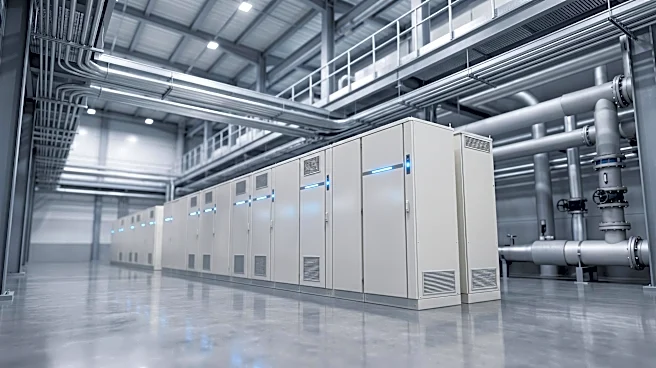
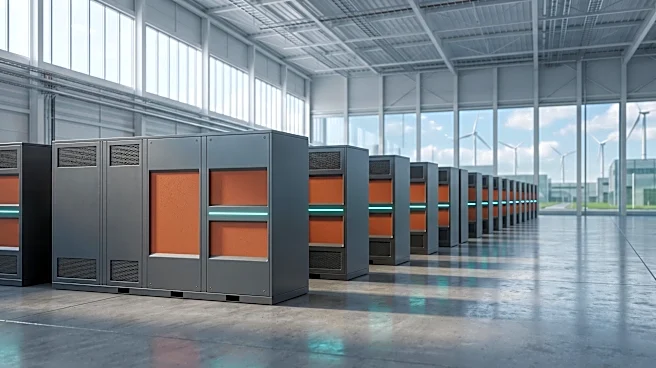
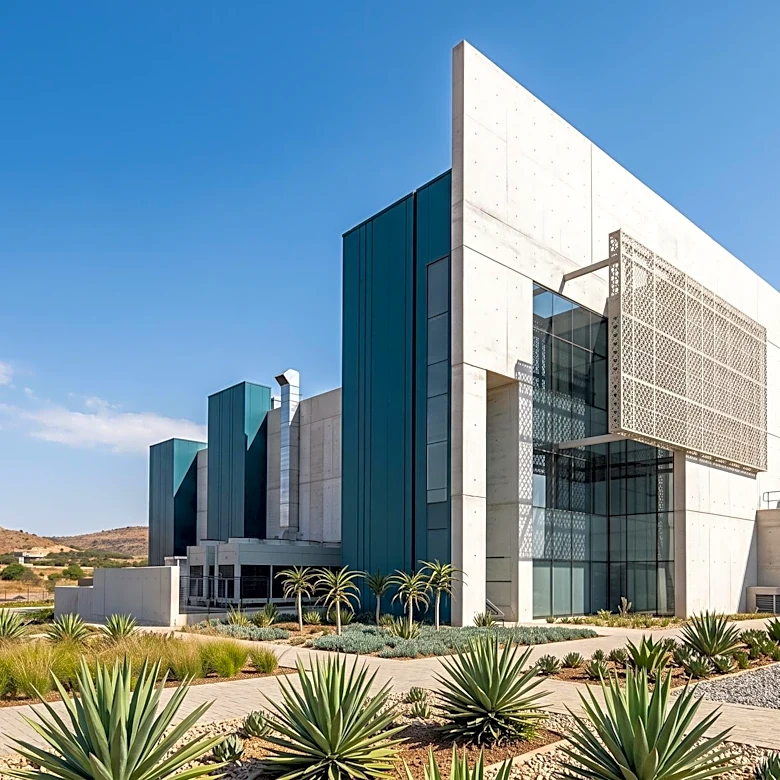
Form Energy, a Somerville, Massachusetts-based company, is developing a new type of iron-based battery designed for long-duration energy storage, capable of holding energy for up to 100 hours. This technology utilizes a process called 'reversible rusting,'
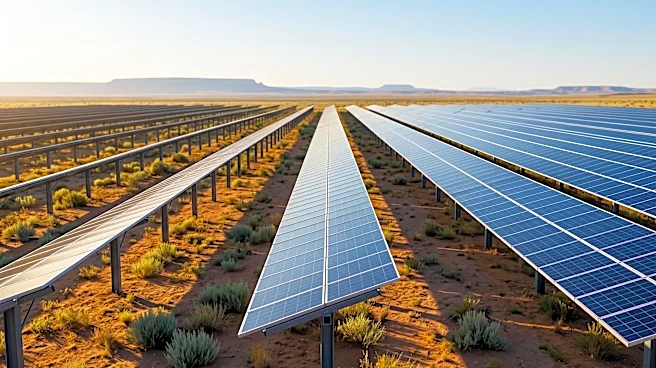
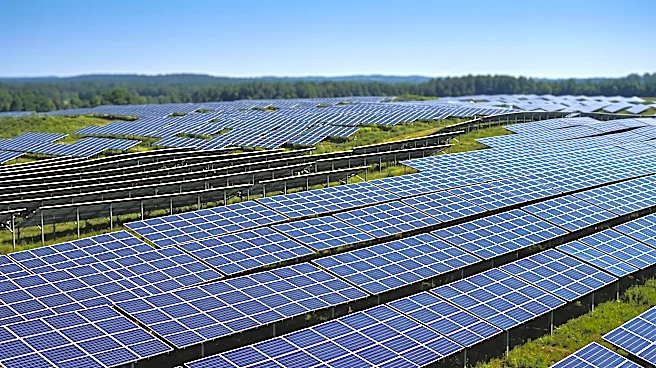
where iron metal converts to rust by absorbing oxygen during discharge, releasing electrons, and then converts back to iron metal during charging. The company has begun producing these batteries at its West Virginia factory for its first commercial deployment, a 150 megawatt-hour system for Minnesota electricity provider Great River Energy, expected to be operational by 2027. Form Energy has also secured a significant deal with Xcel Energy in Minnesota to power a new Google data center with 30 gigawatt-hours of its batteries, backed by wind and solar power, with phases coming online between 2028 and 2031. The company aims to achieve a cost of $20 per kilowatt-hour for its battery systems.
Why It's Important?
The development of Form Energy's iron-based batteries is crucial for enhancing the reliability and cost-effectiveness of renewable energy sources like wind and solar. These intermittent energy sources often require backup from fossil fuel plants, particularly natural gas, to cover periods of low supply or high demand. Form Energy's 100-hour batteries are designed to address multiday supply-demand imbalances, such as those occurring during extreme weather events, making clean energy grids more resilient. By aiming for a cost of $20 per kilowatt-hour, Form Energy seeks to make its storage solutions competitive with natural gas alternatives, potentially accelerating the transition away from fossil fuels. This technology could also play a significant role in mitigating the energy demands of the rapidly expanding AI data center industry, which currently contributes to increased electricity consumption and has even delayed the closure of some coal plants.
What's Next?
Form Energy is currently focused on finalizing its first commercial project with Great River Energy and outfitting its West Virginia factory with new equipment to scale manufacturing. The company has secured over $2 billion in funding, including state and federal grants, to support its expansion efforts and meet its production backlog. While Form Energy has promised 80 gigawatt-hours through commercial agreements, its current production capacity is 2 gigawatt-hours per year, indicating a significant scaling challenge ahead. The success of its technology will depend on its ability to ramp up production efficiently and cost-effectively. Additionally, the company will need to address the physical footprint of its batteries, as its Google installation alone is projected to require an area equivalent to at least 75 football fields.
Beyond the Headlines
The emergence of long-duration energy storage solutions like Form Energy's iron-air batteries signifies a potential paradigm shift in how electricity grids operate. Beyond simply integrating more renewables, these technologies enable a more fundamental decoupling from fossil fuel reliance for baseload power. The 'reversible rusting' process highlights innovative approaches to energy storage that leverage abundant and inexpensive materials, moving beyond the reliance on costly and sometimes scarce metals used in traditional lithium-ion batteries. However, the nascent long-duration storage market is competitive, with various approaches including pumped hydropower, compressed gas, and flow batteries. The economic viability of multiday batteries, which require substantial capital investment but may sit idle for periods, remains a key challenge. The success of Form Energy could pave the way for broader adoption of similar technologies, influencing future energy policy and infrastructure development towards a more sustainable and resilient grid.