








What's Happening?
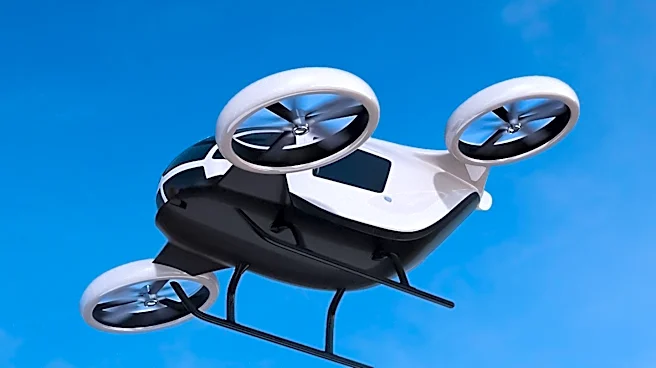
Brazilian developer Moya Aero has successfully completed a full transition flight with its full-scale MOYA 256 autonomous electric vertical take-off and landing (eVTOL) cargo aircraft. The flight, announced on October 21, demonstrated vertical take-off,
wing-borne flight, and a return to vertical landing. This milestone is a significant step in the aircraft's development towards potential operational use. The MOYA 256 is an uncrewed, fully electric aircraft designed for cargo transport, medical and humanitarian deliveries, industrial logistics, e-commerce, and agribusiness. It has a planned payload capacity of 30kg and a range of 160km. The company's flight-test program, supported by the Brazilian innovation agency FINEP, has included nearly 200 flights with the MOYA 256 and close to 500 across its subscale and special-purpose aircraft. Moya Aero is also developing a larger model, the MOYA 760, for heavier loads, and has begun production of a production-conforming prototype for it. The two aircraft are intended to share architectural and system elements. Moya has received 119 letters of intent for its aircraft.
Why It's Important?
The successful full transition flight of the MOYA 256 marks a critical advancement in the development of autonomous cargo eVTOLs, which could significantly impact logistics and supply chains in the US and globally. The ability of this aircraft to operate from compact areas without conventional runways, combined with the efficiency of wing-borne cruise flight, offers a flexible solution for last-mile delivery and humanitarian aid in diverse environments. This technology could alleviate pressure on traditional transportation infrastructure, reduce delivery times, and lower operational costs for businesses. For the US, the emergence of such cargo drones could revolutionize e-commerce fulfillment, particularly in rural or hard-to-reach areas, and enhance disaster response capabilities. The shared architecture between the MOYA 256 and the larger MOYA 760 suggests a scalable and adaptable platform, which could accelerate the adoption of cargo eVTOLs across various industries. The ongoing development of an AI-powered ground control system for beyond-visual-line-of-sight operations also points to a future where autonomous air logistics are managed with sophisticated digital tools, potentially setting new standards for efficiency and safety in the sector.
What's Next?
Following the successful transition flight, Moya Aero will continue its flight-test program to further validate the MOYA 256's propulsion, aerodynamic, and flight-control systems across different flight phases. While no specific date for certification or entry into service has been announced, further testing and regulatory approvals will be necessary before the aircraft can begin routine commercial operations. The company's focus will likely shift towards securing these approvals and potentially converting its 119 letters of intent into firm orders. Production of the MOYA 760 prototype will also continue, aiming to expand the company's cargo drone family for heavier payloads. The development of the AI-powered ground control system will be crucial for enabling efficient and safe beyond-visual-line-of-sight operations, which are essential for widespread commercial deployment. The practical deployment of these aircraft will depend on meeting operational requirements and obtaining necessary regulatory clearances, which will be a key area of focus for Moya Aero in the coming years.
Beyond the Headlines
The progress made by Moya Aero in autonomous cargo eVTOLs highlights a broader trend towards automation and electrification in the aviation sector. This development is not just about new aircraft; it represents a fundamental shift in how goods are transported, with potential implications for urban planning, environmental sustainability, and labor markets. The ability to operate from unconventional sites like football fields could decentralize logistics, reducing reliance on large, centralized hubs and potentially easing traffic congestion in urban areas. Environmentally, electric cargo eVTOLs offer a cleaner alternative to traditional fossil-fuel-powered transport, contributing to reduced carbon emissions and noise pollution. However, the widespread adoption of such technology will necessitate robust regulatory frameworks for airspace management, safety, and cybersecurity, especially for autonomous operations. There will also be societal implications, including potential job displacement in traditional logistics sectors and the need for new skill sets in drone operation and maintenance. The 'pioneering' nature of this technology, as described by Moya Aero's CEO, suggests that the industry is still in its nascent stages, with significant opportunities and challenges ahead in shaping the future of air cargo.