





What's Happening?
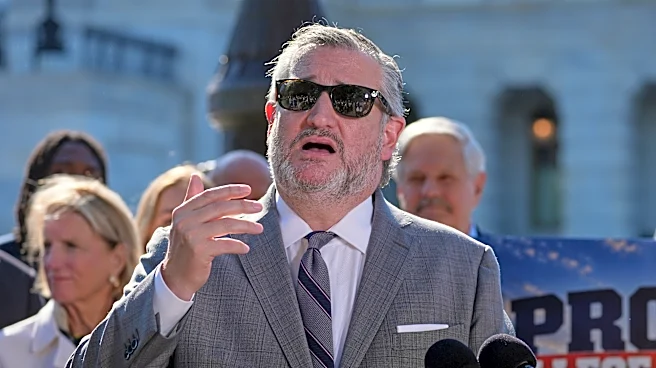
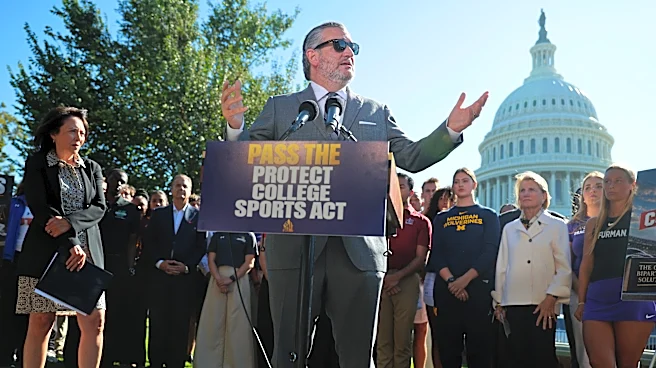
U.S. Sen. John Thune is a proponent of the Protect College Sports Act, a legislative effort aimed at establishing nationwide standards for NCAA sports. Thune describes the current state of college athletics as 'complex and at times chaotic,' citing issues
such as increased player transfers and the recruitment of former professional players back to college campuses. The proposed bill, which has bipartisan support and is backed by the NCAA, seeks to implement national guidelines on athlete eligibility, transfer frequency, and compensation. Specifically, it limits athlete eligibility to five years, typically from enrollment, and prohibits coaches from changing schools mid-season. Thune highlighted concerns from smaller institutions that risk losing standout players to schools with larger budgets, noting that 41 Olympic sports programs were cut across NCAA Division I athletics last year, impacting over 1,000 student-athletes. He argues that national standards are essential to restore stability to the college sports ecosystem, rather than relying on a 'patchwork of state laws.'
Why It's Important?
The push for national standards in college sports, as championed by U.S. Sen. John Thune, carries significant implications for the future of collegiate athletics and its economic landscape. The current environment, characterized by frequent transfers and varying eligibility rules, creates instability that can disproportionately affect smaller institutions. These schools often struggle to compete with the financial resources of larger universities, leading to a talent drain and the potential reduction or elimination of non-revenue-generating sports programs. Establishing uniform national standards could level the playing field, ensuring greater predictability and fairness in recruitment and athlete retention. This stability could benefit student-athletes by providing clearer career paths and reducing the pressure to constantly seek new opportunities. Furthermore, the 'arms race in revenue-generating sports,' such as college football and basketball, which generate substantial income through TV deals, could be reined in, potentially allowing for a more balanced allocation of resources across all collegiate sports. The legislation's impact on athlete compensation and the potential for an antitrust exemption also raises questions about the rights and earning power of student-athletes, making it a critical development for their economic future.
What's Next?
The Protect College Sports Act is currently in the Senate, where it recently advanced to debate. While it enjoys broad bipartisan support and backing from over 30 athletic conferences, it faces opposition from groups like the Congressional Black Caucus and the NAACP. These organizations argue that the bill limits the rights and earning power of student-athletes, particularly by including an antitrust exemption that could prevent them from unionizing or collectively bargaining. For the bill to become law, it must secure approval from the U.S. House of Representatives after passing the Senate. The debate surrounding the bill is likely to intensify as stakeholders continue to voice their concerns and support. The outcome will determine whether a unified national framework for college sports is adopted, potentially reshaping the competitive balance, financial structures, and athlete welfare across NCAA divisions. The ongoing discussions will also highlight the tension between maintaining the traditional amateur model of college sports and acknowledging the increasing professionalization and commercialization of collegiate athletics.
Beyond the Headlines
The debate over national standards in college sports, as highlighted by U.S. Sen. John Thune, delves into deeper ethical and cultural dimensions beyond mere regulatory adjustments. The 'chaotic' state of college athletics reflects a fundamental tension between the educational mission of universities and the burgeoning commercial interests of high-stakes sports. The increasing frequency of player transfers and the recruitment of former professionals blur the lines between amateurism and professionalism, challenging the traditional ethos of collegiate competition. The concern that smaller institutions are losing talent to wealthier schools underscores issues of equity and access within the sports landscape, potentially concentrating athletic power and resources in a few dominant programs. Moreover, the opposition to the bill, particularly regarding its antitrust exemption, raises critical questions about labor rights and economic justice for student-athletes. It forces a re-evaluation of whether athletes, who generate significant revenue for their institutions, should have greater collective bargaining power and control over their careers. The outcome of this legislative effort could set a precedent for how the U.S. balances the pursuit of athletic excellence with the welfare and rights of student-athletes, potentially leading to a long-term shift in the governance and philosophy of college sports.