


What's Happening?
The Chicago Blackhawks are aggressively pursuing upgrades to their forward core following a disappointing start to the 2026-2027 NHL season. With a 4-13-1 record through 18 games, the team's .250 win percentage is on track to be their worst in 98 years,
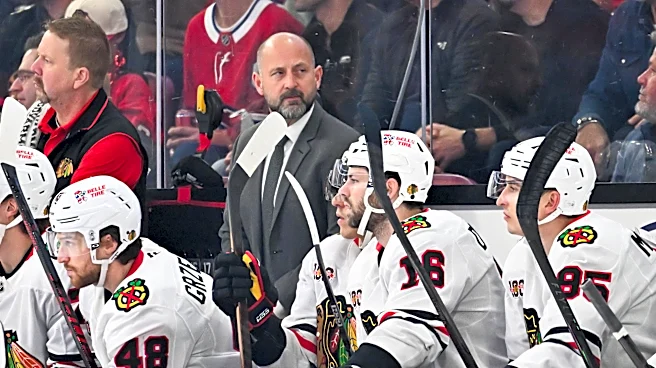
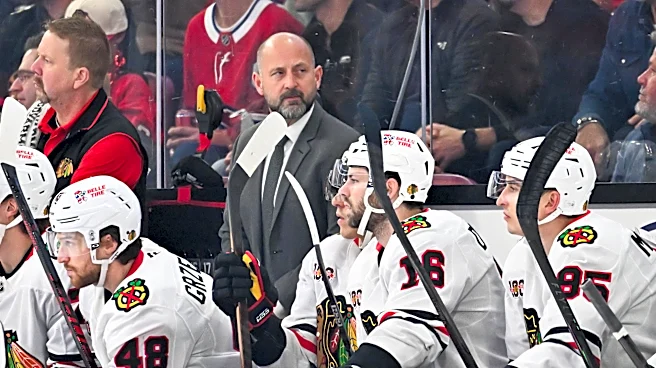
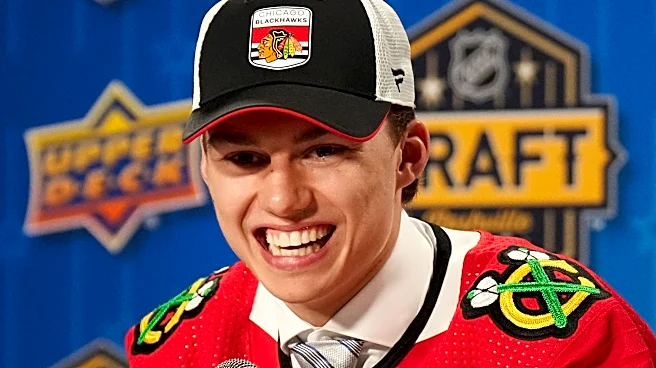
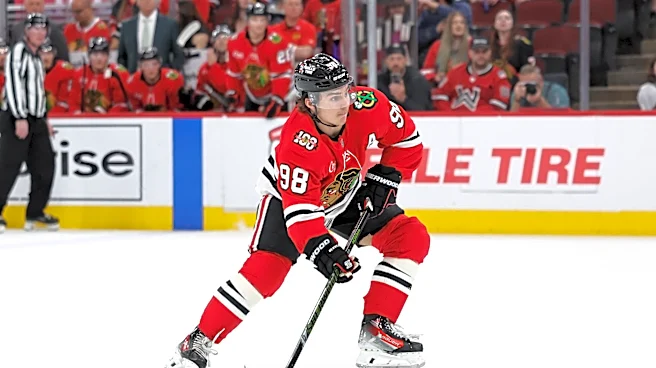
placing them second-to-last in the NHL standings. General Manager Kyle Davidson is reportedly keen on addressing the team's offensive struggles, as their 39 goals rank last in the league. Insider David Pagnotta reported that the Blackhawks are exploring options for younger forwards, specifically players in their mid-20s, who can develop alongside current young talents like Connor Bedard and Anton Frondell. Despite the team's poor performance, coach Jeff Blashill and GM Kyle Davidson's positions appear secure, with Davidson having received a multi-year extension before the season. This indicates that significant roster changes via trade are the most probable course of action to improve the team's standing.
Why It's Important?
This aggressive pursuit of forward upgrades highlights a critical juncture for the Blackhawks' ongoing rebuild strategy. The team's reliance on Connor Bedard for offense has proven unsustainable, as other young players have not met expectations, with Roman Kantserov being a notable exception. The decision to seek established, younger talent rather than solely relying on draft picks signifies a potential shift in their rebuilding timeline, aiming to accelerate their ascent in the standings. For the Blackhawks, acquiring a top-line winger to complement Bedard is a logical target, but such players are difficult to obtain. The team possesses significant draft capital and prospects, which provides leverage in trade negotiations but also presents a difficult decision for Davidson regarding which assets to sacrifice. This move could either solidify their future competitiveness or deplete their prospect pool without achieving the desired immediate impact.
What's Next?
The Blackhawks are expected to actively engage in trade discussions across the league, seeking suitable forward talent. GM Kyle Davidson will face the challenge of identifying players who fit the team's long-term vision while also providing immediate offensive relief. The team's willingness to part with draft capital and prospects will be a key factor in any potential deals. The focus will be on finding players who can integrate with the existing young core and contribute to a more balanced offensive attack. The outcome of these trade pursuits will significantly influence the team's performance for the remainder of the season and could set the tone for their competitive trajectory in the coming years. Fans and analysts will be closely watching Davidson's moves to see how he balances the need for immediate improvement with the long-term goals of the rebuild.
Beyond the Headlines
The Blackhawks' current struggles and their response reflect a broader challenge faced by rebuilding NHL teams: balancing patience with the pressure to perform. While the team has committed to building through the draft, the severe offensive deficiencies and poor record indicate that a purely developmental approach may not be sufficient. The decision to target players in their mid-20s suggests a strategic pivot towards acquiring talent that is closer to its prime, aiming to bridge the gap between prospects and established stars. This approach carries inherent risks, as overpaying for talent could hinder future flexibility, while failing to acquire impactful players could prolong the team's struggles. The success of this strategy will depend on Davidson's ability to make astute trades that enhance the roster without compromising the long-term health of the organization, potentially setting a precedent for other rebuilding franchises.