


What's Happening?
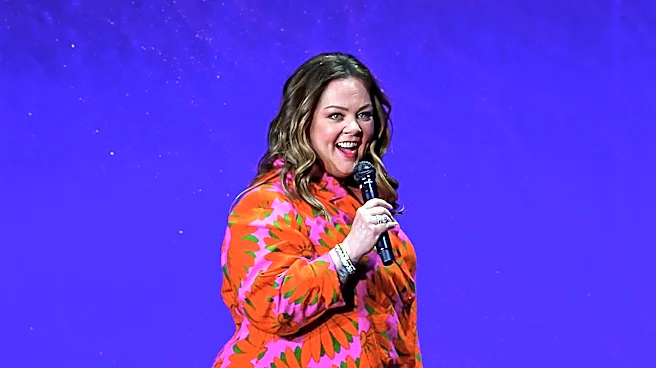
Actress Melissa McCarthy, known for her role as Sookie St. James in 'Gilmore Girls,' recently discussed the difficulties she faced with the show's dialogue. Despite appearing in all seven seasons and the 2016 sequel series, McCarthy revealed to Variety
that mastering Amy Sherman-Palladino's fast-paced and extensive scripts was a significant challenge. She noted that scripts could be up to 93 pages long, and actors were not permitted to alter even a single contraction, even if they received the script on the morning of filming. McCarthy described this rigorous process as 'good training' and acknowledged that it was her first show, so she initially perceived it as the norm for television production. She expressed admiration for Sherman-Palladino's distinct style and her dedication to maintaining her creative vision for the series.
Why It's Important?
This insight from Melissa McCarthy highlights the unique production demands and creative integrity behind 'Gilmore Girls,' a show that has maintained significant popularity for nearly two decades. The revelation about the strict adherence to dialogue underscores the distinctive voice and rapid-fire pacing that became a hallmark of the series, contributing to its enduring appeal and critical acclaim. For aspiring actors and television professionals, McCarthy's experience offers a glimpse into the demanding nature of certain productions and the discipline required to deliver complex, unalterable dialogue. It also reinforces the importance of a showrunner's vision in shaping a series' identity and success, demonstrating how a strong creative stance can lead to a lasting cultural impact. The show's continued rewatchability and the consistent fan engagement, as noted by McCarthy, attest to the effectiveness of this meticulous approach to storytelling and character development.
What's Next?
While there are no current plans for another 'Gilmore Girls' sequel series, the enduring popularity of the show suggests continued interest in its legacy. HBO is reportedly developing a documentary to honor the show, with original cast members like Lauren Graham expected to participate. This documentary could provide further behind-the-scenes details and reflections from the cast and crew, potentially offering more insights into the production challenges and creative processes that defined the series. The ongoing fan engagement and the show's status as a 'comfort show' indicate that 'Gilmore Girls' will likely continue to attract new viewers and maintain its dedicated fanbase. Future discussions or retrospectives may further explore the impact of Amy Sherman-Palladino's distinctive writing style and its influence on television dialogue.
Beyond the Headlines
Melissa McCarthy's comments shed light on a broader aspect of creative control in television production, particularly the role of a showrunner in shaping a series' artistic direction. Sherman-Palladino's insistence on strict adherence to her dialogue, even down to contractions, reflects a commitment to a specific rhythm and tone that became integral to 'Gilmore Girls.' This level of creative authority, especially for a woman running a show at that time, speaks to the challenges and triumphs of maintaining artistic integrity in a collaborative medium. The show's lasting appeal, despite its demanding production, suggests that a strong, singular vision can resonate deeply with audiences and create a timeless piece of entertainment. It also raises questions about the balance between an actor's interpretation and a writer's precise intent, and how these dynamics contribute to a show's overall success and cultural footprint.