






What's Happening?
Natural indigo, derived from the Indigofera tinctoria plant, is being used to create master paints and as a dye for textiles. The term 'indigo' originates from the Greek word for 'from India,' where the plant was initially cultivated. This shrub, which
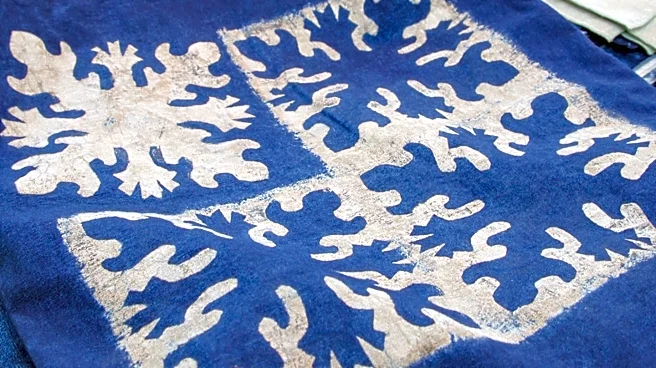
can grow up to two meters in height, yields blue dye from its leaves through a traditional fermentation process. The leaves are submerged in water and allowed to decompose to extract the pigment. Historically, indigo was a highly sought-after dye for textiles and was also popular among painters and calligraphers, serving as both an ink and a dye for parchment. The genuine INDIGO pigment from India is a natural organic product, chemically identified as Natural Blue 1, C.I. 75780. This pigment is unique in its dual application as both a paint ingredient and a natural dye, producing a range of blues from deep midnight blue/black to light, pale blue.
Why It's Important?
The continued use and appreciation of natural indigo dye in the U.S. and globally highlights a growing interest in sustainable and historically rich materials within the art and textile industries. For U.S. artists and designers, access to genuine indigo pigment from India offers a connection to traditional craftsmanship and a unique color palette that synthetic dyes cannot fully replicate. This trend supports the market for natural products and traditional techniques, potentially influencing consumer preferences towards more eco-friendly and artisanal goods. The historical significance of indigo also adds cultural value, enriching the narrative around products that incorporate it. Furthermore, the demand for natural dyes can stimulate ethical sourcing practices and support communities involved in traditional indigo cultivation and processing, contributing to a more responsible global supply chain.
What's Next?
The demand for natural indigo is likely to continue, driven by consumer interest in sustainable products and artisanal crafts. This could lead to increased efforts in ethical sourcing and cultivation of Indigofera tinctoria plants. Research into more efficient and environmentally friendly extraction methods for natural indigo may also gain traction. Educational initiatives in art and design schools could further promote the use of natural dyes, ensuring the preservation of traditional techniques. Businesses in the U.S. textile and art supply sectors may expand their offerings of natural indigo products, potentially collaborating with international suppliers to ensure authenticity and quality. This sustained interest could also foster innovation in combining traditional natural dyes with modern applications, creating new markets and product categories.
Beyond the Headlines
The story of natural indigo extends beyond its immediate use as a dye, touching upon themes of cultural heritage, environmental sustainability, and the global economy. The historical journey of indigo from India to various parts of the world underscores the long-standing interconnectedness of global trade and cultural exchange. Its resurgence reflects a broader societal shift towards valuing natural resources and traditional knowledge in an era dominated by synthetic alternatives. Environmentally, the use of natural indigo, when sourced sustainably, offers a less polluting alternative to synthetic dyes, which often involve harsh chemicals. This contributes to a larger movement towards eco-conscious consumption and production. Culturally, it preserves ancient dyeing techniques and supports the livelihoods of communities that have historically cultivated and processed indigo, maintaining a vital link to the past while addressing contemporary concerns.