







What's Happening?
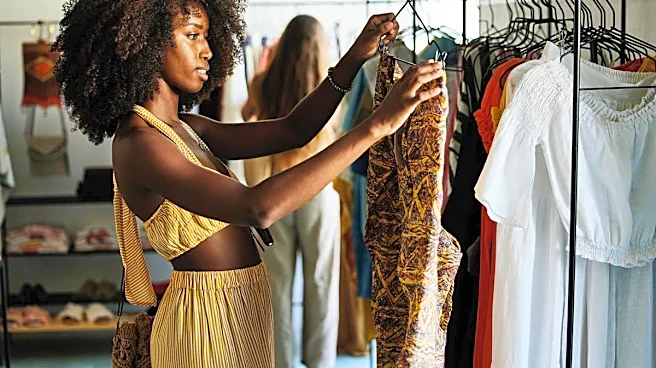
Thrift shopping is increasingly becoming a favored method for consumers to acquire distinctive clothing items, moving beyond the limitations of current mainstream fashion trends. This approach allows individuals to curate wardrobes with vintage pieces
that align with their personal style. The appeal of thrifting extends to those seeking bargains, unique finds, or items that stand out from mass-produced apparel. While the excitement of discovering unusual items can sometimes lead to impulsive purchases, experts advise a deliberate approach, emphasizing careful inspection of items for wear and tear, and considering how pieces will integrate into an existing wardrobe. The goal is to find items that genuinely excite the buyer and will be used, rather than simply being the cheapest option available.
Why It's Important?
The rise of thrifting signifies a notable shift in consumer behavior within the U.S. retail landscape, impacting both the fashion industry and environmental sustainability efforts. As consumers increasingly prioritize unique style and conscious consumption, the demand for second-hand goods challenges the traditional fast fashion model. This trend encourages a more circular economy by extending the lifespan of clothing, thereby reducing textile waste. For businesses, this means a growing market for curated second-hand stores and platforms, while traditional retailers may need to adapt to evolving consumer values that favor individuality and sustainability over constant newness. The emphasis on deliberate purchasing also suggests a broader societal move towards mindful consumption, potentially influencing other sectors beyond fashion.
What's Next?
The continued growth of thrifting is likely to foster further innovation in the second-hand market, including more sophisticated online platforms and curated physical stores. Consumers can expect an increased focus on quality control and transparency from sellers, especially as the market matures. There may also be a greater emphasis on repair and alteration services to maximize the value and longevity of thrifted items. As the movement gains traction, it could inspire more individuals to adopt practices like setting purchasing limits to combat overconsumption, even within the thrifting community. This shift could also lead to a re-evaluation of fashion trends, with personal style and timeless pieces gaining precedence over fleeting micro-trends.
Beyond the Headlines
Beyond the immediate economic and environmental benefits, the thrifting trend carries deeper cultural and ethical implications. It challenges the notion that newness equates to value, promoting an appreciation for craftsmanship and history embedded in vintage items. This shift can empower individuals to express their identity more authentically, free from the pressures of conforming to mass-market trends. Ethically, it highlights the environmental cost of fast fashion, prompting consumers to consider the lifecycle of their clothing and the labor involved in its production and disposal. The practice of thrifting also fosters creativity, as shoppers learn to integrate diverse pieces into their existing wardrobes, developing a more discerning eye for quality and style.