



What's Happening?
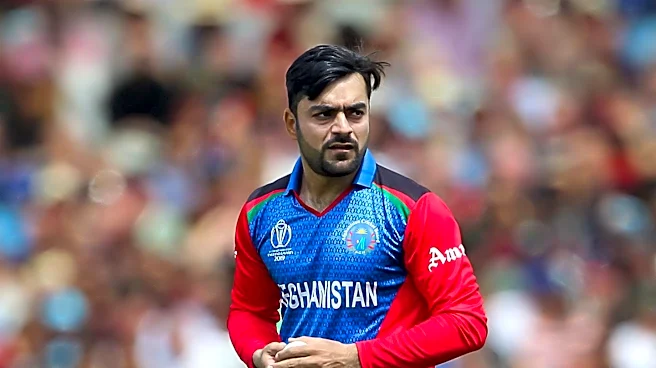
Rashid Khan, a prominent Afghan cricketer, has commented on the stalled progress of the Afghanistan women's cricket team, stating that its fate is beyond his control and that of his teammates. This statement was made during a conversation with Indian
cricket analyst Aakash Chopra on the Baith and Bol podcast. Despite the men's team achieving significant international success, including reaching a T20 World Cup semi-final, the women's program has not fielded a team since 2021. Twenty-five female players remain under contract with the Afghanistan Cricket Board (ACB) but have been unable to represent the country due to restrictions imposed after August 2021. These contracted players have since relocated abroad, with many settling in Australia, where they continue to train and compete informally as the Afghan Women's XI.
Why It's Important?
The situation highlights a significant disparity in sports development and gender equality within Afghanistan, particularly in the context of international sports. The men's team's success brings national pride and international recognition, while the women's team faces systemic barriers, preventing them from participating in global competitions. This not only impacts the individual athletes who are denied opportunities but also sends a message about the role of women in public life and sports within the country. The International Cricket Council (ICC) has maintained a neutral stance, allowing the men's team to continue playing, which further underscores the complex political and social factors at play. The inability of the women's team to compete internationally could also affect Afghanistan's standing in global sports organizations, which often advocate for gender inclusivity.
What's Next?
The future of the Afghanistan women's cricket team remains uncertain. While the ICC has indicated a willingness to support the group of 25 contracted players, a formal pathway for their return to recognized international status has not yet been established. Any resolution would likely require a collaborative effort between the ACB and the ICC to navigate the political and social challenges in Afghanistan. The players, currently in exile, continue to train and compete informally, demonstrating their commitment to the sport. The ongoing dialogue and potential interventions from international sports bodies will be crucial in determining if and when the Afghan women's team can once again represent their country on the global stage.
Beyond the Headlines
This situation extends beyond cricket, reflecting broader human rights and gender equality issues in Afghanistan. The restrictions on women's participation in sports are part of a larger pattern of limitations on women's public life, education, and employment. The contrast between the men's team's international success and the women's team's forced inactivity underscores the deep-seated societal and political challenges that impact women's rights. The international community's response, particularly from sports organizations, sets a precedent for how such issues are addressed in countries where political changes lead to the erosion of human rights. The plight of the Afghan women cricketers serves as a poignant example of how geopolitical shifts can directly affect individual freedoms and aspirations.