






What's Happening?
Dave Puglia, president and CEO of Western Growers, recently discussed critical issues facing specialty crop producers across the U.S. during an appearance on the AgNet News Hour. A primary concern is trade, with Western Growers supporting the extension
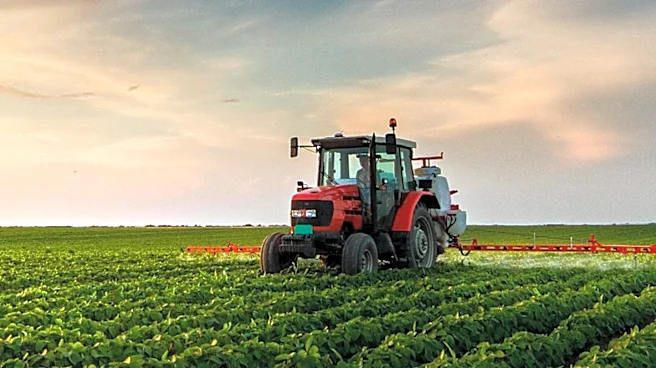
of the U.S.-Mexico-Canada Agreement (USMCA) but advocating for specific changes related to Mexico. These proposed changes include stronger labor enforcement and increased food safety oversight, acknowledging the varied impact of Mexican imports on different crops and regions. Food safety is another significant issue, highlighted by a recent cyclospora outbreak that caused widespread market losses due to consumer uncertainty and conflicting information. Puglia emphasized the need for the FDA to communicate more swiftly and clearly during such outbreaks, and for the produce industry to improve its ability to counter misinformation through social media. Additionally, the conversation addressed the Farm Bill, with Puglia pointing to provisions crucial for specialty crop growers, such as expanding crop insurance and risk-management tools to cover more specialty crops and losses from events like food safety outbreaks beyond a grower's control. He also highlighted the importance of funding for mechanization research and improvements in how economic assistance reaches specialty crop producers. Puglia also noted the regulatory hurdles faced by California farmers in adopting autonomous agricultural equipment, contrasting it with its use in other states.
Why It's Important?
The discussions by Western Growers' CEO Dave Puglia underscore significant challenges and opportunities for the U.S. specialty crop industry, which plays a vital role in the nation's agricultural economy and food supply. Revisions to the USMCA, particularly concerning labor enforcement and food safety oversight in Mexico, could directly impact the competitiveness and profitability of U.S. specialty crop producers. Stronger regulations could level the playing field and protect domestic markets from unfair competition or unsafe imports. Improved food safety protocols and clearer communication from the FDA are crucial for maintaining consumer confidence and preventing substantial economic losses for producers during outbreaks. The ripple effect of misinformation, as seen with the cyclospora outbreak, can devastate entire crop categories, affecting farmers' livelihoods and the stability of the food supply chain. Furthermore, the proposed changes to the Farm Bill, including expanded crop insurance and mechanization research funding, are essential for the long-term resilience and innovation of the specialty crop sector. These measures can help mitigate financial risks for growers, encourage technological adoption, and ensure the continued viability of specialty crop farming in the face of evolving challenges, from climate change to market fluctuations. Addressing regulatory disparities, such as those concerning autonomous agricultural equipment in California, is also vital for fostering innovation and efficiency within the industry.
What's Next?
The advocacy efforts by Western Growers and other specialty crop leaders are likely to intensify as discussions around the U.S.-Mexico-Canada Agreement (USMCA) and the upcoming Farm Bill continue. Stakeholders will closely monitor negotiations and legislative processes to ensure their concerns regarding trade, food safety, and risk management are addressed. For the USMCA, the focus will be on pushing for specific amendments related to Mexican imports, particularly concerning labor standards and food safety regulations. This will involve ongoing dialogue with U.S. trade representatives and potentially direct engagement with Mexican counterparts. Regarding food safety, the industry will likely continue to press the FDA for clearer and faster communication protocols during outbreaks, while also investing in strategies to combat misinformation through social media. On the legislative front, specialty crop growers and their advocates will work to influence the provisions of the next Farm Bill. This will include advocating for the expansion of crop insurance and other risk-management tools to cover a broader range of specialty crops and to include losses from food safety incidents. Furthermore, there will be continued efforts to secure funding for mechanization research and to streamline economic assistance programs for specialty producers. The issue of regulatory limitations on autonomous agricultural equipment, particularly in California, will also likely see continued advocacy for policy changes to foster technological adoption and efficiency.
Beyond the Headlines
The issues highlighted by Dave Puglia extend beyond immediate policy changes, touching upon fundamental shifts in agricultural practices, international trade dynamics, and consumer trust. The push for stronger labor enforcement in Mexico within the USMCA reflects a broader global trend towards ethical sourcing and fair labor practices, which could influence consumer purchasing decisions and corporate social responsibility initiatives. This could lead to increased scrutiny of supply chains and potentially higher standards for imported agricultural products. The emphasis on improved food safety communication and combating misinformation underscores the growing impact of social media on public perception and market stability. In an era of rapid information dissemination, the ability of government agencies and industries to effectively manage narratives during crises is paramount, highlighting the need for sophisticated communication strategies and public education campaigns. Furthermore, the focus on mechanization research and autonomous agricultural equipment points to the accelerating integration of technology in farming. While offering benefits in efficiency and labor reduction, this trend also raises questions about the future of agricultural labor, the digital divide among farmers, and the ethical implications of automation. The regulatory hurdles in California, for instance, illustrate the tension between innovation and existing legal frameworks, suggesting a need for adaptive policy-making to accommodate technological advancements while addressing potential societal impacts. These developments collectively signal a complex future for the specialty crop sector, where technological innovation, international cooperation, and public trust will be critical determinants of success.