





What's Happening?
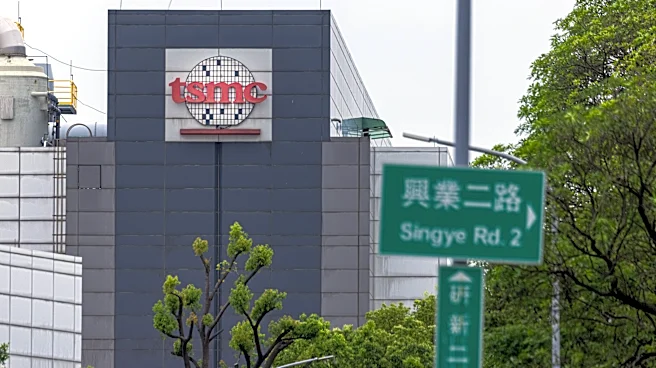
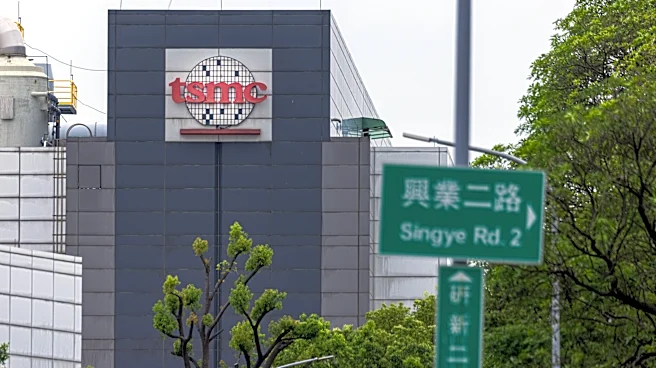
Taiwan Semiconductor Manufacturing (TSMC) American depositary shares experienced a 6.65% drop, closing at $325.98 on November 25. This decline occurred during regular-session trading, following a 4.8% market downturn in Taiwan driven by renewed concerns
regarding artificial intelligence (AI) investments. TSMC's Taipei shares had already fallen by 3.6%. Concurrently, the U.S. government included Taiwan among 14 economies that could face proposed excess-capacity tariffs. While specific rates for trade partners with existing agreements are anticipated to remain within current limits, Taiwan's rate is expected to be around 15%. Despite these market movements, TSMC reported robust financial performance, with October revenue reaching NT$586.89 billion, marking a 59.7% year-over-year increase. Third-quarter 2026 revenue also saw a significant rise of 50.9% to NT$1.494 trillion (US$46.72 billion), with strong gross and operating margins. The company projects fourth-quarter revenue to be between US$52.3 billion and US$54.3 billion.
Why It's Important?
The decline in TSMC's stock, particularly its American depositary shares, suggests that U.S. investors are re-evaluating their exposure to the AI sector, rather than reacting solely to company-specific news. This broader market sentiment could impact other technology companies heavily invested in AI. The proposed U.S. tariffs on economies with excess capacity, including Taiwan, introduce a new layer of uncertainty for global supply chains and trade relations. While Taiwan's tariff rate is expected to be managed within existing caps, any new trade barriers could affect the cost of semiconductors, which are critical components across numerous U.S. industries, from consumer electronics to automotive and defense. TSMC's continued strong revenue growth, however, underscores the persistent high demand for its semiconductor products, indicating that underlying business fundamentals remain robust despite market fluctuations and geopolitical considerations.
What's Next?
The proposed U.S. tariffs are currently subject to public comment and a hearing process, which could delay their implementation until January. This period will be crucial for stakeholders to voice concerns and for the U.S. government to finalize its policy. Investors will be closely watching TSMC's November revenue report, expected in early December, for further indications of the company's performance and the broader semiconductor market health. The ongoing debate around AI's valuation and future growth trajectory will also continue to influence investor sentiment, potentially leading to further volatility in technology stocks. The interplay between U.S. trade policy, global economic conditions, and technological demand will shape TSMC's market position and its impact on the U.S. technology sector.
Beyond the Headlines
The situation with TSMC highlights the intricate connection between geopolitical policy, global trade, and the technology sector. The U.S. proposal for excess-capacity tariffs reflects a broader strategy to address perceived imbalances in international trade and protect domestic industries, which could lead to shifts in global manufacturing and supply chain strategies. For the semiconductor industry, which is highly globalized, such policies can introduce complexities in production and distribution. The market's reaction, particularly the greater fall in TSMC's U.S. shares compared to its Taipei shares, suggests a divergence in investor perception and risk appetite between different markets. This could signal a re-evaluation of investment strategies in sectors heavily reliant on international trade and advanced technology, potentially influencing long-term capital flows and industrial development in the U.S. and globally.