






What's Happening?
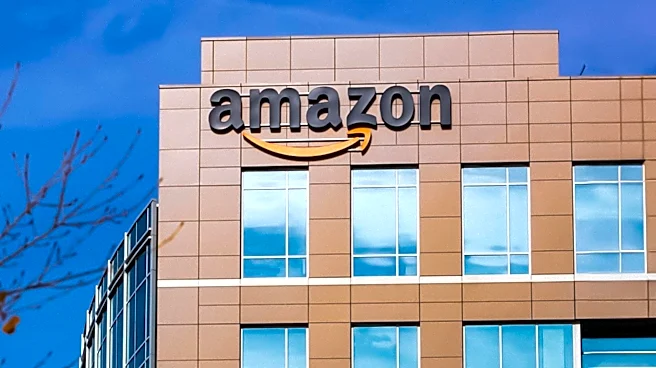
Amazon has achieved the top position on the 2026 Fortune 500 list, marking the first time the e-commerce giant has led the annual ranking of America's largest corporations by revenue. This milestone ends Walmart's 13-year reign at the top. Amazon's journey
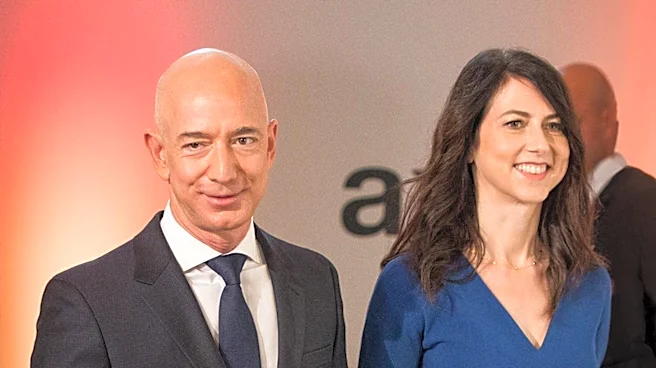
began over three decades ago when Jeff Bezos registered amazon.com in June 1994 as an online bookstore. Despite this significant success, a past warning from Bezos has resurfaced. In November 2018, while still CEO, Bezos reportedly told employees that Amazon was not too big to fail and predicted its eventual bankruptcy, stating that large companies typically have lifespans of 30-plus years, not a hundred-plus years. This caution was delivered during an all-hands meeting, where he emphasized the importance of customer focus and innovation for the company's longevity.
Why It's Important?
Amazon's ascent to the top of the Fortune 500 list signifies its immense influence on the U.S. economy and consumer landscape. Its dominance in e-commerce, cloud computing, artificial intelligence, and advertising sectors impacts numerous industries and sets benchmarks for corporate growth. Bezos's resurfaced warning, however, serves as a critical reminder of the inherent risks and challenges even for the most successful corporations. It highlights the concept of 'concentration risk' for investors, particularly those with significant portions of their retirement savings tied to a single stock like Amazon. The historical example of General Motors, which topped the Fortune 500 for decades before filing for bankruptcy in 2009, underscores that market dominance does not guarantee invincibility, emphasizing the need for continuous adaptation and customer focus.
What's Next?
Amazon's continued growth and market leadership will likely face ongoing scrutiny regarding its business practices, market power, and impact on smaller competitors. The company's ability to maintain its top position will depend on its sustained innovation and adherence to Bezos's philosophy of customer obsession. For investors, the situation prompts a re-evaluation of portfolio diversification and risk management, especially for those heavily invested in Amazon stock. The company's expansion into new sectors and its response to evolving market conditions will be key indicators of its long-term trajectory. Regulatory bodies may also continue to monitor Amazon's market influence, potentially leading to policy discussions around antitrust and fair competition.
Beyond the Headlines
Bezos's warning about Amazon's potential failure delves into deeper implications about corporate lifecycles and the nature of sustained success in a dynamic economy. It suggests that even revolutionary companies are subject to the forces of change and potential obsolescence if they become complacent or lose touch with their core mission. This perspective challenges the notion of corporate immortality and emphasizes the ethical and strategic imperative for continuous self-assessment and adaptation. The focus on customer obsession as a bulwark against failure highlights a fundamental principle of business longevity, suggesting that internal focus and short-term gains can be detrimental in the long run. This philosophy extends beyond Amazon, offering a cautionary tale and a strategic blueprint for any large corporation aiming for enduring relevance.