




What's Happening?
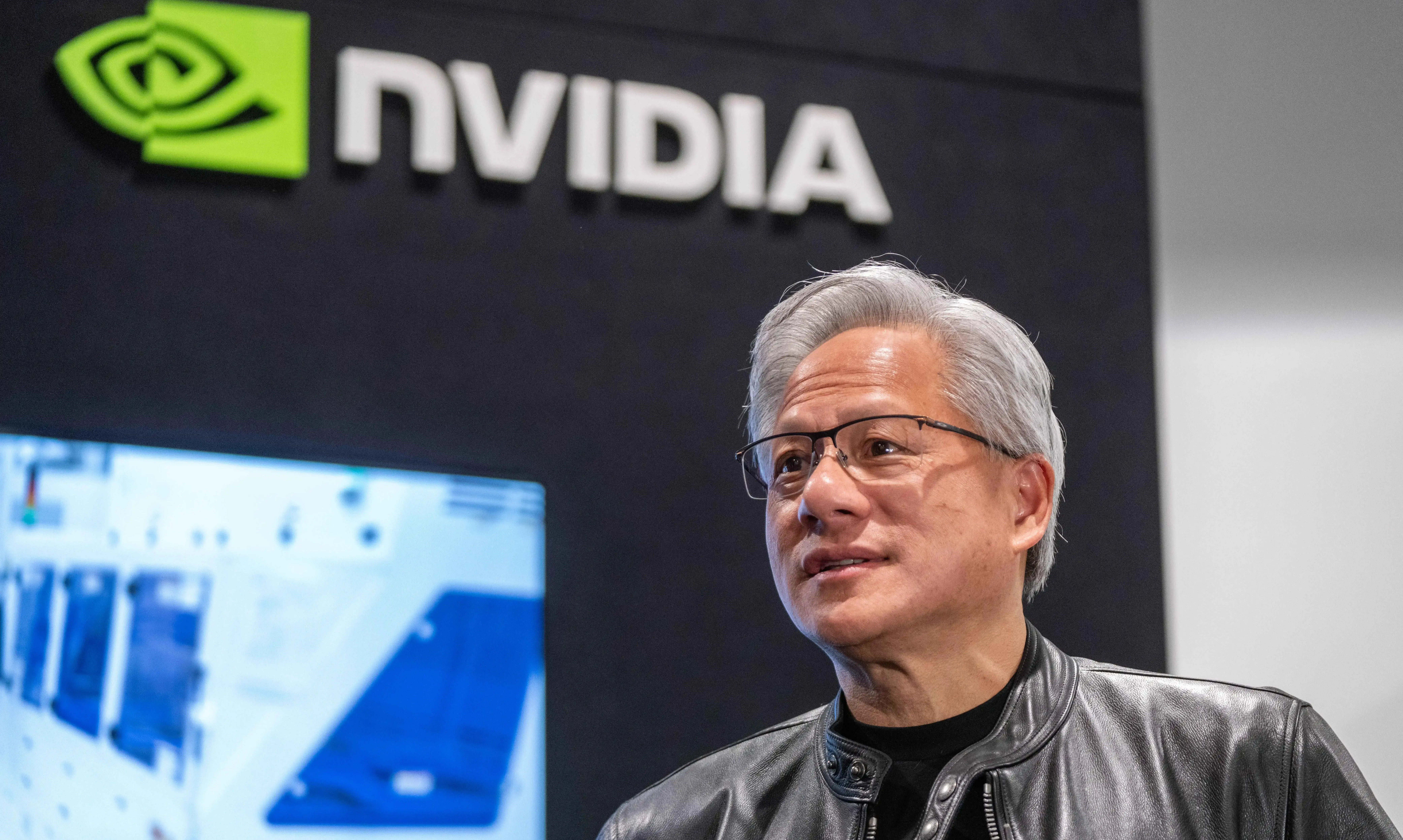
Nvidia has announced its acquisition of Hugging Face, an open-source AI platform, for $12.9 billion. This strategic move aims to strengthen Nvidia's position in the rapidly evolving artificial intelligence landscape by expanding and defending the ecosystem
around its chips. The acquisition grants Nvidia direct access to Hugging Face's extensive community of over 18 million AI developers. Hugging Face CEO Clément Delangue and co-founders Julien Chaumond and Thomas Wolf will join Nvidia, bringing their expertise and leadership to the company. This deal is Nvidia's second-largest on record, following its $20 billion purchase of assets from chipmaker Groq in December. The acquisition is seen as a parallel to Microsoft's 2018 purchase of GitHub, an open-source platform for traditional software code, for $7.5 billion, indicating a strategy to leverage open-source development to drive demand for core business offerings.
Why It's Important?
This acquisition is highly significant for the U.S. technology and business sectors, particularly in the artificial intelligence and semiconductor industries. By acquiring Hugging Face, Nvidia gains a crucial foothold in the open-source AI development community, which is a major driver of innovation and adoption in AI. This move allows Nvidia to influence the direction of AI development, ensuring that its accelerated computing hardware and CUDA software stack remain central to the creation and deployment of AI models. The strategy of winning over developers, as demonstrated by Microsoft's success with GitHub, is vital because developers often dictate which technologies companies adopt. This could lead to increased demand for Nvidia's chips and software, solidifying its market dominance. Furthermore, the acquisition acts as a defensive measure, preventing competitors like Amazon and Alphabet from gaining control over this influential open-source platform, thereby maintaining Nvidia's competitive edge in the AI hardware market.
What's Next?
Nvidia has committed to maintaining Hugging Face as an open platform, accessible to all silicon vendors, clouds, and model providers, without mandating the use of Nvidia chips. However, by integrating Nvidia's technology more deeply into the platform, the company aims to incentivize the use of its paid products by reducing friction for developers. This strategy will make Nvidia's offerings a natural progression as AI projects move from development to deployment. The acquisition is expected to foster greater alignment between open-source Large Language Model (LLM) development and the Nvidia ecosystem. The company's goal is to tap into the rising demand for compute across both open-source and proprietary AI models, driving future revenue growth. The ongoing balance between open-source and closed-source AI models will continue to shape the industry, with Nvidia positioned to benefit from both approaches.
Beyond the Headlines
The acquisition highlights a growing trend in the tech industry where major players are strategically investing in open-source platforms to control and influence the broader technological ecosystem. This move by Nvidia underscores the critical role of developer communities in shaping the future of AI. By supporting open-source development, Nvidia not only fosters innovation but also cultivates loyalty among developers, creating a powerful network effect that benefits its core business. The ethical implications of a dominant hardware provider acquiring a key open-source platform will be a point of discussion, particularly regarding potential biases or preferential treatment within the ecosystem, even with Nvidia's commitment to openness. This strategy also reflects the increasing convergence of hardware and software in the AI domain, where integrated solutions are becoming paramount for performance and efficiency, ultimately driving the next wave of technological advancements and economic growth.