





What's Happening?
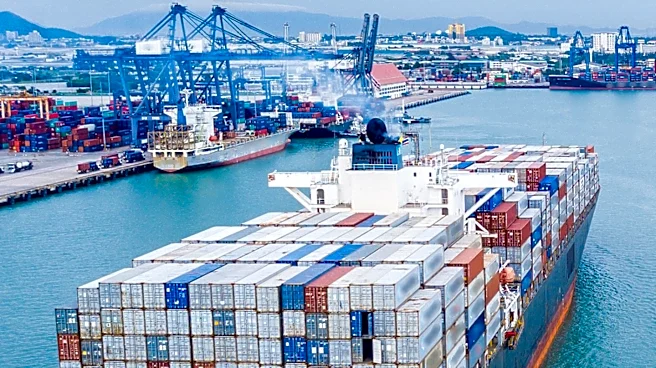
The container ship ANITTA BHUM (IMO 1117276) is actively engaged in international shipping routes. According to recent tracking data, the vessel last conducted cargo operations at Manzanillo, Mexico, from November 2 to November 8, 2026. Its next anticipated
port of call is Qingdao, China, with an estimated arrival around November 30, 2026. The ANITTA BHUM is a Panamax-sized container ship, identified by its MMSI 563342200 and call sign S6TN7. In the past six months, major carriers such as EMIRATES LINE, SINOTRANS, and RCL have utilized the ANITTA BHUM for their container shipments. The most frequent routes serviced by this vessel include Nhava Sheva, India, to Manzanillo, Mexico, with an average transit time of 60 days, and Shanghai, China, to Manzanillo, Mexico, averaging 34 days.
Why It's Important?
The continued operation of vessels like the ANITTA BHUM is crucial for global supply chains and international trade, directly impacting U.S. businesses and consumers. The efficient movement of container ships ensures that goods, from raw materials to finished products, can be transported across continents. Delays or disruptions in these shipping routes can lead to increased costs, inventory shortages, and potential economic impacts on various industries, including retail, manufacturing, and agriculture. The vessel's consistent activity on routes connecting Asia, India, and Mexico highlights its role in facilitating trade flows that often involve transshipment or direct delivery of goods destined for or originating from the U.S. market. The reliability of such shipping services is a key factor in maintaining stable international commerce.
What's Next?
The ANITTA BHUM is scheduled to arrive in Qingdao, China, around November 30, 2026, after which it is expected to continue its scheduled voyages, potentially including calls at Busan, South Korea, and Manzanillo, Mexico, in December 2026. Shipping lines and logistics companies will monitor its schedule closely to manage their cargo movements and supply chain planning. Any changes to its estimated arrival times or route could necessitate adjustments in logistics operations for businesses relying on these shipping lanes. The vessel's ongoing movements will continue to support the flow of goods between major global trade hubs, influencing inventory levels and delivery timelines for various international markets, including those connected to the U.S. via trans-Pacific or other routes.
Beyond the Headlines
The operational patterns of container ships like the ANITTA BHUM offer insights into broader economic trends and geopolitical dynamics. The consistent use of specific routes, such as those between Asia, India, and Mexico, reflects established trade corridors and the demand for goods in these regions. The reliance on a few major carriers also indicates the consolidation within the shipping industry. Furthermore, the efficiency and reliability of these vessels are increasingly scrutinized in the context of environmental regulations and sustainability goals. The shipping industry faces pressure to reduce emissions, and the performance of individual ships contributes to the overall environmental footprint of global trade. Understanding these operational details helps in assessing the resilience and adaptability of global supply chains in response to various economic and environmental challenges.