







What's Happening?
The automotive industry is utilizing various battery technologies to power different types of vehicles, ranging from conventional gasoline cars to electric vehicles (EVs). Lead-acid batteries are the standard for gasoline and diesel cars, primarily for engine
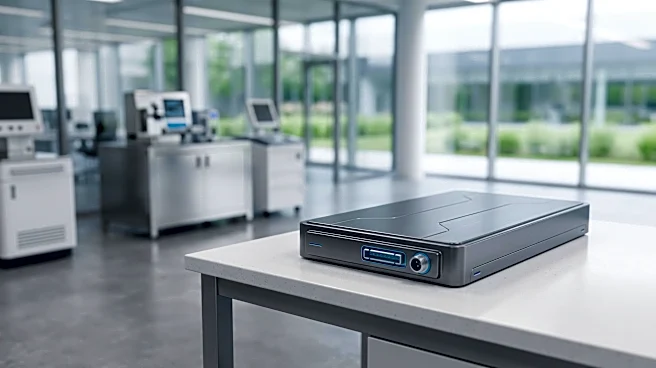
starting and powering accessories. These batteries are affordable and reliable but have limitations in energy storage, weight, and lifespan (3-5 years). For hybrid vehicles, plug-in hybrids (PHEVs), and EVs, lithium-ion batteries are the primary energy source for electric motors. They offer advantages such as being lightweight, compact, high energy density, and having a long lifespan, though they are more expensive and sensitive to extreme temperatures. Nickel-metal hydride (NiMH) batteries are also used in hybrid vehicles to power electric motors alongside internal combustion engines, providing a longer lifespan than lead-acid batteries and being more environmentally friendly, but with lower energy density and higher weight. An emerging technology, solid-state batteries, is under development and is expected to surpass current lithium-ion batteries in energy storage, offering higher energy density, faster charging, enhanced safety, and a longer lifespan.
Why It's Important?
The choice of battery technology significantly impacts vehicle performance, maintenance costs, environmental footprint, and driving range, which are critical factors for U.S. consumers and the automotive industry. The dominance of lithium-ion batteries in the EV market is crucial for achieving longer ranges and better overall efficiency, directly influencing the adoption rate of electric vehicles in the U.S. The development of solid-state batteries could revolutionize the EV market by addressing current limitations, potentially accelerating the transition away from fossil fuels and reducing reliance on foreign oil. This shift has profound implications for energy infrastructure, manufacturing jobs, and environmental policy. Furthermore, the varying lifespans and environmental impacts of different battery types affect waste management and recycling industries, necessitating new infrastructure and regulations to handle end-of-life batteries responsibly. The ongoing innovation in battery technology is a key driver for the future of transportation and energy independence in the U.S.
What's Next?
The automotive industry is expected to continue investing heavily in research and development for advanced battery technologies, particularly solid-state batteries, to overcome the current limitations of lithium-ion batteries. As these technologies mature, their commercial viability and widespread adoption will depend on cost reduction, scalability of manufacturing, and the establishment of robust charging infrastructure. Consumers can anticipate a broader range of EVs with improved performance, longer ranges, and faster charging capabilities. Regulatory bodies may introduce new standards for battery efficiency, safety, and recycling to support the growing EV market and mitigate environmental concerns. The transition will also likely spur further innovation in related sectors, such as smart grid technologies and renewable energy integration, to support the increased demand for electricity. The development of more sustainable and efficient battery solutions will be a continuous process, shaping the future of transportation and energy consumption in the U.S.
Beyond the Headlines
The evolution of battery technology extends beyond mere vehicle performance, touching upon critical ethical, economic, and geopolitical dimensions. The reliance on specific raw materials for advanced batteries, such as lithium and cobalt, raises concerns about supply chain vulnerabilities, ethical sourcing, and environmental impact of mining operations. The U.S. government and industry players are increasingly focused on securing domestic supply chains and developing alternative battery chemistries to reduce dependence on foreign sources. Moreover, the rapid advancement in battery technology could lead to significant shifts in global economic power, with nations that lead in battery innovation and production gaining a strategic advantage. The long-term implications also include the need for a circular economy approach to battery manufacturing, emphasizing recycling and reuse to minimize waste and resource depletion. This technological race is not just about cars; it's about national security, economic competitiveness, and environmental stewardship on a global scale.