




What's Happening?
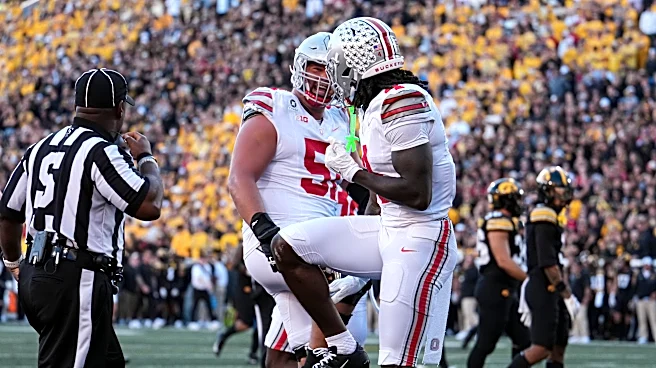
Jason Whitlock has publicly refuted Dave Portnoy's claim that Ohio State Buckeyes head coach Ryan Day was responsible for Portnoy's removal from the Fox Sports Big Noon Kickoff pregame show. Portnoy had asserted that Ohio State and Day 'bitched and moaned'
to the Big Ten and threatened Fox, leading to his departure. Whitlock, however, stated that Portnoy is 'lying to himself' and that the real reason for his firing was a lack of broad appeal. Whitlock argued that while Portnoy is 'dominant online,' his internet persona and content did not translate effectively to broadcast television, which requires a different kind of comfort and appeal for a wider, family-oriented audience. He emphasized that 'Fox gambled that internet fame would translate to broadcast comfort, and it lost,' concluding that Portnoy is a 'victim of the wrong medium,' not of Ryan Day's complaints.
Why It's Important?
This exchange is important as it highlights the growing tension and differing dynamics between digital media personalities and traditional broadcast television. Portnoy's situation exemplifies the challenges internet-famous individuals face when transitioning to mainstream platforms, where audience expectations and content standards are often vastly different. Whitlock's analysis underscores the distinction between niche online appeal and broad television marketability, suggesting that content that thrives in an 'opt-in' online environment may be perceived as 'crude and intrusive' in a family living room setting. This discussion has implications for media companies seeking to leverage online popularity for television programming, as it suggests that internet fame does not automatically guarantee broadcast success. It also touches on the power dynamics within collegiate sports, where major programs like Ohio State can exert significant influence over network decisions due to their financial and viewership contributions.
What's Next?
The debate between Whitlock and Portnoy is likely to continue fueling discussions about the compatibility of internet culture with traditional media. Media executives may become more cautious in integrating online personalities into mainstream broadcasts, leading to more rigorous vetting processes for talent. For Dave Portnoy, this event reinforces his position within the digital sphere, where his content and persona are well-received by his established audience. He will likely continue to thrive on platforms where fans actively choose to engage with his specific brand of content. For Fox Sports and other networks, the experience may lead to a re-evaluation of their strategies for attracting younger audiences, potentially focusing on talent that can adapt their style across different media or developing distinct content strategies for each platform rather than attempting a direct transfer of personalities.
Beyond the Headlines
Beyond the immediate professional implications, this incident delves into the broader cultural clash between the unfiltered, often provocative nature of internet content and the more curated, family-friendly expectations of traditional television. Whitlock's assertion that 'television is an invitation into your home' while the internet is 'an invitation into the privacy of your smartphone' encapsulates this fundamental difference. This cultural divide raises questions about evolving societal norms regarding humor, controversy, and public discourse. It also highlights the challenge for individuals and brands to maintain authenticity across diverse platforms without alienating different segments of their audience. The episode serves as a case study in the complexities of media consumption in the digital age, where the lines between personal and public personas are increasingly blurred, and the expectations of different audiences can be starkly divergent.