


What's Happening?
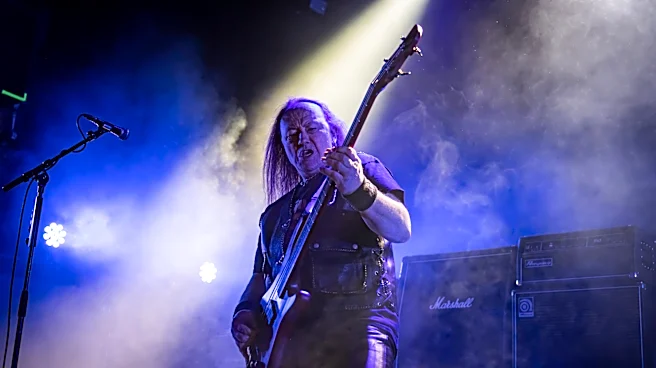
Guitarists Nick Petrino and Charlie Bellmore of the band Eastblood recently discussed their debut album, 'Burn What's Left,' and their approach to creating modern groove-oriented crossover thrash. Bellmore initiated the project during the COVID-19 pandemic,
fulfilling a long-held dream of forming a band with dueling guitar solos. The songwriting process was described as natural and efficient, with both musicians pushing each other to elevate their performances. Petrino noted that Bellmore would often challenge him to redo his solos after hearing Petrino's contributions, and vice versa. The band, which also includes Chris and Rob, recorded the album with a focus on authenticity, deliberately avoiding excessive digital correction to maintain a raw, human sound. Bellmore emphasized that they wanted the album to sound like 'real people' playing together, even though parts were recorded in different locations.
Why It's Important?
The release of 'Burn What's Left' and Eastblood's approach to music creation highlight a significant trend in the metal music industry: a return to organic, authentic performances amidst an era dominated by digital perfection. The band's philosophy of embracing imperfections and prioritizing raw energy over flawless production offers a counter-narrative to the prevalent use of auto-tune and copied elements in modern music. This stance could resonate with a segment of the audience that feels disconnected from overly polished recordings and seeks a more genuine live experience. Furthermore, the discussion on the evolution of thrash metal, incorporating elements from metalcore, blackened, technical, and death/thrash genres, indicates a dynamic and evolving landscape within heavy music. This continuous blending of styles suggests that the genre remains vibrant and capable of attracting new listeners while retaining its core appeal.
What's Next?
Eastblood plans to support 'Burn What's Left' with more live performances and potentially a tour or two in the coming year. Bellmore expressed a desire to tour for about three weeks to showcase the band's live energy to a broader audience. The band also has unreleased material from previous recording sessions and continues to write new music, suggesting future releases are likely. Given the members' extensive experience with other notable artists like Dee Snider and Jasta, they aim to leverage their connections to secure touring opportunities. The band's commitment to an authentic live experience suggests that their future endeavors will continue to prioritize genuine musical expression over digital manipulation, potentially influencing other emerging artists in the metal scene.
Beyond the Headlines
Eastblood's emphasis on authenticity and the rejection of 'perfect' digital production touches upon a broader cultural debate regarding the impact of technology on artistic expression. In an age where social media often showcases highly curated and digitally enhanced performances, Eastblood's commitment to raw, uncorrected music challenges the notion that perfection is the ultimate goal. This approach could foster a more appreciative audience for live, unvarnished talent and encourage other musicians to prioritize genuine skill and emotional connection over technical flawlessness. The band's members, having worked with industry veterans, also highlight the importance of humility and approachability, suggesting that true credibility in the music industry extends beyond musical prowess to include personal character and audience engagement. This perspective offers a valuable lesson for aspiring artists navigating the complexities of a rapidly changing music landscape.