




What's Happening?
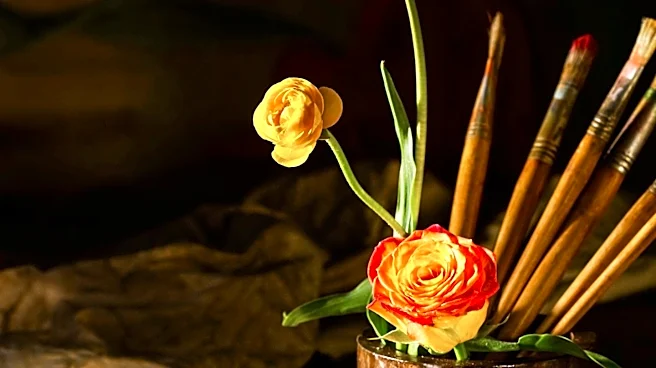
Vincent Van Gogh's extensive series of floral still lifes, particularly those painted during his time in Paris in 1886, were not merely aesthetic exercises but pivotal to his artistic evolution. According to art historical analysis, Van Gogh turned to painting
flowers due to financial constraints, as human models were expensive. This necessity became an opportunity for him to deeply engage with color theory, specifically the concept of complementary colors, which he learned from Charles Blanc's book. He aimed to harmonize 'brutal extremes' of color and render 'intense COLOR' rather than 'grey harmony.' These studies allowed him to experiment with vibrant palettes, impasto techniques, and thick brushwork, influenced by artists like Adolphe Monticelli, marking a significant shift from the darker tones of his Dutch period to the bright, intense style of his mature works.
Why It's Important?
This detailed examination of Van Gogh's floral period is crucial for understanding the foundational elements of his iconic style. It highlights how practical limitations can inadvertently foster significant artistic breakthroughs. His systematic approach to color theory, using flowers as subjects, demonstrates a deliberate and intellectual engagement with his craft, moving beyond mere imitation to a profound exploration of visual language. This period laid the groundwork for masterpieces like 'Starry Night' and 'Almond Blossom,' showcasing how his early experiments with color and texture in still lifes directly informed his later, more complex compositions. For art enthusiasts and students, it provides insight into the developmental process of a master, emphasizing the importance of foundational studies and experimentation.
What's Next?
The ongoing study and re-evaluation of Van Gogh's early works, particularly his floral still lifes, will likely continue to enrich our understanding of his artistic journey. Future exhibitions and academic research may further explore the specific influences and techniques he adopted during this period, potentially uncovering new connections between his Parisian experiments and his later iconic paintings. This continuous scholarly engagement helps to solidify the narrative of Van Gogh's development, offering fresh perspectives on how his unique vision was cultivated. It also encourages a deeper appreciation for the often-overlooked preparatory stages of an artist's career, demonstrating that even seemingly simple subjects can be profound vehicles for artistic growth.
Beyond the Headlines
Beyond the technical aspects, Van Gogh's dedication to painting flowers due to financial hardship offers a poignant narrative about resilience and resourcefulness in the face of adversity. It underscores the idea that creativity can thrive even under challenging circumstances, transforming limitations into opportunities for innovation. His pursuit of 'intense COLOR' and harmony in his floral studies can also be seen as a metaphor for his broader artistic and personal quest for meaning and beauty in a world he often found harsh. This period reflects a deep commitment to artistic principles, where the subject matter became a means to an end—the mastery of color and expression—rather than an end in itself. It speaks to the enduring power of art to transcend its immediate context and convey deeper human experiences.