




What's Happening?
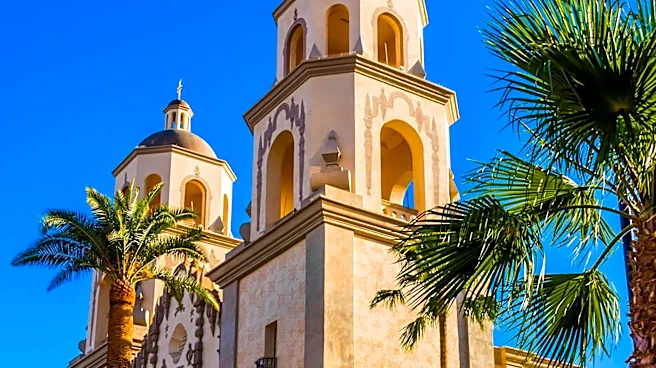
A nearly 100-year-old Presbyterian church, originally built in 1931 in Los Angeles, has been meticulously restored and repurposed into a 25-room boutique hotel named Hotel Lucile. Anthony Gutierrez, the opening general manager of Hotel Lucile, discussed
the extensive restoration process, emphasizing the preservation of the church's original architectural features. The project involved transforming the historic religious structure into a modern hospitality destination while maintaining its unique character and heritage. This adaptive reuse initiative breathes new life into an aging building, offering a distinctive lodging experience in the heart of Los Angeles. The conversion highlights a growing trend of repurposing historical structures for contemporary uses, blending past and present in urban development.
Why It's Important?
The transformation of a historic Los Angeles church into a boutique hotel is significant for several reasons, particularly in the context of urban development and cultural preservation in the U.S. This project exemplifies adaptive reuse, a sustainable practice that conserves architectural heritage while meeting modern needs. For Los Angeles, it adds a unique hospitality option that stands apart from conventional hotels, potentially attracting tourists interested in historical architecture and distinctive experiences. Economically, such projects can revitalize neighborhoods, create jobs, and contribute to local tourism revenue. It also showcases how communities can find innovative solutions for underutilized historic buildings, preventing demolition and preserving the city's character. The success of Hotel Lucile could inspire similar adaptive reuse projects across the U.S., encouraging developers to look at historical structures as assets rather than liabilities, thereby fostering a more sustainable and culturally rich urban landscape.
What's Next?
Hotel Lucile is now open and operating as a 25-room boutique hotel, offering a unique lodging experience in Los Angeles. The focus will be on establishing its reputation and attracting guests who appreciate its historical charm and modern amenities. The success of this project could serve as a case study for future adaptive reuse developments, particularly for other historic religious buildings that are no longer serving their original purpose. Local preservation societies and urban planners will likely monitor its impact on the surrounding community and its contribution to the city's cultural tourism. The hotel's management will continue to highlight its unique history and architectural preservation efforts as a key selling point. Future plans might include expanding its offerings or hosting cultural events that align with its historical context, further integrating it into the fabric of Los Angeles.
Beyond the Headlines
The conversion of a church into a hotel touches upon deeper societal and cultural shifts. As religious attendance declines in some areas, many historic church buildings face an uncertain future. Adaptive reuse projects like Hotel Lucile offer a viable and often celebrated alternative to demolition, preserving architectural beauty and historical memory. This trend reflects a broader re-evaluation of urban spaces and the desire to integrate history into contemporary life. Ethically, it raises questions about the appropriate repurposing of sacred spaces, though in this instance, the focus appears to be on architectural preservation and community benefit. Culturally, it transforms a site of spiritual gathering into one of leisure and commerce, symbolizing a changing relationship between public and private spaces. This development could also influence zoning laws and preservation policies, encouraging more flexible approaches to historic building conservation and fostering a new wave of creative urban regeneration across the U.S.