






What's Happening?
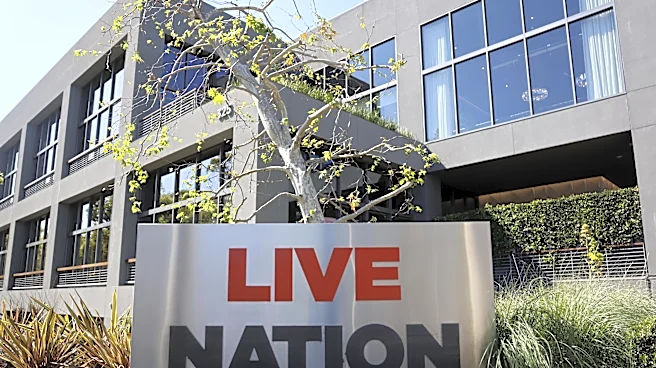
Live Nation Entertainment, a global leader in live entertainment, announced robust financial results for the third quarter of 2026. The company's revenue surged by 19% to reach $10.1 billion, while its operating income increased by 13% to $892 million.
Adjusted AOI (Adjusted Operating Income) also saw a significant rise of 14%, totaling $1.18 billion. These figures highlight a period of substantial growth for Live Nation, which currently connects with 159 million fans across 55 countries. In addition to its strong financial performance, Live Nation has outlined plans for considerable capital expenditure in fiscal year 2026, allocating $1.1 billion primarily towards the expansion and improvement of its venues. This investment underscores the company's commitment to enhancing its infrastructure and capacity to host live events.
Why It's Important?
Live Nation's impressive financial results and strategic investment plans are significant for the U.S. entertainment industry. As the world's leading live entertainment company, its growth directly impacts the broader ecosystem of concerts, ticketing, and venue operations. The planned $1.1 billion capital spending for venue expansion and improvement suggests a positive outlook for job creation in construction, event management, and hospitality sectors. This investment could also lead to an increase in the number and scale of live events across the country, benefiting local economies through tourism and related services. For consumers, it could mean more diverse and higher-quality entertainment options. The continued dominance and expansion of Live Nation also highlight the increasing consolidation within the live entertainment market, which could have implications for competition and pricing in the long term.
What's Next?
Live Nation's substantial capital expenditure of $1.1 billion in fiscal 2026 is expected to lead to significant developments in its venue portfolio. This investment will likely result in the construction of new venues and the modernization of existing ones, potentially increasing the company's capacity to host more events and accommodate larger audiences. The focus on venue expansion and improvement suggests a strategic move to enhance the fan experience and operational efficiency. Stakeholders, including local communities, artists, and event organizers, can anticipate new opportunities arising from these developments. The company's continued growth and investment in infrastructure are likely to solidify its position as a dominant force in the global live entertainment market, influencing trends in event production and ticketing for the foreseeable future.
Beyond the Headlines
The substantial growth reported by Live Nation, coupled with its significant investment in venue infrastructure, points to a broader trend of increasing demand for live experiences in the post-pandemic era. This surge in demand could be driven by a desire for communal experiences and a shift in consumer spending towards experiential goods and services. The company's global reach and market leadership also raise questions about the concentration of power within the entertainment industry. While expansion can lead to innovation and improved facilities, it also warrants scrutiny regarding potential monopolistic practices and their impact on smaller promoters, artists, and ticket pricing. The ethical implications of such market dominance, particularly concerning fair competition and consumer access, will likely remain a topic of discussion as Live Nation continues its growth trajectory.