



What's Happening?
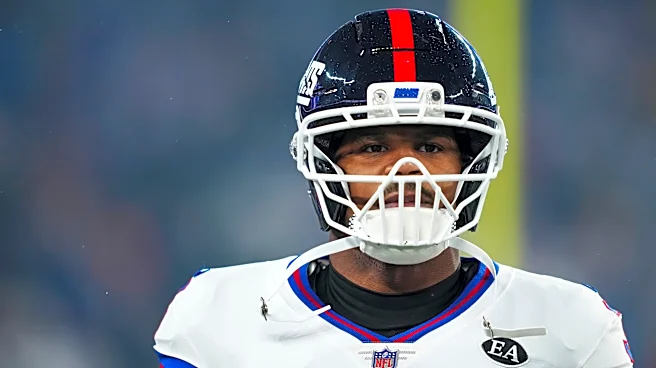
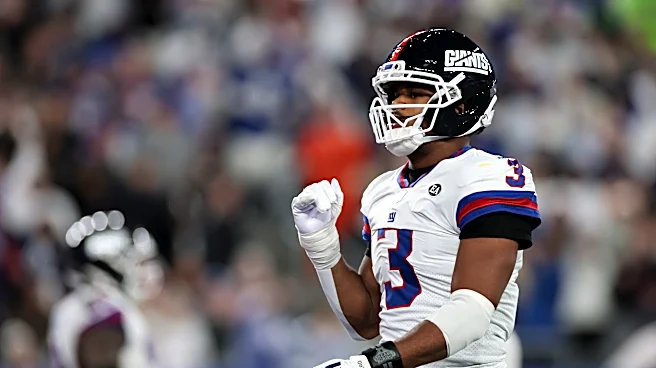
Malachi Fields, a rookie wide receiver for the New York Giants, has become a significant contributor to the team's offense. Through nine games, Fields has been targeted 39 times, resulting in 22 receptions for 350 yards and one touchdown. His performance
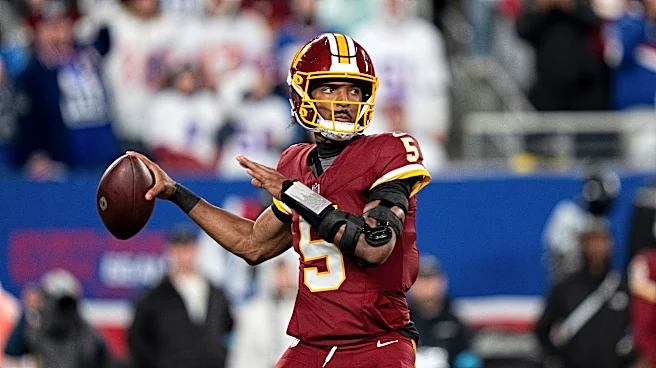
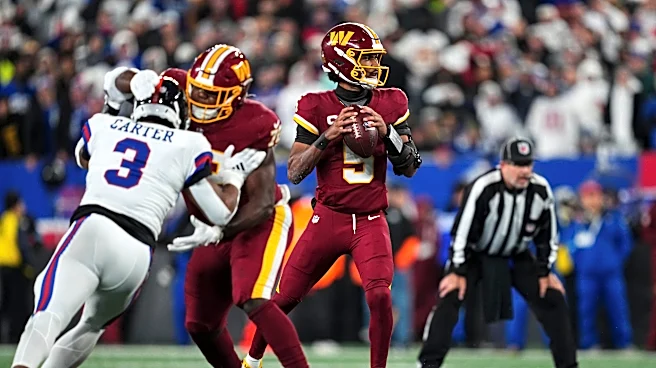
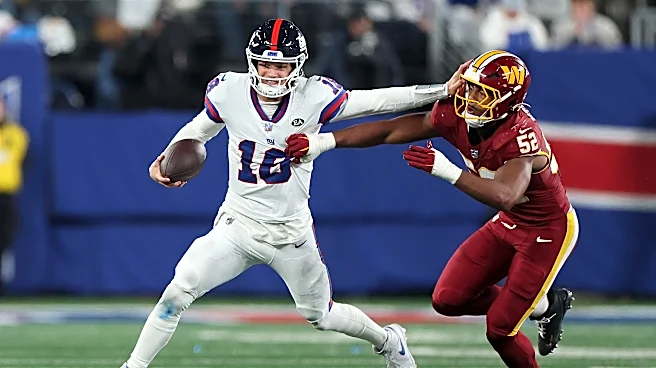
has been particularly notable in recent weeks, with 10 receptions for 185 yards on 14 targets over his last three games. In a recent Week 10 matchup against Washington, Fields secured three catches for 62 yards from four targets. Standing at 6-foot-4 and 222 pounds, the former Notre Dame standout is providing the Giants' quarterback, J.J. McCarthy, with a reliable downfield option capable of making substantial plays on the outside. This emergence is seen as a potential solution to the frustration experienced by fellow wide receiver Malik Nabers, who has frequently faced double coverage.
Why It's Important?
The rise of Malachi Fields is crucial for the New York Giants' offensive strategy, particularly in alleviating the pressure on star wide receiver Malik Nabers. With Nabers and tight end Isaiah Likely accounting for over 54% of the team's passing game targets, opposing defenses have been able to focus their efforts on containing these two players. Fields' ability to consistently make plays downfield could force defenses to adjust their coverage, potentially freeing up Nabers from constant double teams. This shift in defensive attention could allow Nabers more opportunities to make game-changing plays, rather than being limited to short, manufactured touches. For the Giants, who are currently leading the NFC East, maximizing their offensive weapons is vital for sustained success and a deeper playoff run. Fields' development could be a significant factor in unlocking the full potential of the team's passing attack.
What's Next?
The New York Giants are expected to integrate Malachi Fields more prominently into their offensive scheme. The team traded up to draft Fields, indicating their belief in his potential, and his recent performances have justified a larger role. By increasing Fields' target share to around seven or eight targets per game, the Giants aim to diversify their passing attack and make it more challenging for opposing defenses to predict. This strategic adjustment could lead to more favorable matchups for both Fields and Nabers, ultimately enhancing the overall effectiveness of the Giants' offense. The team will likely continue to evaluate how Fields' presence impacts defensive coverages and adjust their play-calling to exploit any new opportunities that arise from his increased involvement.
Beyond the Headlines
The emergence of Malachi Fields highlights a broader strategic principle in professional football: the importance of developing multiple offensive threats to prevent defenses from keying in on a single star player. While Malik Nabers is undeniably a top-tier talent, his frustration with double coverage underscores the limitations of a highly concentrated target distribution. Fields' development offers a blueprint for how teams can leverage their draft capital to cultivate complementary players who can indirectly enhance the performance of their established stars. This dynamic could also influence future draft strategies, with teams prioritizing versatile playmakers who can create mismatches and open up opportunities across the field, rather than solely focusing on singular, dominant talents. The success of this approach could set a precedent for how NFL teams manage their offensive personnel to achieve sustained competitive advantage.