




What's Happening?
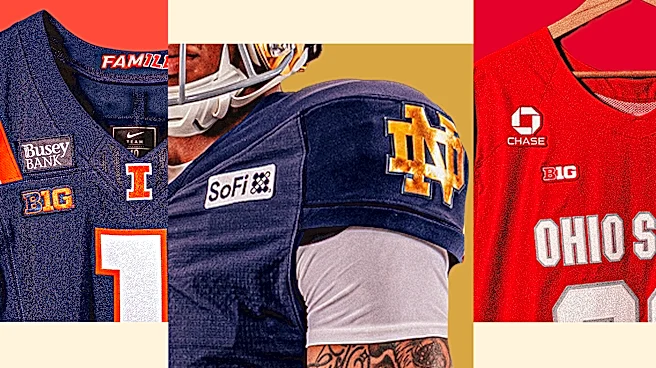
Ohio State University has announced a significant jersey patch sponsorship deal with JPMorgan Chase, reportedly valued at nearly $17 million annually. However, the full terms of the agreement, including compensation details and the duration, have not
been disclosed. The deal is structured between JPMorgan and Learfield, a sports marketing company that manages corporate sponsorships and multimedia rights for athletic departments. Ohio State has denied a public records request for the agreement, citing its arrangement with Learfield, which is not subject to public records laws. This partnership is part of a broader trend among athletic departments seeking jersey patch sponsorships following an NCAA rule change allowing corporate logos on uniforms. The Chase logo will be featured on the uniforms of all 36 varsity sports teams at Ohio State starting this fall.
Why It's Important?
The deal highlights a growing trend in college sports where athletic departments are increasingly turning to corporate sponsorships as a revenue source. With rising expenses related to athlete compensation, such sponsorships provide a financial boost. Ohio State's athletic department reported significant revenue from sponsorships, and this new deal with JPMorgan Chase is expected to further enhance their financial standing. The confidentiality of the agreement underscores the complexities of public-private partnerships in collegiate sports, where private entities like Learfield can manage deals without public disclosure. This trend could influence other universities to pursue similar sponsorships, potentially reshaping the financial landscape of college athletics.
What's Next?
As jersey patch sponsorships become more common, other universities may follow Ohio State's lead in securing lucrative deals. The NCAA's rule change has opened new revenue streams for athletic departments, which could lead to increased competition among corporations seeking visibility through college sports. Stakeholders, including university administrators and corporate sponsors, will likely continue to explore these opportunities. Additionally, the impact on athlete compensation and the distribution of sponsorship revenues will be closely monitored, as schools navigate the balance between financial gain and fair compensation for athletes.