



What's Happening?
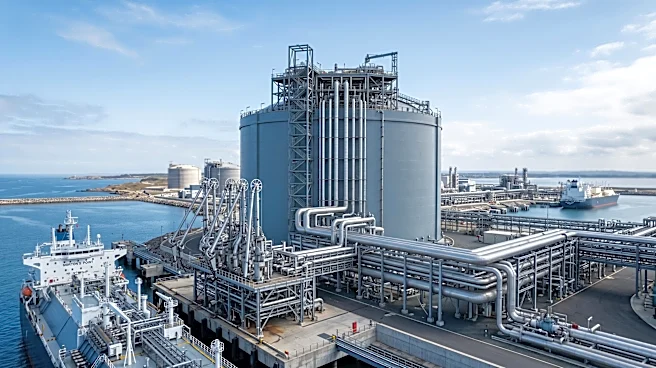
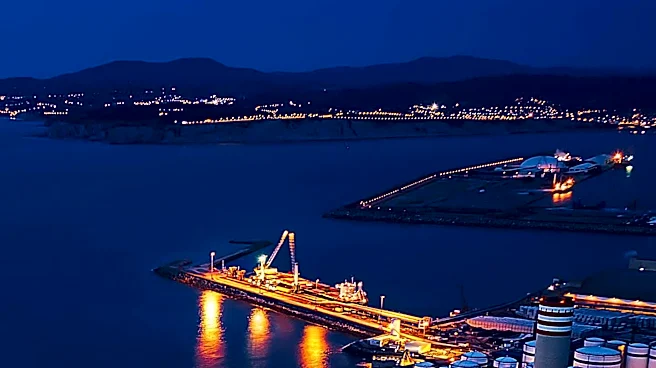
The Federal Energy Regulatory Commission (FERC) has granted approval to Cheniere Energy for the expansion of its Sabine Pass LNG export terminal in Louisiana. This regulatory decision allows for an increase in the terminal's capacity by 20 Mt/year. The approval also
encompasses the expansion of the Creole Trail Pipeline Project and the Sabine Crossing Pipeline, which are crucial for supplying natural gas to the expanded terminal. The Sabine Pass facility currently operates with a natural gas liquefaction capacity exceeding 30 Mt/year across six liquefaction trains. The expansion is planned in several phases, with the first phase, known as Train 7, projected to add over 6 Mt/year of liquefaction capacity, which has already been secured through long-term contracts. A final investment decision for this initial phase is anticipated in early 2027. Upon full completion, the terminal's total capacity could surpass 50 Mt/year. Cheniere Energy, a significant U.S. LNG exporter, operates two primary facilities: Sabine Pass LNG and Corpus Christi LNG.
Why It's Important?
This FERC approval is a significant step for Cheniere Energy and the U.S. energy sector, moving the company closer to a final investment decision on a major expansion project. The increased LNG export capacity at Sabine Pass will bolster the United States' position as a leading global supplier of liquefied natural gas. This expansion is expected to create jobs and stimulate economic activity in Louisiana and the broader Gulf Coast region. For international energy markets, the additional supply from the U.S. could help stabilize prices and enhance energy security for importing nations. The associated pipeline infrastructure expansion will also improve the efficiency and reliability of natural gas transportation to the export terminal, ensuring a steady supply for liquefaction. This development underscores the ongoing strategic importance of natural gas in the U.S. energy portfolio and its role in global energy trade.
What's Next?
Following FERC's regulatory approval, Cheniere Energy must now make a final investment decision (FID) regarding the expansion project. The FID for the initial phase, Train 7, is expected in early 2027. This decision will commit capital and initiate the full notice to proceed for construction. Once the FID is made, construction on the various phases of the expansion will commence, leading to a gradual increase in the terminal's liquefaction capacity. The expansion of the Creole Trail Pipeline Project and the Sabine Crossing Pipeline will proceed in parallel to ensure the necessary gas transportation infrastructure is in place. The successful execution of this project will further solidify Cheniere's market position and contribute to the U.S.'s long-term energy export strategy.
Beyond the Headlines
The expansion of the Sabine Pass LNG terminal highlights the complex interplay between regulatory processes, corporate investment decisions, and global energy demands. This project reflects a broader trend of increasing U.S. energy exports, which has geopolitical implications, particularly in providing alternative energy sources to countries seeking to diversify away from other suppliers. Environmentally, while natural gas is often considered a cleaner fossil fuel, the scale of this expansion raises questions about its long-term impact on greenhouse gas emissions and the transition to renewable energy sources. The project also underscores the economic reliance of certain U.S. regions on the energy industry and the challenges of balancing economic development with environmental concerns. The long-term contracts already secured for Train 7 indicate a strong market demand for U.S. LNG, suggesting continued growth in this sector.