



What's Happening?
Interior designers are increasingly highlighting statement lighting as a crucial element for personalizing home interiors. According to Jennifer Taylor Wirick, owner of Jennifer Taylor Design, light fixtures offer an accessible way to update and add interest
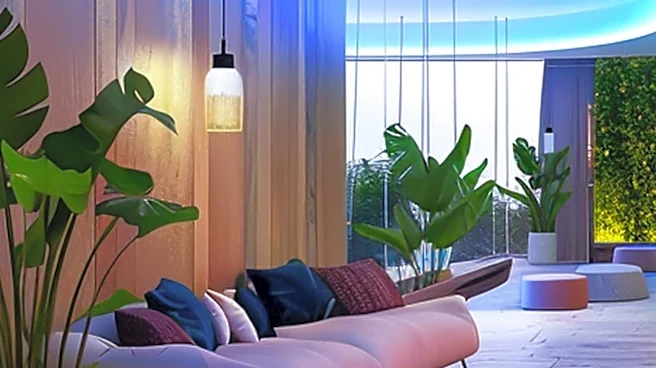
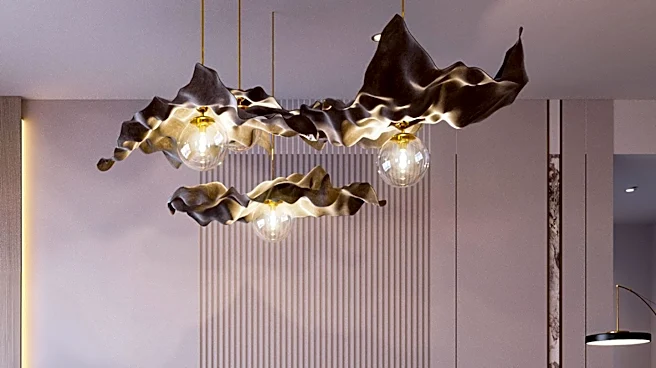
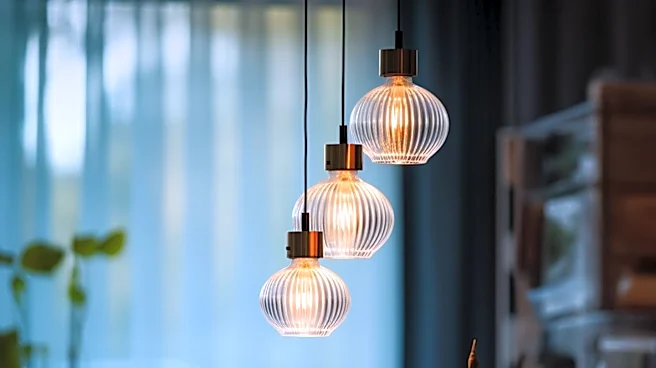
to a home, as they are relatively easy to change with evolving trends. Statement lighting can be achieved through various fixtures such as chandeliers, sconces, lamps, and floor lamps, each serving as a focal point. Designers suggest that a statement pendant light can carry the main decorative emphasis of a room, particularly when positioned over a dining table or in a prominent area. The goal is often to create at least three light sources arranged in a loose triangle to ensure balanced illumination and prevent dark corners. The key to effective statement lighting lies in its dominant characteristic—be it shape, scale, color, material, or placement—and its ability to complement the room's overall aesthetic and functionality. This approach allows homeowners to infuse personality and style into their living spaces without extensive renovations.
Why It's Important?
The emphasis on statement lighting reflects a broader trend in home design towards personalization and flexible decor. For U.S. homeowners, this means an increased opportunity to express individual style and adapt their living environments more easily. The lighting industry stands to benefit from this trend, as demand for unique and visually impactful fixtures is likely to grow. Retailers and manufacturers specializing in decorative lighting, from high-end designer pieces to more accessible options, could see increased sales. Furthermore, interior design services that incorporate strategic lighting plans will become more valuable, as clients seek expert guidance to achieve personalized and well-lit spaces. This shift also underscores the understanding that lighting is not merely functional but a critical component of a room's mood, aesthetic appeal, and overall design narrative, influencing how residents and guests experience a space.
What's Next?
As the trend towards personalized home decor continues, consumers can expect to see a wider array of innovative and artistic lighting fixtures entering the market. Manufacturers will likely focus on diverse materials, unique shapes, and smart lighting technologies that allow for greater customization of color and temperature. Interior designers will continue to integrate statement lighting as a core element in their proposals, educating clients on its impact beyond mere illumination. We may also see an increase in DIY-friendly statement lighting options, empowering more homeowners to experiment with bold fixtures. Educational content from design professionals and retailers will likely expand, offering guidance on how to select and place statement lighting to achieve desired aesthetic and functional outcomes, further solidifying its role as a key design tool.
Beyond the Headlines
Beyond its immediate aesthetic appeal, the rise of statement lighting reflects a deeper cultural shift towards valuing individuality and self-expression within personal spaces. In an increasingly standardized world, home decor becomes a canvas for personal identity, and lighting, with its transformative power, plays a significant role. Ethically, this trend encourages sustainable practices in manufacturing, as consumers may seek unique, durable pieces made from natural or recycled materials, moving away from disposable decor. Legally, as lighting technology advances, there may be increased scrutiny on energy efficiency standards and safety regulations for complex or custom fixtures. Culturally, statement lighting can be seen as an art form, blurring the lines between functional object and sculptural installation, thereby elevating the role of interior design in contemporary art and lifestyle discussions.