








What's Happening?
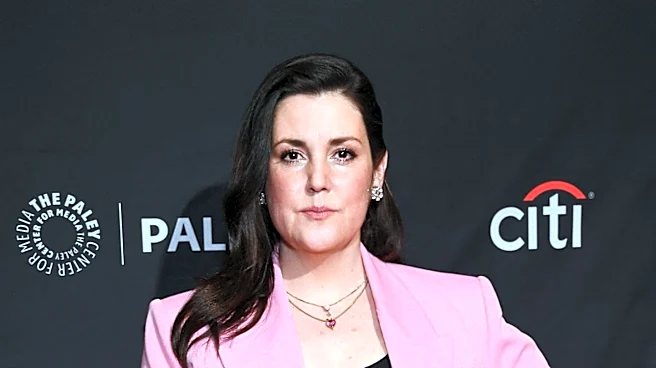
Actress Melanie Lynskey has addressed and corrected widespread online rumors regarding her earnings from the CBS comedy series 'Two and a Half Men'. Lynskey, who played Rose on the show, stated that estimates claiming she made between $200,000 and $300,000
per episode were highly exaggerated. She clarified that her actual take-home pay was significantly lower, approximately one-tenth of the rumored figure. Lynskey explained that agents, managers, business managers, and taxes collectively reduced her gross earnings by about 50%. She also debunked the notion that the sitcom made her a millionaire, emphasizing that while she was grateful for the income, it primarily helped cover her mortgage and bills, enabling her to pursue independent film projects. This clarification came after a discussion initiated by fellow cast member Holland Taylor, who also spoke about salary disparities on the show.
Why It's Important?
This clarification from Melanie Lynskey highlights a common misconception in the entertainment industry regarding celebrity salaries. Publicly reported figures often represent gross earnings before substantial deductions for representation, management, and taxes. This disparity can lead to an inflated perception of an actor's wealth, potentially influencing public opinion and discussions about compensation fairness. For aspiring actors and those outside the industry, Lynskey's statement provides a more realistic view of the financial realities, underscoring that even significant per-episode rates do not translate directly into vast personal fortunes. It also sheds light on the complex financial ecosystem surrounding high-profile television productions, where multiple parties take a percentage of an actor's earnings.
What's Next?
The discussion initiated by Melanie Lynskey and Holland Taylor could prompt further conversations within the entertainment industry about salary transparency and the financial structures that impact actors' take-home pay. While no immediate policy changes are expected, increased awareness among the public and industry professionals might lead to a more nuanced understanding of compensation. This could also encourage other actors to share their experiences, potentially fostering a more open dialogue about the financial challenges and realities faced by many in the profession, even those on successful shows. The ongoing nature of such discussions could influence future contract negotiations and public perception of actor compensation.
Beyond the Headlines
Melanie Lynskey's candid revelation touches upon broader themes of financial literacy and media representation of wealth. The public often consumes headline figures without understanding the intricate financial deductions involved, leading to a distorted view of economic realities for individuals in high-earning professions. This situation also underscores the ethical responsibility of media outlets to provide context when reporting on celebrity incomes. Furthermore, it highlights the persistent issue of salary disparities within the entertainment industry, as evidenced by Holland Taylor's comments about not receiving raises despite Emmy nominations, and the significant gap between supporting actors' pay and lead actors like Charlie Sheen, who reportedly earned $1.9 million per episode. This ongoing dialogue can contribute to a more informed public discourse on labor economics and fair compensation.