



What's Happening?
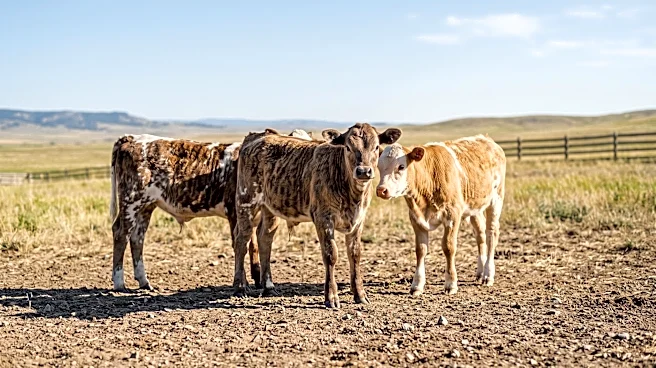
The U.S. beef industry is experiencing a significant shift with the rapid growth of 'beef-on-dairy' production, a practice involving breeding dairy cows with beef bulls to produce calves for meat. This method has seen an explosive increase, from 50,000
head in 2014 to 3.22 million in 2024, now accounting for an estimated 26% of the feedlot population. This surge is partly driven by dairy farmers seeking new profit sources and the beef industry's response to a historic cattle shortage exacerbated by drought. Large-scale operations like Blackshirt Feeders, the country's largest cattle feedlot under construction in Nebraska, are primarily housing beef-on-dairy cattle. While proponents argue it helps ease the cattle shortage, independent ranchers and organizations like R-CALF USA view it as a significant threat to their livelihood and the traditional structure of the beef industry, fearing increased vertical integration similar to the pork and poultry sectors.
Why It's Important?
The rise of beef-on-dairy production carries profound implications for the U.S. agricultural landscape. For independent ranchers, it represents a potential erosion of their market share and independence, as the model could allow meatpackers and large corporations to control more of the supply chain from birth to slaughter. This shift could lead to a 'chickenization' of the beef industry, where farmers operate under strict contracts with limited leverage, a system that has largely eliminated independent hog feeders. Consumers may increasingly purchase beef from these crossbred animals without explicit labeling. Furthermore, the model raises animal welfare concerns, as beef-on-dairy cattle typically live in confinement from birth, are separated from their mothers early, and may be more prone to health issues like congestive heart failure, lameness, and liver abscesses due to intensive genetic selection and grain-heavy diets. The environmental impact of large feedlots, such as water consumption from aquifers and manure generation, also presents significant concerns for local communities.
What's Next?
The beef-on-dairy model is expected to continue its growth, with experts like Tara Felix from Penn State anticipating a move towards a more integrated system, where meatpackers or large feedlots gain greater control over the supply chain through ownership or contracts. Companies like Cargill, Nestlé, Land O’Lakes (through Purina Mills), and ABS Global are actively supporting and promoting beef-on-dairy crossbreeding and related technologies. This trend suggests that the beef industry will increasingly rely on this model to address cattle shortages and achieve greater supply chain consistency. Independent rancher organizations like R-CALF USA will likely continue to advocate against this industrialization, pushing for policies that protect traditional ranching and promote market competition. Public scrutiny regarding animal welfare practices in large-scale confinement operations is also likely to intensify, potentially leading to increased calls for transparency and regulatory oversight.
Beyond the Headlines
The expansion of beef-on-dairy production highlights a deeper struggle within American agriculture between traditional, independent farming and industrial-scale, vertically integrated systems. This shift is not merely about cattle supply but about the future of rural economies, the concentration of power within the food industry, and evolving ethical considerations regarding animal husbandry. The 'chickenization' of beef could fundamentally alter the economic viability of small and medium-sized ranches, leading to further consolidation and a loss of agricultural diversity. It also brings to the forefront questions about consumer awareness and the right to know the origins and raising practices of their food. The environmental strain on resources like water and land from massive feedlots, coupled with potential animal health issues, could spark broader debates about sustainable food production and the long-term ecological footprint of industrial agriculture in the U.S.