




What's Happening?
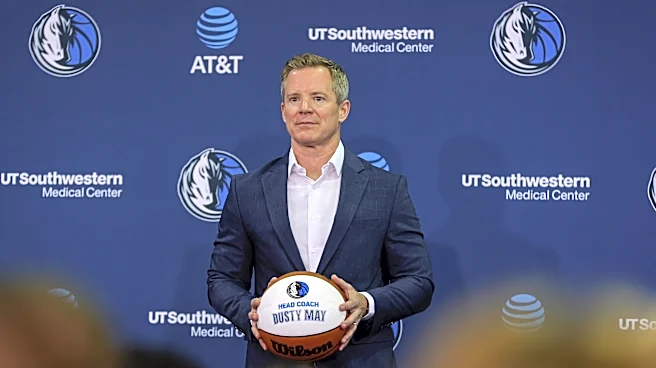
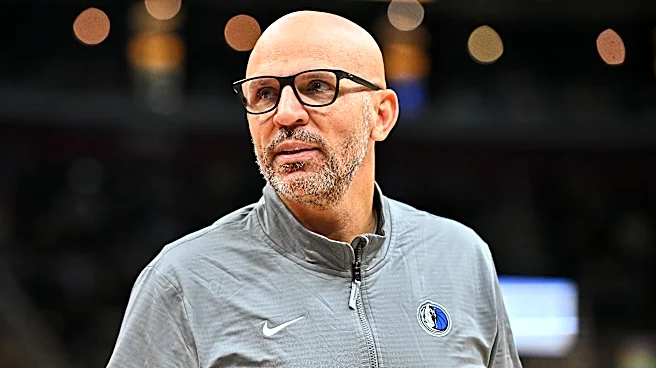
The Dallas Mavericks have fired head coach Jason Kidd, a move made by Masai Ujiri less than a month after he became the team's president of basketball operations. This decision was part of a broader strategy to initiate a complete overhaul of the franchise.
Kidd's tenure was reportedly marred by rumors surrounding the Luka Doncic trade, and Ujiri aimed to sever ties with individuals connected to what is described as the 'most infamous trade in NBA history.' The Mavericks have since hired Dusty May as their new head coach, who has led the team to a 7-4 record through 11 games, exceeding initial expectations. May's coaching style, characterized by accountability, high energy, and effective in-game adjustments, is seen as a significant factor in the team's early success. The change reflects a desire for a fresh start and a new cultural direction for the team.
Why It's Important?
The firing of Jason Kidd and the subsequent hiring of Dusty May signify a pivotal shift in the Dallas Mavericks' organizational philosophy and on-court strategy. This move is important because it demonstrates a clear intent from new leadership to rebuild the team's culture from the ground up, moving away from past controversies and underperformance. The decision to bring in a college coach like May, known for his player development skills and hands-on approach, suggests a long-term vision focused on nurturing young talent and instilling discipline. For the Mavericks, this could mean a more stable and competitive future, potentially re-engaging a fanbase that has been 'heartbroken' by previous team decisions. The success of this coaching change could also influence other NBA franchises to consider similar leadership overhauls when seeking to revitalize their teams.
What's Next?
Following the coaching change, the Dallas Mavericks will continue to integrate Dusty May's coaching philosophy and develop their roster under his guidance. The immediate focus will be on sustaining the positive momentum established in the early part of the season and building chemistry among the players. May's commitment to holding players accountable and his hands-on approach are expected to shape the team's identity moving forward. Key players like Kyrie Irving have already expressed positive feedback on May's coaching, indicating a receptive locker room. The franchise will likely continue to make personnel decisions that align with May's vision, potentially through trades or future draft picks, to further solidify the team's new direction. The long-term success of this transition will be measured by the team's performance in the playoffs and its ability to consistently compete at a high level.
Beyond the Headlines
The Mavericks' decision to replace Jason Kidd with Dusty May extends beyond a simple coaching change; it represents a strategic pivot towards a different model of team building and leadership in the NBA. By opting for a college coach with a reputation for program building and player development, the Mavericks are signaling a departure from the traditional NBA coaching carousel, often dominated by former players or established assistants. This move could highlight a growing trend in professional sports where organizations prioritize a coach's ability to cultivate a strong team culture and develop young talent over prior NBA head coaching experience. It also underscores the increasing influence of front office executives like Masai Ujiri in shaping a team's identity and making bold decisions to achieve long-term success, even if it means parting ways with well-known figures.